
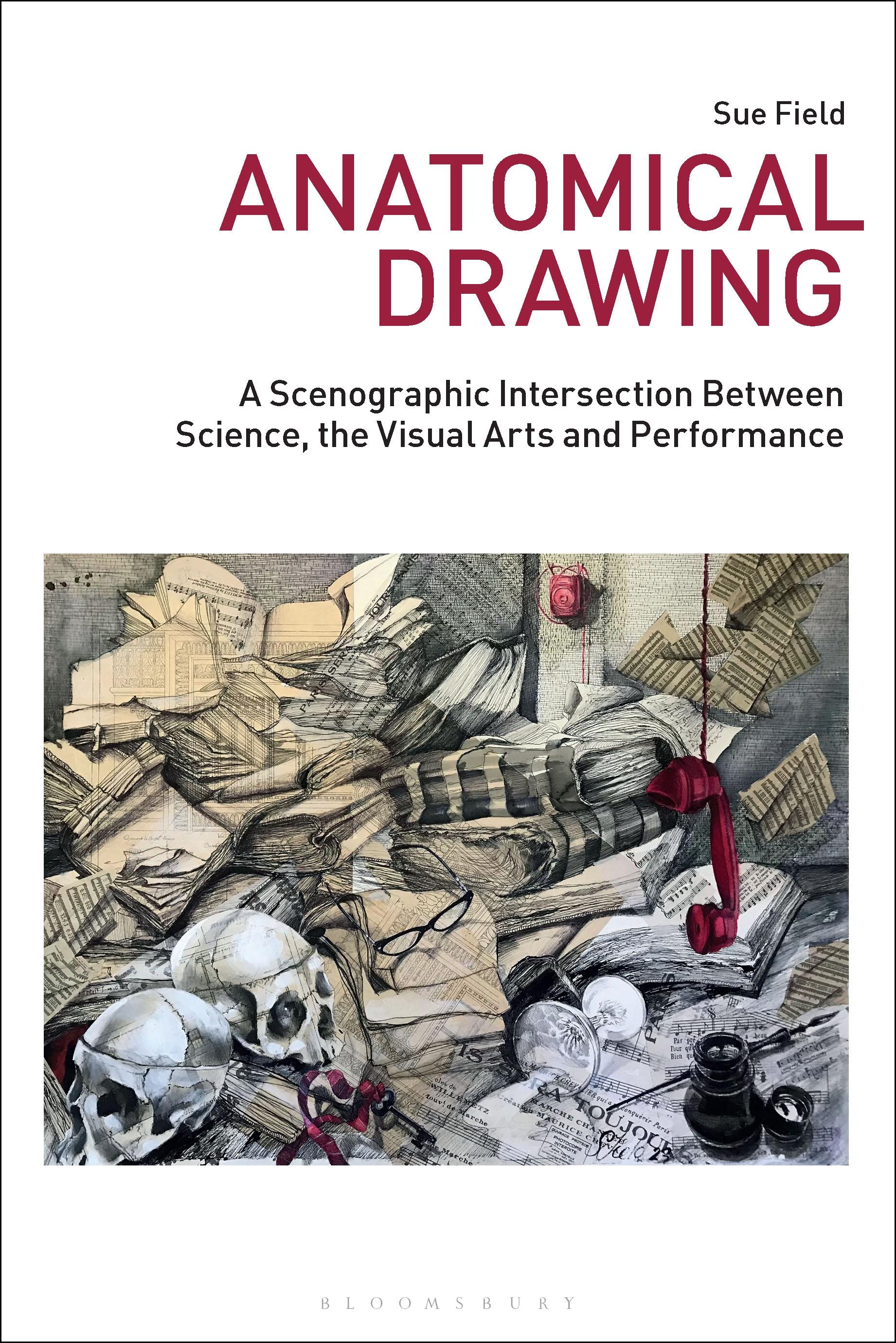
Intersecting art, science and the scenographic mise-en-scène, this book provides a new approach to anatomical drawing, viewed through the contemporary lens of scenographic theory.
Sue Field traces the evolution of anatomical drawing from its historical background of hand-drawn observational scientific investigations to the contemporary, complex visualization tools that inform visual art practice, performance, film and screen-based installations. Presenting an overview of traditional approaches across centuries, the opening chapters explore the extraordinary work of scientists and artists such as Andreas Vesalius, Gérard de Lairesse, Santiago Ramón y Cajal and Dorothy Foster Chubb who, through the medium of drawing dissect, dismember and anatomize the human form.
Anatomical Drawing examines how forms, fluids and systems are entangled within the labyrinthine two-dimensional drawn space and how the body has been the subject of the spectacle. Corporeal proportions continue to be embodied within the designs of structures, buildings and visual art. Illustrated throughout, the book explores the drawings of 17th-century architect and scenographer Inigo Jones, through to the ghostly, spectral forms illuminated in the present-day X-ray drawings of the artist Angela Palmer, and the visceral and deeply personal works of Kiki Smith. Field analyses the contemporary skeletal manifestations that have been spawned from the medieval Danse Macabre, such as Walt Disney's drawn animations and the theatrical staging, metaphor and allegorical intent in the contemporary drawn artworks of William Kentridge, Peter Greenaway, Mark Dion and Dann Barber.
This rigorous study illustrates how the anatomical drawing shapes multiple scenographic encounters, both on a two-dimensional plane and within a three-dimensional space, as the site of imaginative agency across the breadth of the visual and performance arts. These drawings are where a corporeal, spectacularized representation of the human body is staged and performed within an expanded drawn space, generating something new and unforeseen - a scenographic worlding.
Sue Field traces the evolution of anatomical drawing from its historical background of hand-drawn observational scientific investigations to the contemporary, complex visualization tools that inform visual art practice, performance, film and screen-based installations. Presenting an overview of traditional approaches across centuries, the opening chapters explore the extraordinary work of scientists and artists such as Andreas Vesalius, Gérard de Lairesse, Santiago Ramón y Cajal and Dorothy Foster Chubb who, through the medium of drawing dissect, dismember and anatomize the human form.
Anatomical Drawing examines how forms, fluids and systems are entangled within the labyrinthine two-dimensional drawn space and how the body has been the subject of the spectacle. Corporeal proportions continue to be embodied within the designs of structures, buildings and visual art. Illustrated throughout, the book explores the drawings of 17th-century architect and scenographer Inigo Jones, through to the ghostly, spectral forms illuminated in the present-day X-ray drawings of the artist Angela Palmer, and the visceral and deeply personal works of Kiki Smith. Field analyses the contemporary skeletal manifestations that have been spawned from the medieval Danse Macabre, such as Walt Disney's drawn animations and the theatrical staging, metaphor and allegorical intent in the contemporary drawn artworks of William Kentridge, Peter Greenaway, Mark Dion and Dann Barber.
This rigorous study illustrates how the anatomical drawing shapes multiple scenographic encounters, both on a two-dimensional plane and within a three-dimensional space, as the site of imaginative agency across the breadth of the visual and performance arts. These drawings are where a corporeal, spectacularized representation of the human body is staged and performed within an expanded drawn space, generating something new and unforeseen - a scenographic worlding.
Pagine: 224
Categoria: Konst, Design & Fotografi
e-ISBN: 9781350285576
Peso di spedizione: 1.2 kg
Spedito in: 1-2 giorni
Paga facilmente con carta, Klarna, Apple Pay o Google Pay. Non sei soddisfatto? Hai sempre 14 giorni per il rimborso. Leggi di più nei nostri termini. Per qualsiasi domanda, scrivici a hello@memmo.org.
Memmo rende lo studio più facile, ovunque tu sia nel mondo. Qui trovi i tuoi libri di testo e strumenti di studio intelligenti, tutto in un unico posto: riassunti, quiz, podcast e flashcard. E poi c'è Ted, il tuo compagno di studio che risponde a ogni tua domanda. Oltre 50.000 studenti studiano già qui: è stato creato per aiutarti a imparare più velocemente e a stressarti meno.