
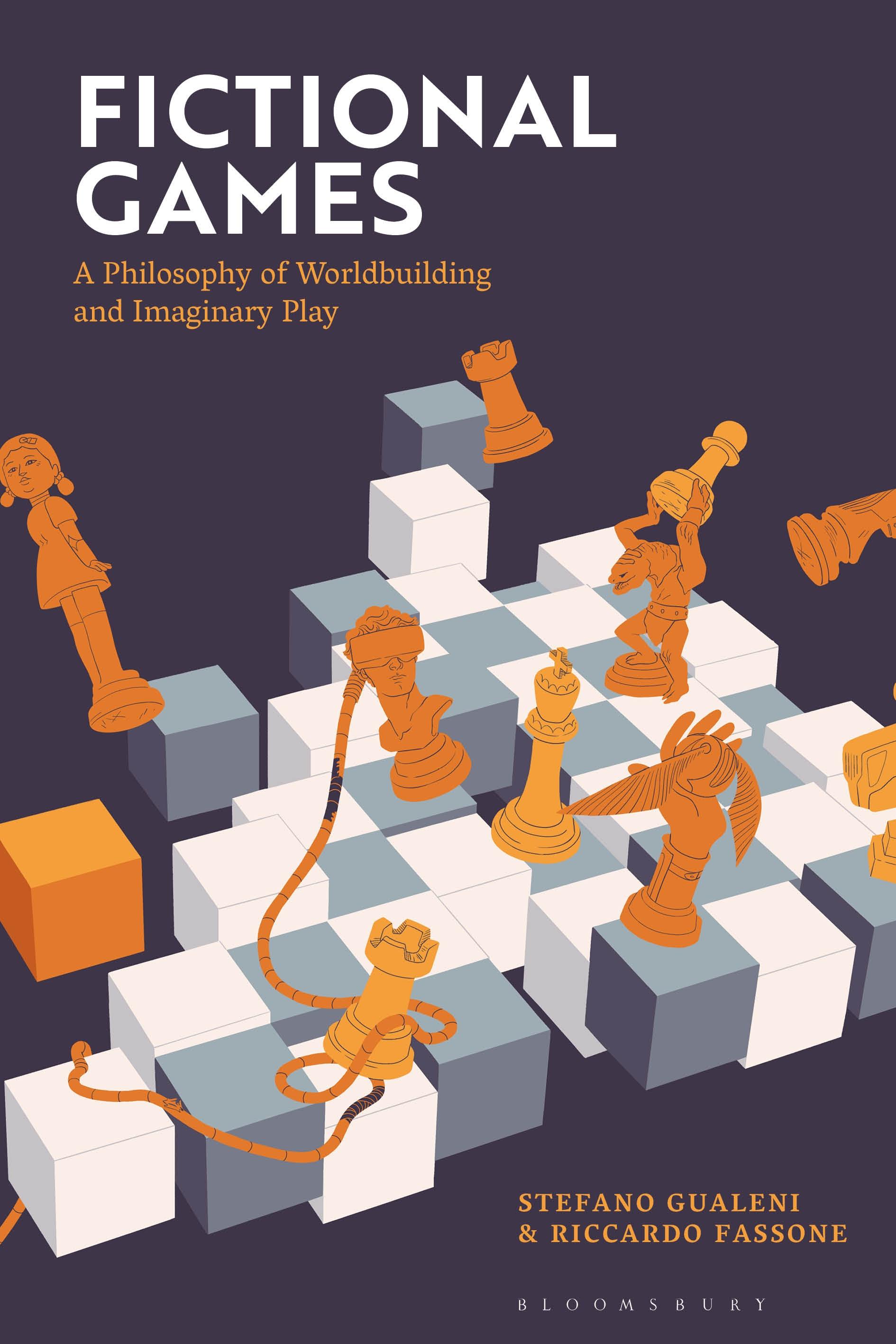
What roles do imaginary games have in story-telling? Why do fiction authors outline the rules of a game that the audience will never play? Combining perspectives from philosophy, literary theory and game studies, this book provides the first in-depth investigation into the significance of fictional games within fictional worlds.
Drawing from contemporary cinema and literature, from The Hunger Games to the science fiction of Iain M. Banks, Stefano Gualeni and Riccardo Fassone introduce five key functions that different types of imaginary games have in worldbuilding. First, fictional games can emphasize the dominant values and ideologies of the fictional society they belong to. Second, some imaginary games function in fictional worlds as critical, utopian tools, inspiring shifts in the thinking and political orientation of the fictional characters. Third, a few fictional games are conducive to the transcendence of a particular form of being, such as the overcoming of human corporeality. Fourth, imaginary games within works of fiction can deceptively blur the boundaries between the contingency of play and the irrevocable seriousness of “real life”, either camouflaging life as a game or disguising a game as something with more permanent consequences. And fifth, they can function as meta-reflexive tools, suggesting critical and/or satirical perspectives on how actual games are designed, played, sold, manipulated, experienced, understood and utilized as part of our culture.
With illustrations in every chapter bringing the imaginary games to life, Gualeni and Fassone creatively inspire us to consider fictional games anew: not as moments of playful reprieve in a storyline, but as significant and multi-layered expressive devices.
Drawing from contemporary cinema and literature, from The Hunger Games to the science fiction of Iain M. Banks, Stefano Gualeni and Riccardo Fassone introduce five key functions that different types of imaginary games have in worldbuilding. First, fictional games can emphasize the dominant values and ideologies of the fictional society they belong to. Second, some imaginary games function in fictional worlds as critical, utopian tools, inspiring shifts in the thinking and political orientation of the fictional characters. Third, a few fictional games are conducive to the transcendence of a particular form of being, such as the overcoming of human corporeality. Fourth, imaginary games within works of fiction can deceptively blur the boundaries between the contingency of play and the irrevocable seriousness of “real life”, either camouflaging life as a game or disguising a game as something with more permanent consequences. And fifth, they can function as meta-reflexive tools, suggesting critical and/or satirical perspectives on how actual games are designed, played, sold, manipulated, experienced, understood and utilized as part of our culture.
With illustrations in every chapter bringing the imaginary games to life, Gualeni and Fassone creatively inspire us to consider fictional games anew: not as moments of playful reprieve in a storyline, but as significant and multi-layered expressive devices.
Pagine: 216
Categoria: Film- & Medievetenskap
e-ISBN: 9781350277106
Peso di spedizione: 1.2 kg
Spedito in: 1-2 giorni
Paga facilmente con carta, Klarna, Apple Pay o Google Pay. Non sei soddisfatto? Hai sempre 14 giorni per il rimborso. Leggi di più nei nostri termini. Per qualsiasi domanda, scrivici a hello@memmo.org.
Memmo rende lo studio più facile, ovunque tu sia nel mondo. Qui trovi i tuoi libri di testo e strumenti di studio intelligenti, tutto in un unico posto: riassunti, quiz, podcast e flashcard. E poi c'è Ted, il tuo compagno di studio che risponde a ogni tua domanda. Oltre 50.000 studenti studiano già qui: è stato creato per aiutarti a imparare più velocemente e a stressarti meno.