
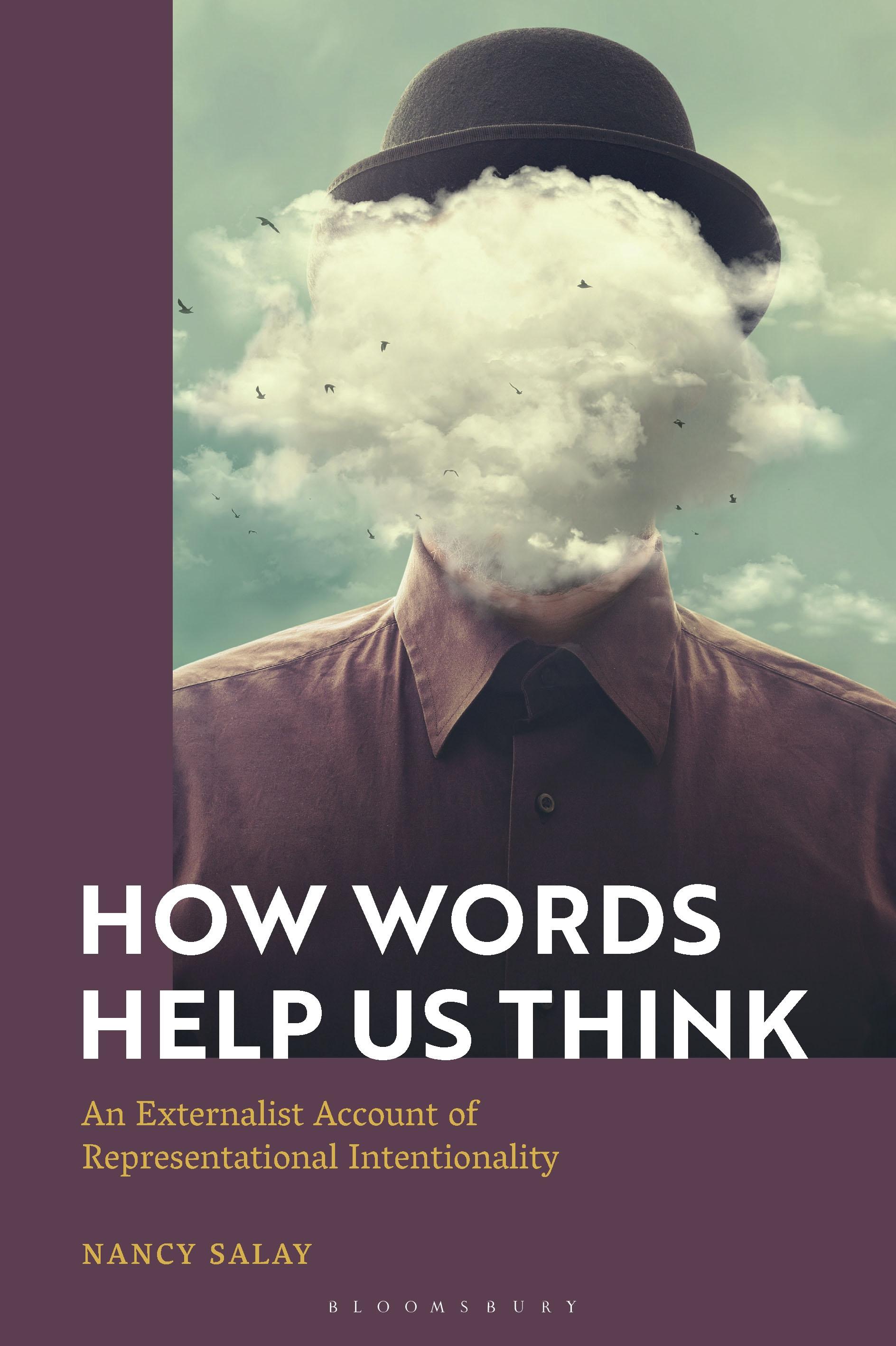
A capacity to act for reasons is a key indicator of intelligence. A leaf floats this way and that as the wind currents shift, a drone moves up or down with the movements of its controller, but a cognitive agent decides to walk to the store to get some food. This deliberative capacity to think through hypothetical situations, to choose between the grocery store or the restaurant, requires representational intentionality, the ability to think about real and possible situations in the world. According to the mainstream zeitgeist in the cognitive sciences, this capacity exhaustively reduces to lower level processes and, as a consequence, cognitive research has been driven increasingly inwards and downwards to focus on activity at the neural and molecular levels.
Here, Nancy Salay argues that this move is deeply misguided. After revealing the central problems with this internalist idea, Salay puts forward an externalist paradigm of intentionality supported by recent empirical work in neuroscience, computer science, philosophy, animal cognition and developmental psychology. Drawing all of these insights together, she provides a unified framework in which to situate externalist views of intentionality, making progress towards a viable theory of cognition. This is a comprehensive theoretical guide and a valuable empirical resource for those who view cognition through an extended and enactive lens.
Here, Nancy Salay argues that this move is deeply misguided. After revealing the central problems with this internalist idea, Salay puts forward an externalist paradigm of intentionality supported by recent empirical work in neuroscience, computer science, philosophy, animal cognition and developmental psychology. Drawing all of these insights together, she provides a unified framework in which to situate externalist views of intentionality, making progress towards a viable theory of cognition. This is a comprehensive theoretical guide and a valuable empirical resource for those who view cognition through an extended and enactive lens.
Paga facilmente con carta, Klarna, Apple Pay o Google Pay. Non sei soddisfatto? Hai sempre 14 giorni per il rimborso. Leggi di più nei nostri termini. Per qualsiasi domanda, scrivici a hello@memmo.org.
Memmo rende lo studio più facile, ovunque tu sia nel mondo. Qui trovi i tuoi libri di testo e strumenti di studio intelligenti, tutto in un unico posto: riassunti, quiz, podcast e flashcard. E poi c'è Ted, il tuo compagno di studio che risponde a ogni tua domanda. Oltre 50.000 studenti studiano già qui: è stato creato per aiutarti a imparare più velocemente e a stressarti meno.