
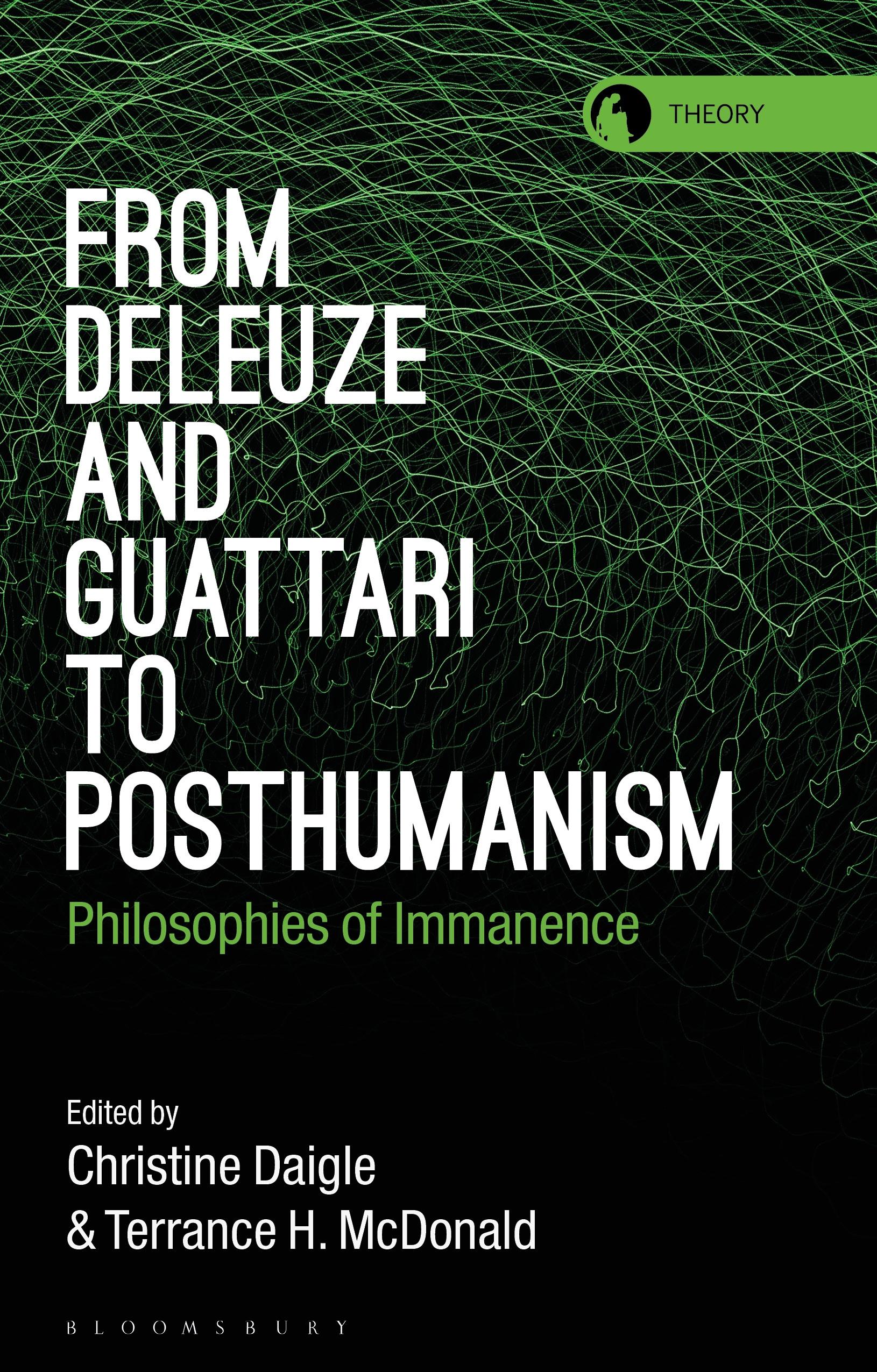
Uncovering the theoretical and creative interconnections between posthumanism and philosophies of immanence, this volume explores the influence of the philosophy of immanence on posthuman theory; the varied reworkings of immanence for the nonhuman turn; and the new pathways for critical thinking created by the combination of these monumental discourses.
With the philosophy of Gilles Deleuze and Félix Guattari serving as a vibrant node of immanence, this volume maps a multiplicity of pathways from Deleuze, Guattari and their theoretical allies – including Spinoza and Nietzsche – to posthuman thought. As positions that insist, respectively, on the equal yet distinct powers of mind and body (immanence) and the urgent need to dismantle human privilege and exceptionality (posthumanism), each chapter reveals concepts for rethinking established notions of being, thought, experience, and life.
The authors here take examples from a range of different media, including literature and contemporary cinema, featuring films such as Enthiran/The Robot (India, 2010) and CHAPPiE (USA/Mexico, 2015), and new developments in technology and theory. In doing so, they investigate Deleuzian and Guattarian posthumanism from a variety of political and ethical frameworks and perspectives, from afro-pessimism to feminist thought, disability studies, biopolitics, and social justice.
Countering the dualisms of Cartesian philosophy and flattening the hierarchies imposed by Humanism, From Deleuze and Guattari to Posthumanism launches vital interrogations of established knowledge and sparks the critical reflection necessary for life in the posthuman era.
With the philosophy of Gilles Deleuze and Félix Guattari serving as a vibrant node of immanence, this volume maps a multiplicity of pathways from Deleuze, Guattari and their theoretical allies – including Spinoza and Nietzsche – to posthuman thought. As positions that insist, respectively, on the equal yet distinct powers of mind and body (immanence) and the urgent need to dismantle human privilege and exceptionality (posthumanism), each chapter reveals concepts for rethinking established notions of being, thought, experience, and life.
The authors here take examples from a range of different media, including literature and contemporary cinema, featuring films such as Enthiran/The Robot (India, 2010) and CHAPPiE (USA/Mexico, 2015), and new developments in technology and theory. In doing so, they investigate Deleuzian and Guattarian posthumanism from a variety of political and ethical frameworks and perspectives, from afro-pessimism to feminist thought, disability studies, biopolitics, and social justice.
Countering the dualisms of Cartesian philosophy and flattening the hierarchies imposed by Humanism, From Deleuze and Guattari to Posthumanism launches vital interrogations of established knowledge and sparks the critical reflection necessary for life in the posthuman era.
Paga facilmente con carta, Klarna, Apple Pay o Google Pay. Non sei soddisfatto? Hai sempre 14 giorni per il rimborso. Leggi di più nei nostri termini. Per qualsiasi domanda, scrivici a hello@memmo.org.
Memmo rende lo studio più facile, ovunque tu sia nel mondo. Qui trovi i tuoi libri di testo e strumenti di studio intelligenti, tutto in un unico posto: riassunti, quiz, podcast e flashcard. E poi c'è Ted, il tuo compagno di studio che risponde a ogni tua domanda. Oltre 50.000 studenti studiano già qui: è stato creato per aiutarti a imparare più velocemente e a stressarti meno.