
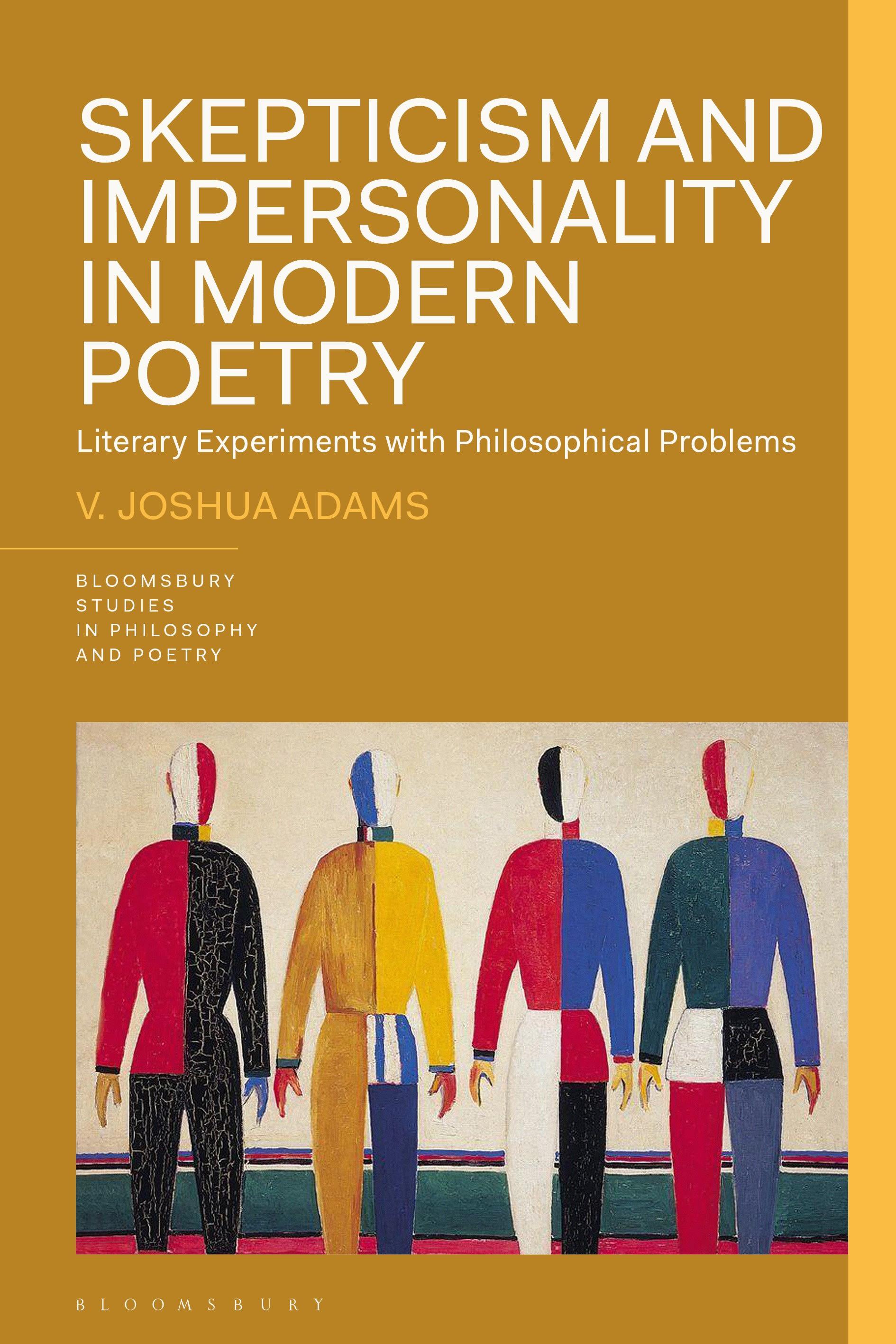
Modern literature is often described in terms of its impersonality. What is the significance of this fact?
In Skepticism and Impersonality, V. Joshua Adams follows the history of impersonality in modern poetry from Mallarmé and Eliot through to the present, engaging with work by major poets and critics, but also contemporary philosophers. Rather than seeing impersonality exclusively as a literary historical phenomenon, Adams argues that we should understand it as an attempt to address skeptical problems arising from the limitations of first-person experience.
Defending impersonality as a response to skeptical problems, including doubts about the publicity of our experiences, our knowledge of other minds, the capacity of our language to describe the world, the relationship between mind and body, and the fictionality and continuity of our sense of self, Adams analyzes what he calls “experiments in impersonality” as means of working through skeptical doubt. The writers discussed transform this doubt into art, whilst also ironizing it as corrosive and self-defeating. Ultimately this leads Adams to reinterpret literary impersonality as a therapeutic philosophical project.
Skepticism and Impersonality promises a new theoretical justification for our practical interest in literary texts, to renovate our conception of how those texts might do philosophical work, and to expand our sense of what a philosophical poem can be.
In Skepticism and Impersonality, V. Joshua Adams follows the history of impersonality in modern poetry from Mallarmé and Eliot through to the present, engaging with work by major poets and critics, but also contemporary philosophers. Rather than seeing impersonality exclusively as a literary historical phenomenon, Adams argues that we should understand it as an attempt to address skeptical problems arising from the limitations of first-person experience.
Defending impersonality as a response to skeptical problems, including doubts about the publicity of our experiences, our knowledge of other minds, the capacity of our language to describe the world, the relationship between mind and body, and the fictionality and continuity of our sense of self, Adams analyzes what he calls “experiments in impersonality” as means of working through skeptical doubt. The writers discussed transform this doubt into art, whilst also ironizing it as corrosive and self-defeating. Ultimately this leads Adams to reinterpret literary impersonality as a therapeutic philosophical project.
Skepticism and Impersonality promises a new theoretical justification for our practical interest in literary texts, to renovate our conception of how those texts might do philosophical work, and to expand our sense of what a philosophical poem can be.
Pagine: 248
Categoria: Litteraturvetenskap & Teori
e-ISBN: 9781350259669
Peso di spedizione: 1.2 kg
Spedito in: 1-2 giorni
Paga facilmente con carta, Klarna, Apple Pay o Google Pay. Non sei soddisfatto? Hai sempre 14 giorni per il rimborso. Leggi di più nei nostri termini. Per qualsiasi domanda, scrivici a hello@memmo.org.
Memmo rende lo studio più facile, ovunque tu sia nel mondo. Qui trovi i tuoi libri di testo e strumenti di studio intelligenti, tutto in un unico posto: riassunti, quiz, podcast e flashcard. E poi c'è Ted, il tuo compagno di studio che risponde a ogni tua domanda. Oltre 50.000 studenti studiano già qui: è stato creato per aiutarti a imparare più velocemente e a stressarti meno.