
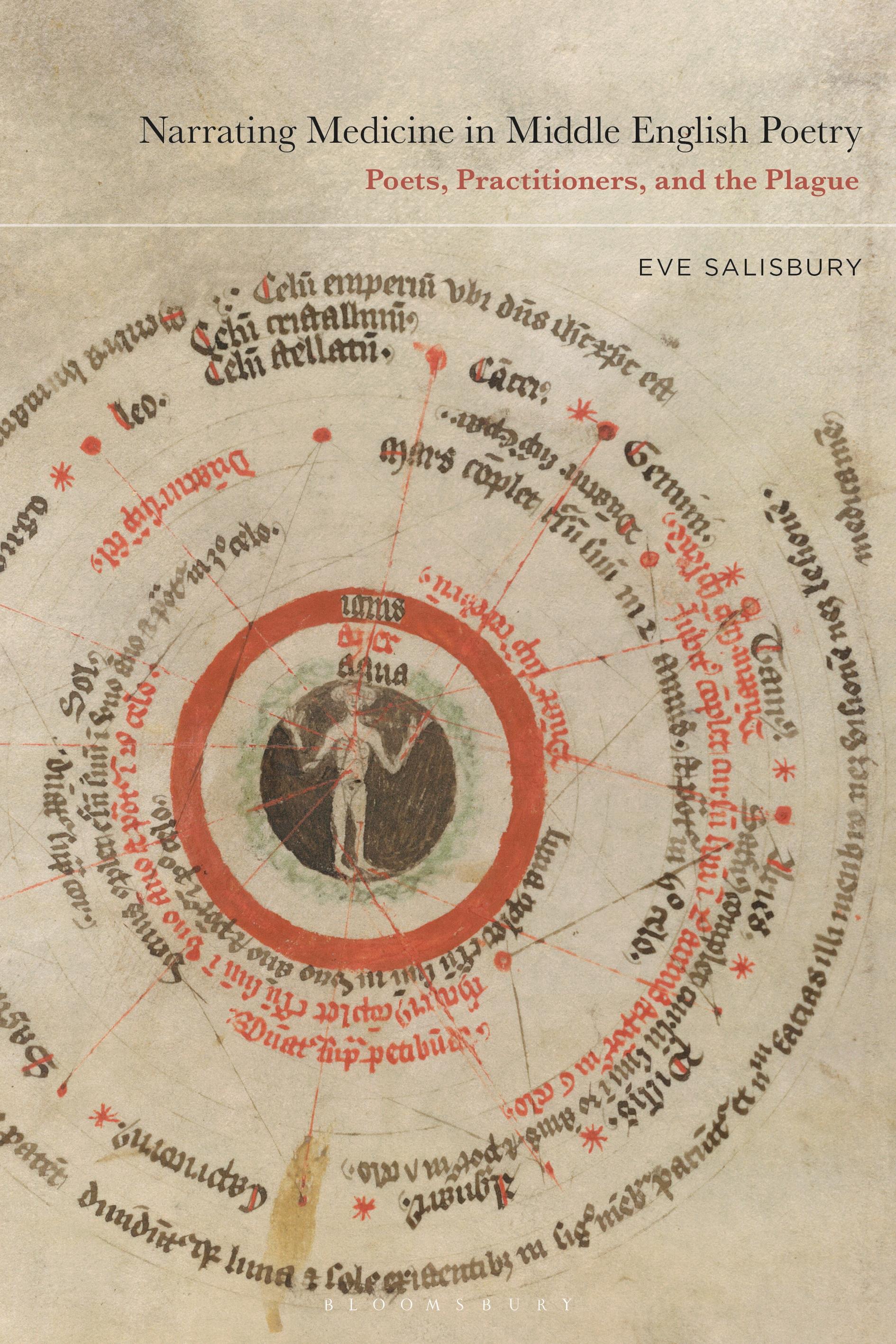
Exploring medical writing in England in the 100+ years after the advent of the “Great Mortality”, this book examines the storytelling practices of poets, patients, and physicians in the midst of a medieval public health crisis and demonstrates how literary narratives enable us to see a kinship between poetry and the healing arts.
Looking at how we can learn to diagnose a text as if we were diagnosing a body, Salisbury provides new insights into how we can recuperate the voices of those afflicted by illness in medieval texts when we have no direct testimony.
She considers how we interpret stories told by patients in narratives mediated by others, ways that women factor into the shaping of a medical canon, how medical writing intersects with religious belief and memorial practices governed by the Church, and ways that regimens of health benefit a population in the throes of an epidemic.
Looking at how we can learn to diagnose a text as if we were diagnosing a body, Salisbury provides new insights into how we can recuperate the voices of those afflicted by illness in medieval texts when we have no direct testimony.
She considers how we interpret stories told by patients in narratives mediated by others, ways that women factor into the shaping of a medical canon, how medical writing intersects with religious belief and memorial practices governed by the Church, and ways that regimens of health benefit a population in the throes of an epidemic.
Paga facilmente con carta, Klarna, Apple Pay o Google Pay. Non sei soddisfatto? Hai sempre 14 giorni per il rimborso. Leggi di più nei nostri termini. Per qualsiasi domanda, scrivici a hello@memmo.org.
Memmo rende lo studio più facile, ovunque tu sia nel mondo. Qui trovi i tuoi libri di testo e strumenti di studio intelligenti, tutto in un unico posto: riassunti, quiz, podcast e flashcard. E poi c'è Ted, il tuo compagno di studio che risponde a ogni tua domanda. Oltre 50.000 studenti studiano già qui: è stato creato per aiutarti a imparare più velocemente e a stressarti meno.