
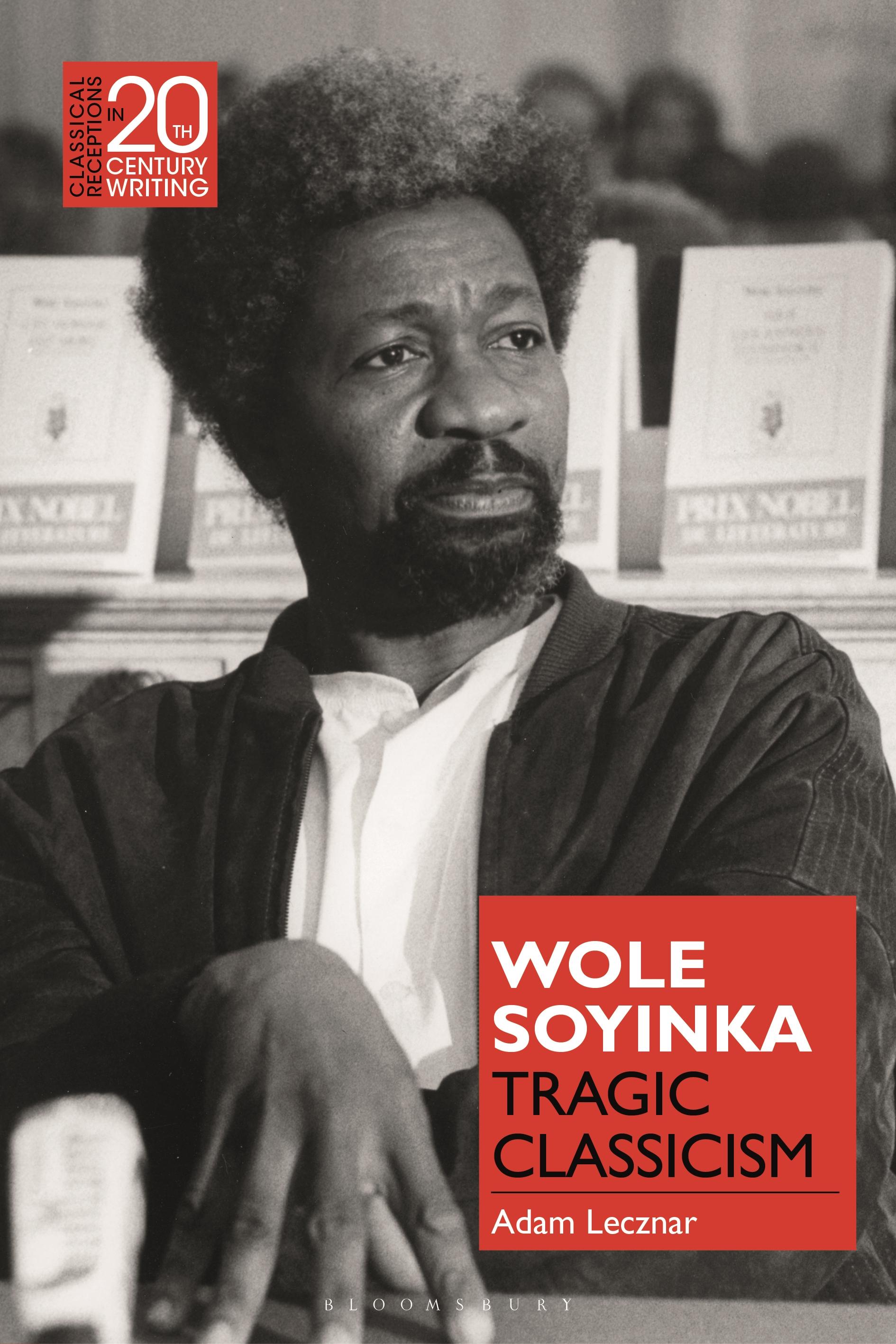
This book presents a new way of looking at Wole Soyinka's engagement with the classical past. Nigerian author and activist Wole Soyinka was the first Black African author to win the Nobel Prize for Literature (1986), and his oeuvre has become seminal to postcolonial literature. The frequent references to Greece and Rome that appear across Soyinka's writings, most explicitly in his 1973 play The Bacchae of Euripides: A Communion Rite, have often received short shrift in scholarship on the author. At best, these references have been understood as elements of Soyinka's prodigiously inclusive humanism. At worst, Soyinka's critics argue that the invocations of a Graeco-Roman past testify to the neocolonial cultural affinities that make Soyinka a problematic figure in postcolonial literary history.
Adam Lecznar challenges these readings, arguing that Soyinka's authorial outlook is informed by a hybrid form of classicism in which he aligns the legacy of Greece and Rome with the African cultural heritage to form a narrative of literary and cultural value that looks beyond the ancient Mediterranean. This book turns a spotlight on how Soyinka's appeals to Greece and Rome inform his reflections on Africa's ancient past, Yoruba belief, and the modern significance of tragedy. Lecznar contends that Soyinka's notion of classicism is not solely dependent on the memory of the Graeco-Roman past. Rather, it draws innovatively on a global cultural heritage to advance revolutionary and futural narratives of history and identity.
Adam Lecznar challenges these readings, arguing that Soyinka's authorial outlook is informed by a hybrid form of classicism in which he aligns the legacy of Greece and Rome with the African cultural heritage to form a narrative of literary and cultural value that looks beyond the ancient Mediterranean. This book turns a spotlight on how Soyinka's appeals to Greece and Rome inform his reflections on Africa's ancient past, Yoruba belief, and the modern significance of tragedy. Lecznar contends that Soyinka's notion of classicism is not solely dependent on the memory of the Graeco-Roman past. Rather, it draws innovatively on a global cultural heritage to advance revolutionary and futural narratives of history and identity.
Pagine: 176
Categoria: Litteraturvetenskap & Teori
e-ISBN: 9781350249066
Peso di spedizione: 1.2 kg
Spedito in: 1-2 giorni
Paga facilmente con carta, Klarna, Apple Pay o Google Pay. Non sei soddisfatto? Hai sempre 14 giorni per il rimborso. Leggi di più nei nostri termini. Per qualsiasi domanda, scrivici a hello@memmo.org.
Memmo rende lo studio più facile, ovunque tu sia nel mondo. Qui trovi i tuoi libri di testo e strumenti di studio intelligenti, tutto in un unico posto: riassunti, quiz, podcast e flashcard. E poi c'è Ted, il tuo compagno di studio che risponde a ogni tua domanda. Oltre 50.000 studenti studiano già qui: è stato creato per aiutarti a imparare più velocemente e a stressarti meno.