
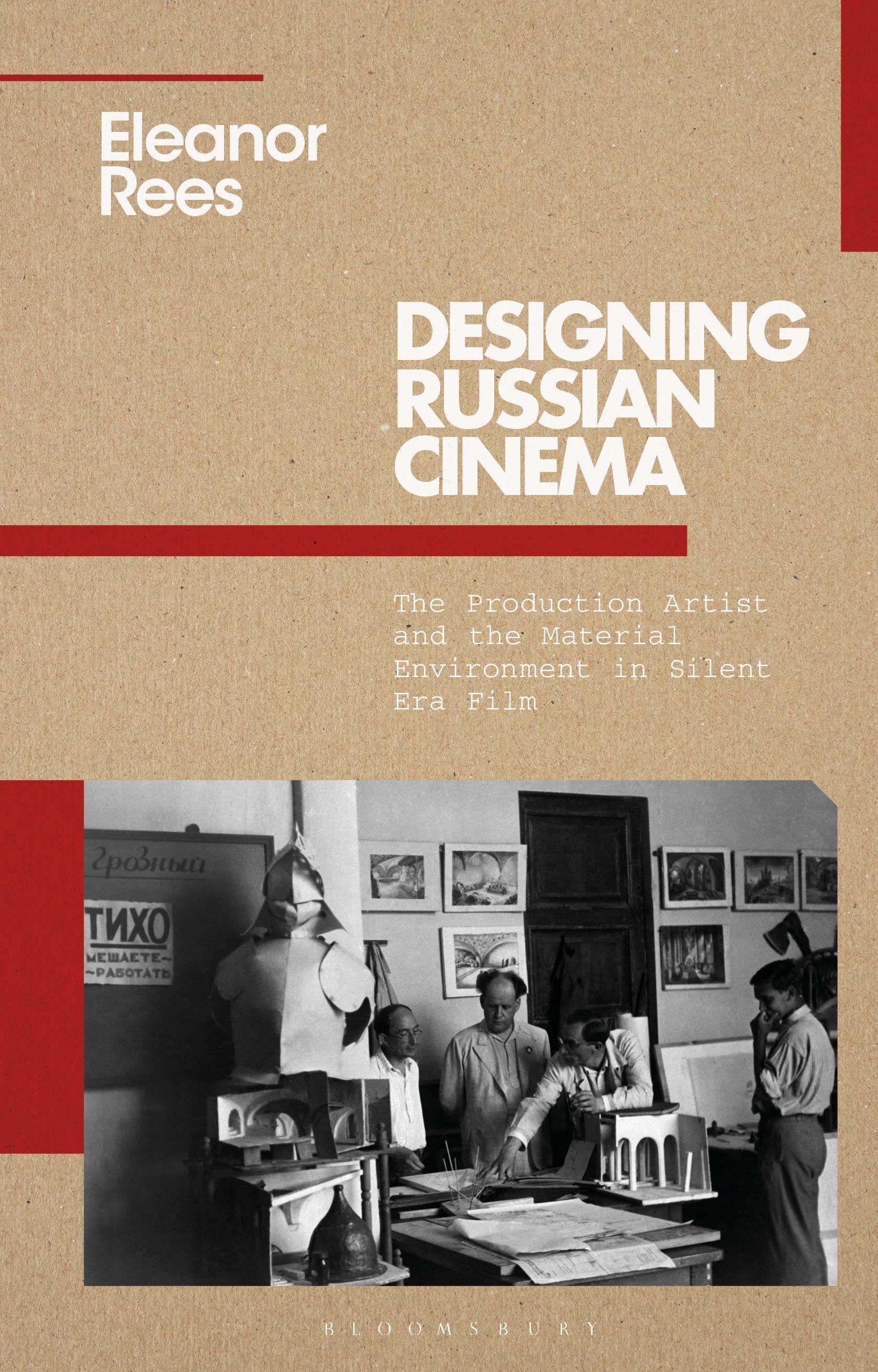
This book highlights the significant role that production artists played when Russian cinema was still in its infancy. It uncovers Russian cinema's connections with other art forms, examining how production artists drew on both aesthetic traditions and modernist experiments in architecture, painting and theatre as they explored the new medium of cinema and its potential to engender new models of perception and forms of audience engagement.
Drawing on set design sketches, archival documents and film-makers' memoirs, Eleanor Rees reveals how less-canonical films such as Behind the Screen (Kulisy ekrana, 1919) and Palace and Fortress (Dvorets i krepost´, 1923), were remarkable from a design perspective, and also provides new readings of well-known films, such as Children of the Age (Deti veka, 1915) and Strike (Stachka, 1925). Rees brings to light information on significant but understudied figures such as Vladimir Egorov and Sergei Kozlovskii, and highlights the involvement of well-known figures such as Lev Kuleshov and Aleksandr Rodchenko.
Unlike the majority of late Imperial directors and camera operators, many early-Russian production artists continued to work in cinema in the Soviet era and to draw on practices forged before the 1917 Revolution. In spanning the entire silent era, this book highlights the often overlooked continuities between the late-Imperial and early-Soviet periods of cinema, thus questioning traditional historical periodisations.
Drawing on set design sketches, archival documents and film-makers' memoirs, Eleanor Rees reveals how less-canonical films such as Behind the Screen (Kulisy ekrana, 1919) and Palace and Fortress (Dvorets i krepost´, 1923), were remarkable from a design perspective, and also provides new readings of well-known films, such as Children of the Age (Deti veka, 1915) and Strike (Stachka, 1925). Rees brings to light information on significant but understudied figures such as Vladimir Egorov and Sergei Kozlovskii, and highlights the involvement of well-known figures such as Lev Kuleshov and Aleksandr Rodchenko.
Unlike the majority of late Imperial directors and camera operators, many early-Russian production artists continued to work in cinema in the Soviet era and to draw on practices forged before the 1917 Revolution. In spanning the entire silent era, this book highlights the often overlooked continuities between the late-Imperial and early-Soviet periods of cinema, thus questioning traditional historical periodisations.
Pagine: 256
Categoria: Film- & Medievetenskap
e-ISBN: 9781350246379
Peso di spedizione: 1.2 kg
Spedito in: 1-2 giorni
Paga facilmente con carta, Klarna, Apple Pay o Google Pay. Non sei soddisfatto? Hai sempre 14 giorni per il rimborso. Leggi di più nei nostri termini. Per qualsiasi domanda, scrivici a hello@memmo.org.
Memmo rende lo studio più facile, ovunque tu sia nel mondo. Qui trovi i tuoi libri di testo e strumenti di studio intelligenti, tutto in un unico posto: riassunti, quiz, podcast e flashcard. E poi c'è Ted, il tuo compagno di studio che risponde a ogni tua domanda. Oltre 50.000 studenti studiano già qui: è stato creato per aiutarti a imparare più velocemente e a stressarti meno.