
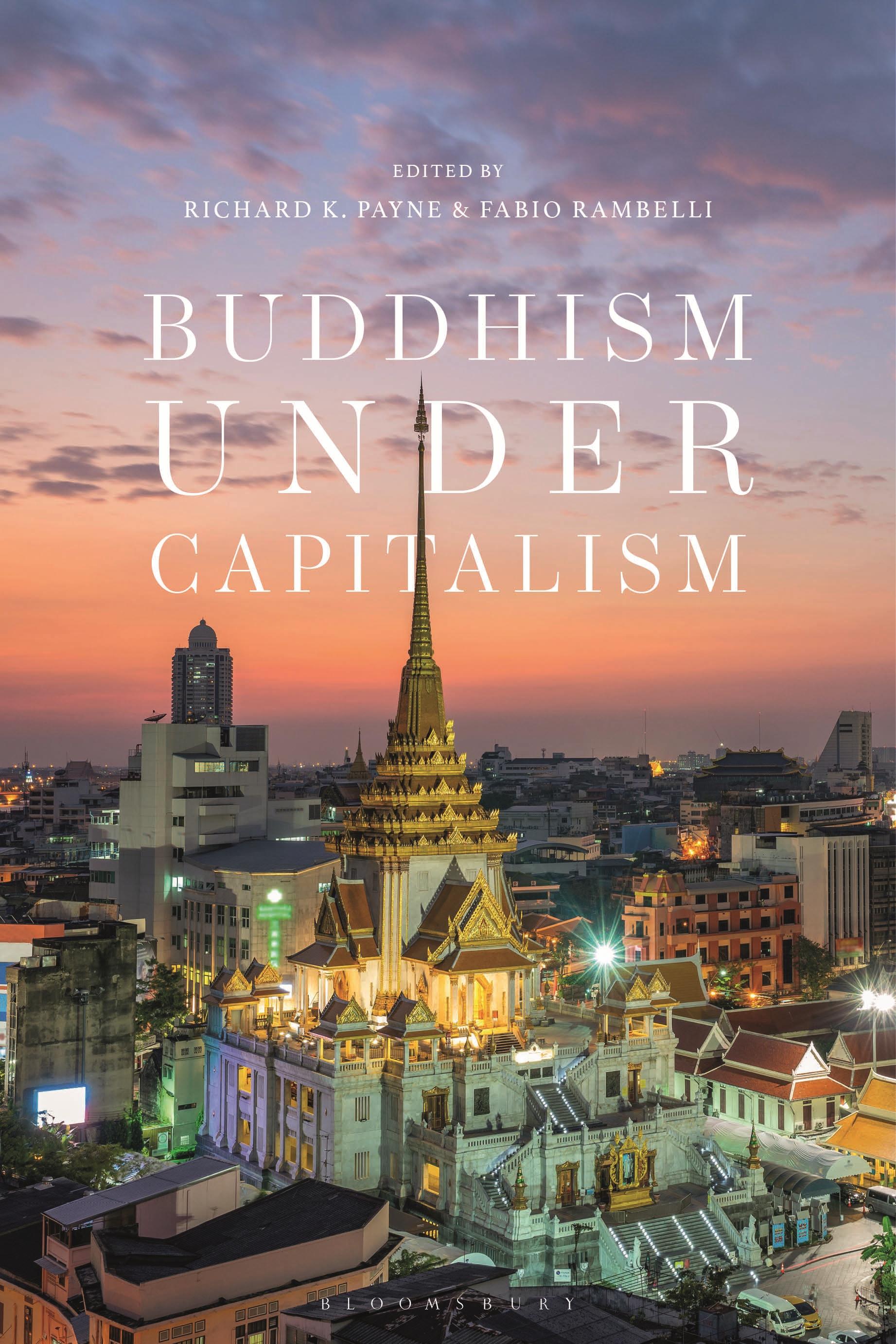
This book argues that Buddhism has spread due to globalized capitalism, and explores how capitalism is also impacting Buddhists and Buddhism today.
Edited by two leading scholars in Buddhist studies, the book examines how capitalism and neo-liberalism have shaped global perceptions of Buddhism, as well as specific local practices and attitudes. It examines the institutional practices that sustained the spread of Buddhism for two and a half millennia, and the adaptation of Buddhist institutions in contemporary, global economic systems-particularly in Europe and the United States over the last century and half.
These innovative essays on the interfaces between Buddhism and capitalism will prompt readers to rethink the connection between Buddhism and secular society. Case studies include digital capitalism, tourism, and monasticism, and are drawn from the USA, Tibet, China, Japan, and Thailand.
Edited by two leading scholars in Buddhist studies, the book examines how capitalism and neo-liberalism have shaped global perceptions of Buddhism, as well as specific local practices and attitudes. It examines the institutional practices that sustained the spread of Buddhism for two and a half millennia, and the adaptation of Buddhist institutions in contemporary, global economic systems-particularly in Europe and the United States over the last century and half.
These innovative essays on the interfaces between Buddhism and capitalism will prompt readers to rethink the connection between Buddhism and secular society. Case studies include digital capitalism, tourism, and monasticism, and are drawn from the USA, Tibet, China, Japan, and Thailand.
Paga facilmente con carta, Klarna, Apple Pay o Google Pay. Non sei soddisfatto? Hai sempre 14 giorni per il rimborso. Leggi di più nei nostri termini. Per qualsiasi domanda, scrivici a hello@memmo.org.
Memmo rende lo studio più facile, ovunque tu sia nel mondo. Qui trovi i tuoi libri di testo e strumenti di studio intelligenti, tutto in un unico posto: riassunti, quiz, podcast e flashcard. E poi c'è Ted, il tuo compagno di studio che risponde a ogni tua domanda. Oltre 50.000 studenti studiano già qui: è stato creato per aiutarti a imparare più velocemente e a stressarti meno.