
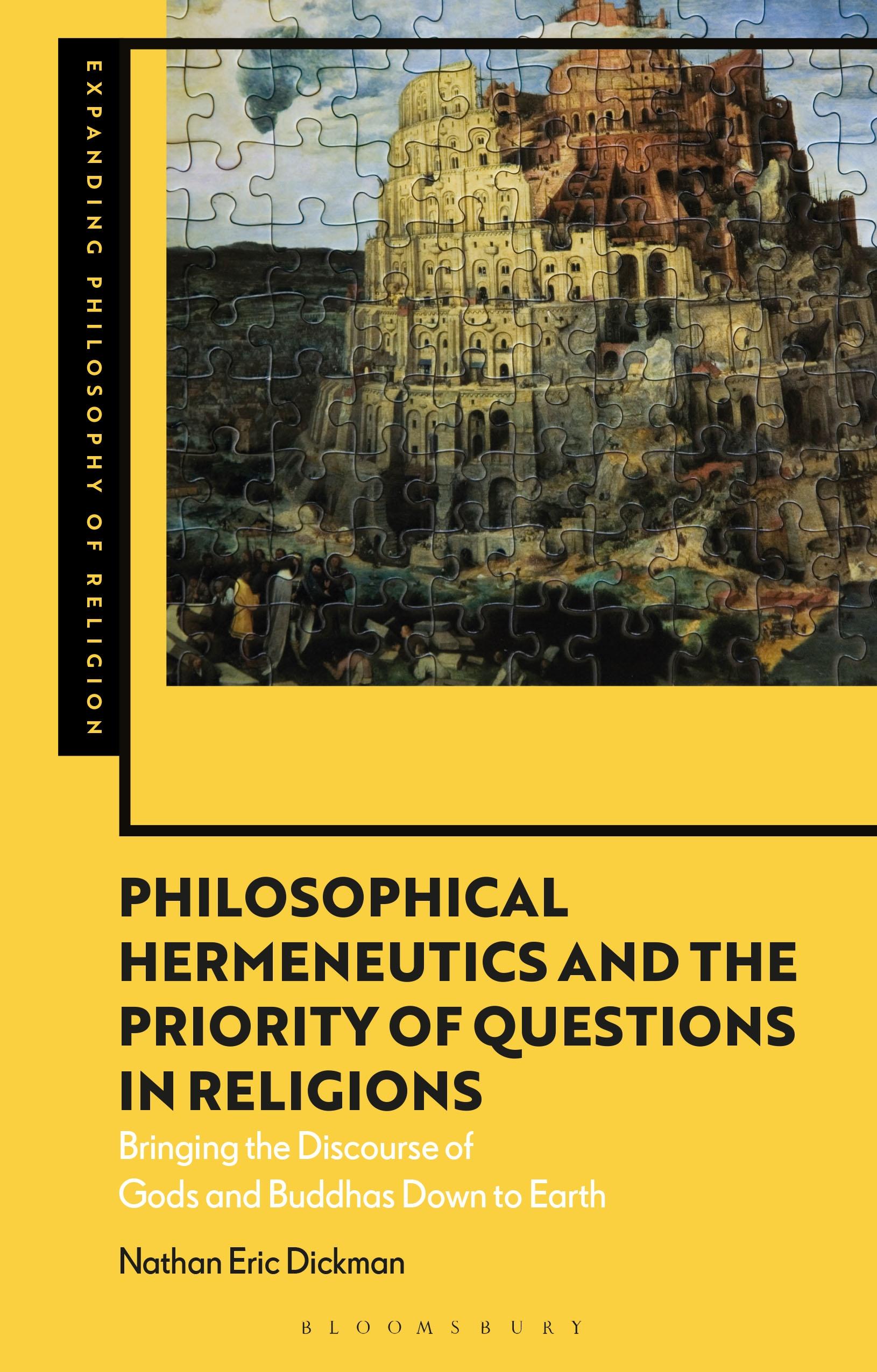
Buddhas, gods, prophets and oracles are often depicted as asking questions. But what are we to understand when Jesus asks “Who do you say that I am?”, or Mazu, the Classical Zen master asks, “Why do you seek outside?" Is their questioning a power or weakness? Is it something human beings are only capable of due to our finitude? Is there any kind of question that is a power?
Focusing on three case studies of questions in divine discourse on the level of story - the god depicted in the Jewish Bible, the master Mazu in his recorded sayings literature, and Jesus as he is depicted in canonized Christian Gospels - Nathan Eric Dickman meditates on human responses to divine questions. He considers the purpose of interreligious dialogue and the provocative kind of questions that seem to purposefully decenter us, drawing on methods from confessionally-oriented hermeneutics and skills from critical thinking.
He allows us to see alternative ways of interpreting religious texts through approaches that look beyond reading a text for the improvement of our own religion or for access to some metaphysically transcendent reality. This is the first step in a phenomenology of religions that is inclusive, diverse, relevant and grounded in the world we live in.
Focusing on three case studies of questions in divine discourse on the level of story - the god depicted in the Jewish Bible, the master Mazu in his recorded sayings literature, and Jesus as he is depicted in canonized Christian Gospels - Nathan Eric Dickman meditates on human responses to divine questions. He considers the purpose of interreligious dialogue and the provocative kind of questions that seem to purposefully decenter us, drawing on methods from confessionally-oriented hermeneutics and skills from critical thinking.
He allows us to see alternative ways of interpreting religious texts through approaches that look beyond reading a text for the improvement of our own religion or for access to some metaphysically transcendent reality. This is the first step in a phenomenology of religions that is inclusive, diverse, relevant and grounded in the world we live in.
Paga facilmente con carta, Klarna, Apple Pay o Google Pay. Non sei soddisfatto? Hai sempre 14 giorni per il rimborso. Leggi di più nei nostri termini. Per qualsiasi domanda, scrivici a hello@memmo.org.
Memmo rende lo studio più facile, ovunque tu sia nel mondo. Qui trovi i tuoi libri di testo e strumenti di studio intelligenti, tutto in un unico posto: riassunti, quiz, podcast e flashcard. E poi c'è Ted, il tuo compagno di studio che risponde a ogni tua domanda. Oltre 50.000 studenti studiano già qui: è stato creato per aiutarti a imparare più velocemente e a stressarti meno.