
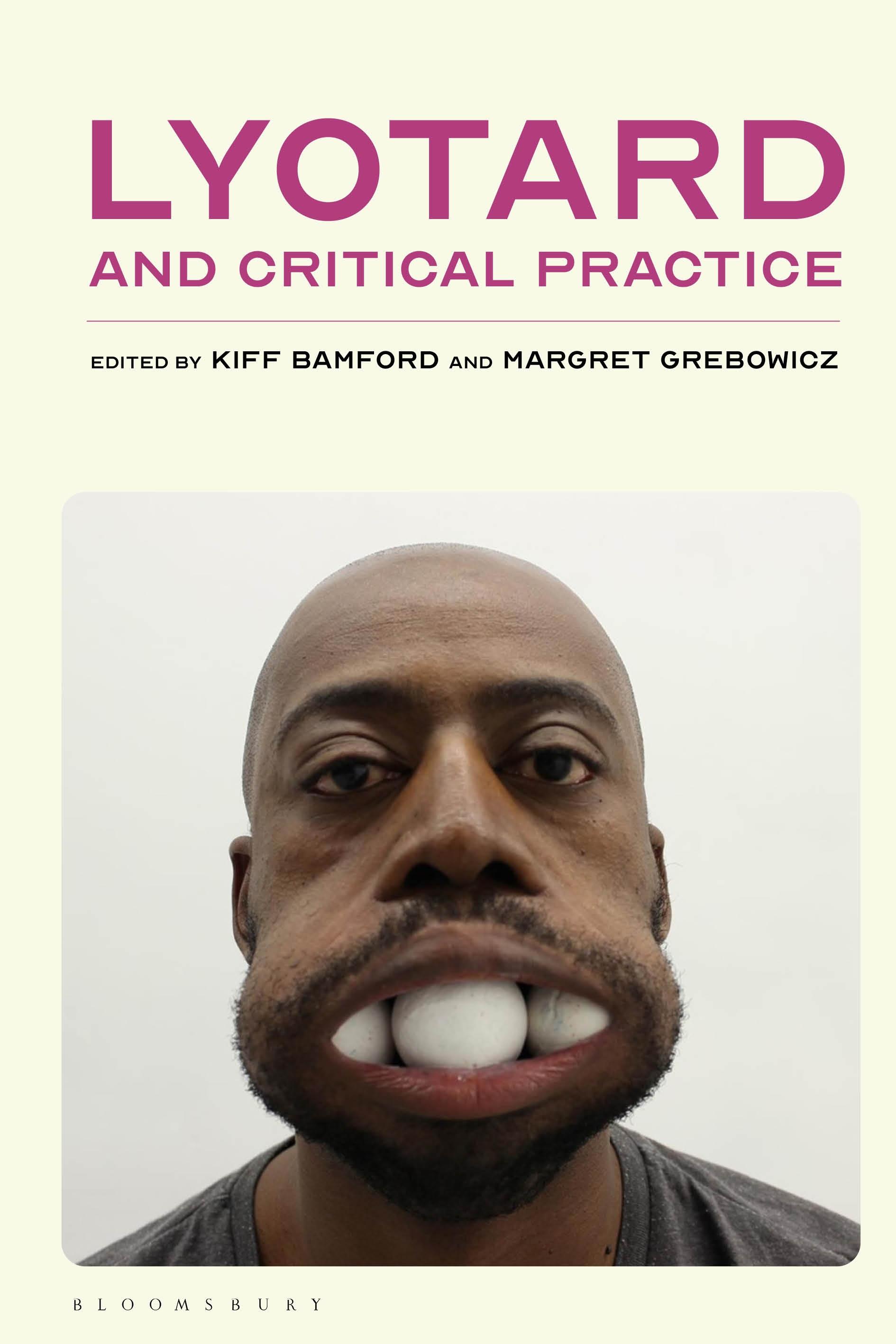
Jean-François Lyotard (1924-1998) was one of the previous century's most provocative thinkers. Can his work help us address the crisis currently facing the humanities?
The dominant economic discourse sees the humanities as “low-value,” an irritation at best. Lyotard helps us to think against this pervasive dismissal of creative activity, not by defending the honor of the humanities, but by inviting critical practices which aggravate this irritation. Critical practices trouble what counts as critique, embrace incertitude, and listen for silenced voices.
Twelve essays by artists and researchers take up Lyotard's invitation and begin to develop the idea of critical practice in the contemporary context. Three sections titled “What resists thinking;” “Long views and distances” and “Why art practice?” address contemporary concerns like affectivity, aesthetics, economic imperatives, militarism, pedagogy, posthumanism, and the closure of what in Lyotard's time was called "the West."
Four short pieces by Lyotard intervene in and buttress the discussion: “Apathy in Theory” and “Interview with Art Présent,” here published in English for the first time, and “Affect-phrase” and “The Other's Rights” republished here to highlight his prescient concern for that which cannot be articulated.
The dominant economic discourse sees the humanities as “low-value,” an irritation at best. Lyotard helps us to think against this pervasive dismissal of creative activity, not by defending the honor of the humanities, but by inviting critical practices which aggravate this irritation. Critical practices trouble what counts as critique, embrace incertitude, and listen for silenced voices.
Twelve essays by artists and researchers take up Lyotard's invitation and begin to develop the idea of critical practice in the contemporary context. Three sections titled “What resists thinking;” “Long views and distances” and “Why art practice?” address contemporary concerns like affectivity, aesthetics, economic imperatives, militarism, pedagogy, posthumanism, and the closure of what in Lyotard's time was called "the West."
Four short pieces by Lyotard intervene in and buttress the discussion: “Apathy in Theory” and “Interview with Art Présent,” here published in English for the first time, and “Affect-phrase” and “The Other's Rights” republished here to highlight his prescient concern for that which cannot be articulated.
Paga facilmente con carta, Klarna, Apple Pay o Google Pay. Non sei soddisfatto? Hai sempre 14 giorni per il rimborso. Leggi di più nei nostri termini. Per qualsiasi domanda, scrivici a hello@memmo.org.
Memmo rende lo studio più facile, ovunque tu sia nel mondo. Qui trovi i tuoi libri di testo e strumenti di studio intelligenti, tutto in un unico posto: riassunti, quiz, podcast e flashcard. E poi c'è Ted, il tuo compagno di studio che risponde a ogni tua domanda. Oltre 50.000 studenti studiano già qui: è stato creato per aiutarti a imparare più velocemente e a stressarti meno.