
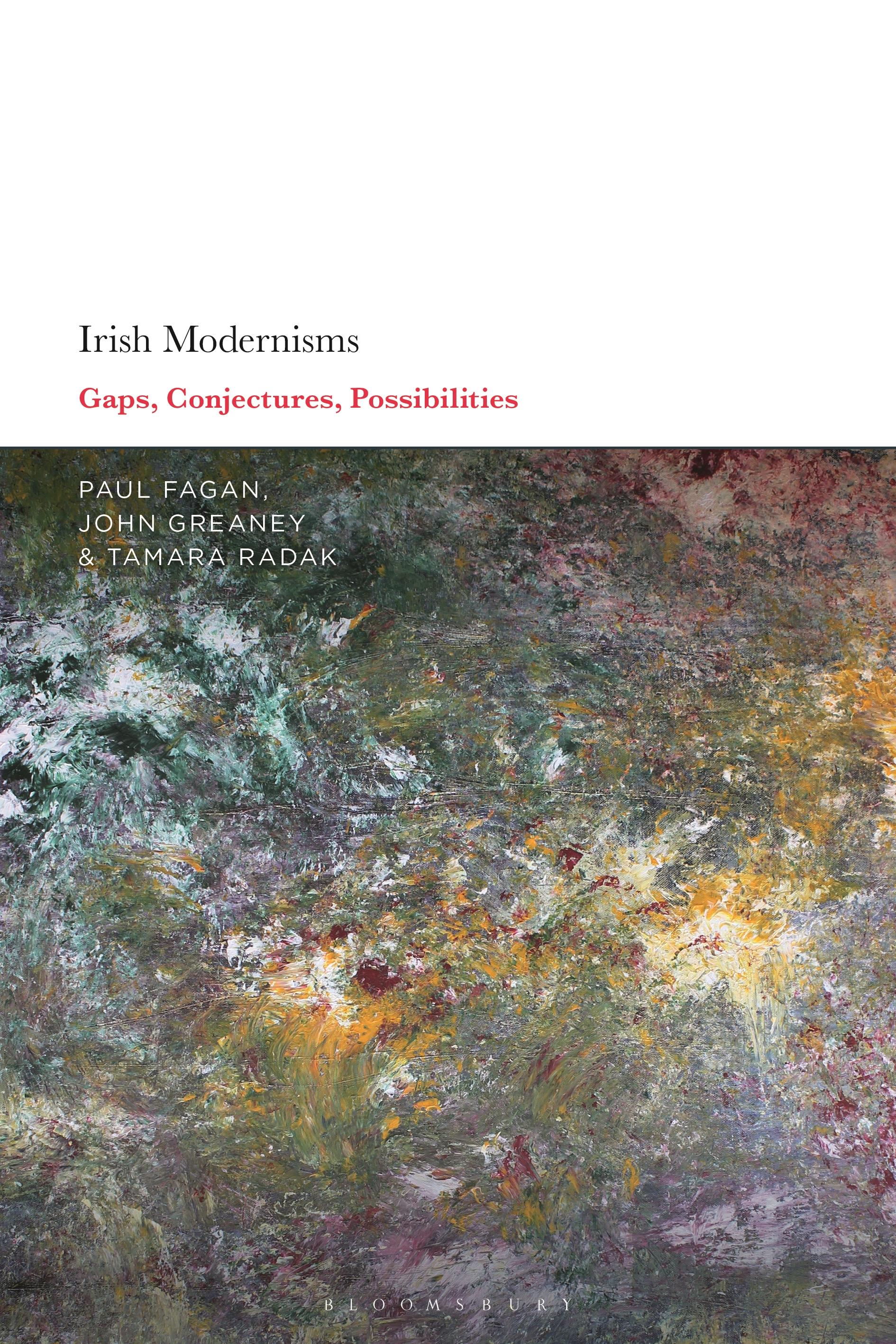
This book focuses on previously unexplored gaps, limitations and avenues of inquiry within the canon and scholarship of Irish modernism to develop a more attentive and fluid theoretical account of this conceptual field. Foregrounding interfaces between literary, visual, musical, dramatic, cinematic, epistolary and journalistic media, these essays introduce previously peripheral writers, artists and cultural figures to debates about Irish modernism: Hannah Berman, Ethel Colburn Mayne, Mary Devenport O'Neill, Sheila Wingfield, Freda Laughton, Rhoda Coghill, Elizabeth Bowen, Máirtín Ó Cadhain, Joseph Plunkett, Liam O'Flaherty, Edward Martyn, Jane Barlow, Seosamh Ó Torna, Jack B. Yeats and Brian O'Nolan all feature here to interrogate the term's implications.
Probing Irish modernism's responsiveness to contemporary theory beyond postcolonial and Irish studies, Irish Modernisms: Gaps, Conjectures, Possibilities uses diverse paradigms, including weak theory, biopolitics, posthumanism and the nonhuman turn, to rethink Irish modernism's organising themes: the material body, language, mediality, canonicity, war, state violence, prostitution, temporality, death, mourning. Across the volume, cutting-edge work from queer theory and gender studies draws urgent attention to the too-often marginalized importance of women's writing and queer expression to the Irish avant-garde, while critical reappraisals of the coordinates of race and national history compel us to ask not only where and when Irish modernism occurred, but also whose modernism it was?
Probing Irish modernism's responsiveness to contemporary theory beyond postcolonial and Irish studies, Irish Modernisms: Gaps, Conjectures, Possibilities uses diverse paradigms, including weak theory, biopolitics, posthumanism and the nonhuman turn, to rethink Irish modernism's organising themes: the material body, language, mediality, canonicity, war, state violence, prostitution, temporality, death, mourning. Across the volume, cutting-edge work from queer theory and gender studies draws urgent attention to the too-often marginalized importance of women's writing and queer expression to the Irish avant-garde, while critical reappraisals of the coordinates of race and national history compel us to ask not only where and when Irish modernism occurred, but also whose modernism it was?
Pagine: 280
Categoria: Litteraturvetenskap & Teori
e-ISBN: 9781350177383
Peso di spedizione: 1.2 kg
Spedito in: 1-2 giorni
Paga facilmente con carta, Klarna, Apple Pay o Google Pay. Non sei soddisfatto? Hai sempre 14 giorni per il rimborso. Leggi di più nei nostri termini. Per qualsiasi domanda, scrivici a hello@memmo.org.
Memmo rende lo studio più facile, ovunque tu sia nel mondo. Qui trovi i tuoi libri di testo e strumenti di studio intelligenti, tutto in un unico posto: riassunti, quiz, podcast e flashcard. E poi c'è Ted, il tuo compagno di studio che risponde a ogni tua domanda. Oltre 50.000 studenti studiano già qui: è stato creato per aiutarti a imparare più velocemente e a stressarti meno.