
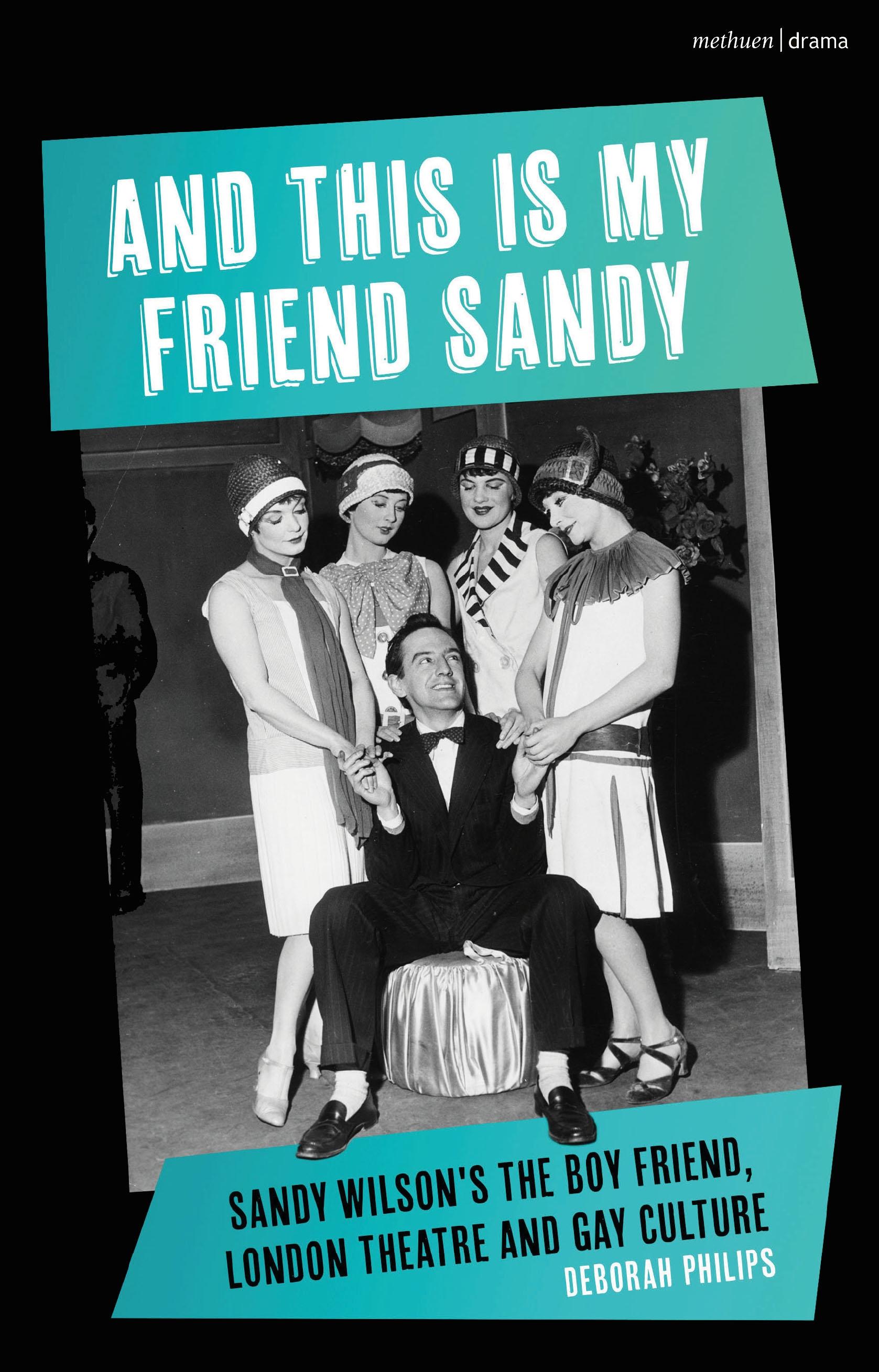
This book situates the production of The Boy Friend and the Players' Theatre in the context of a post-war London and reads The Boy Friend, and Wilson's later work, as exercises in contemporary camp. It argues for Wilson as a significant and transitional figure both for musical theatre and for modes of homosexuality in the context of the pre-Wolfenden 1950s.
Sandy Wilson's The Boy Friend is one of the most successful British musicals ever written. First produced at the Players' Theatre Club in London in 1953 it transferred to the West End and Broadway, making a star out of Julie Andrews and gave Twiggy a leading role in Ken Russell's 1971 film adaptation.
Despite this success, little is known about Wilson, a gay writer working in Britain in the 1950s at a time when homosexuality was illegal.
Drawing on original research assembled from the Wilson archives at the Harry Ransom Center, this is the first critical study of Wilson as a key figure of 1950s British theatre. Beginning with the often overlooked context of the Players' Theatre Club through to Wilson's relationship to industry figures such as Binkie Beaumont, Noël Coward and Ivor Novello, this study explores the work in the broader history of Soho gay culture. As well as a critical perspective on The Boy Friend, later works such as Divorce Me, Darling!, The Buccaneer and Valmouth are examined as well as uncompleted musical versions of Pygmalion and Goodbye to Berlin to give a comprehensive and original perspective on one of British theatre's most celebrated yet overlooked talents.
Sandy Wilson's The Boy Friend is one of the most successful British musicals ever written. First produced at the Players' Theatre Club in London in 1953 it transferred to the West End and Broadway, making a star out of Julie Andrews and gave Twiggy a leading role in Ken Russell's 1971 film adaptation.
Despite this success, little is known about Wilson, a gay writer working in Britain in the 1950s at a time when homosexuality was illegal.
Drawing on original research assembled from the Wilson archives at the Harry Ransom Center, this is the first critical study of Wilson as a key figure of 1950s British theatre. Beginning with the often overlooked context of the Players' Theatre Club through to Wilson's relationship to industry figures such as Binkie Beaumont, Noël Coward and Ivor Novello, this study explores the work in the broader history of Soho gay culture. As well as a critical perspective on The Boy Friend, later works such as Divorce Me, Darling!, The Buccaneer and Valmouth are examined as well as uncompleted musical versions of Pygmalion and Goodbye to Berlin to give a comprehensive and original perspective on one of British theatre's most celebrated yet overlooked talents.
Paga facilmente con carta, Klarna, Apple Pay o Google Pay. Non sei soddisfatto? Hai sempre 14 giorni per il rimborso. Leggi di più nei nostri termini. Per qualsiasi domanda, scrivici a hello@memmo.org.
Memmo rende lo studio più facile, ovunque tu sia nel mondo. Qui trovi i tuoi libri di testo e strumenti di studio intelligenti, tutto in un unico posto: riassunti, quiz, podcast e flashcard. E poi c'è Ted, il tuo compagno di studio che risponde a ogni tua domanda. Oltre 50.000 studenti studiano già qui: è stato creato per aiutarti a imparare più velocemente e a stressarti meno.