
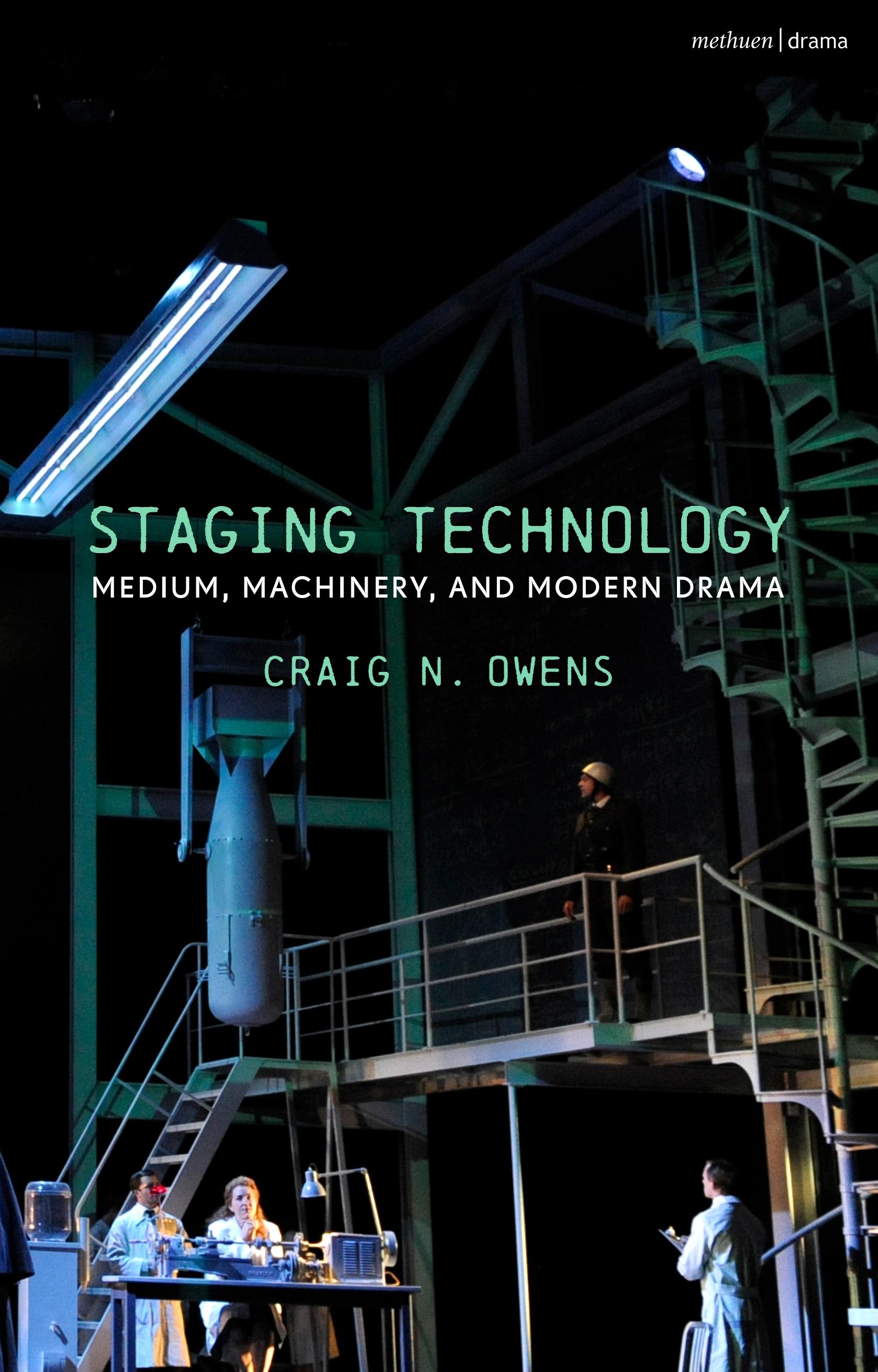
Through an examination of a range of performance works ranging from Jean Cocteau's ballet The Eiffel Tower Wedding Party (1921) to Julie Taymor's monumental production of Spider-Man: Turn off the Dark (2010) and Mexican playwright Isaac Gomez's La Ruta(2018), Staging Technology asks what becomes visible when we encounter plays, operas, and musicals that are themselves about fraught human/machine interfaces. What can theatrical production tell us about the way technology functions as an element of ideology and power in narrative drama? About the limits of the human?
Staging Technology bridges the divide between the technical practices of theatre production and critical, theoretical approaches to interpreting drama to examine the way dramatic theatre's technologies are shaped by larger historical, ideological, and economic forces. At the same time, it examines how those technologies themselves have influenced 20th and 21st-century playwrights', composers', and librettists' choice of subject matter for staged representation.
Examining performance works from the modernist and post-modern European and American canon of drama, opera, and performance art including works by Eugène Ionesco, Samuel Beckett, Heiner Müller, Sophie Treadwell, Harold Pinter, Tristan Tzara, Jean Cocteau, Arthur Miller, Robert Pinsky, John Adams and Alice Goodman, Staging Technology transforms how we think about the interrelationship between theatre practice, performance, narrative drama, and text. In it Craig N. Owens synthesizes approaches to interpretation and practice from disparate realms, offering insights into over-arching ways of making meaning that are illustrated through focused and innovative readings of individual works for the dramatic stage. Staging Technology provides a new and transformative paradigm for thinking about dramatic literature, the practices of representational theatre production, and the historical and social contexts they inhabit.
Staging Technology bridges the divide between the technical practices of theatre production and critical, theoretical approaches to interpreting drama to examine the way dramatic theatre's technologies are shaped by larger historical, ideological, and economic forces. At the same time, it examines how those technologies themselves have influenced 20th and 21st-century playwrights', composers', and librettists' choice of subject matter for staged representation.
Examining performance works from the modernist and post-modern European and American canon of drama, opera, and performance art including works by Eugène Ionesco, Samuel Beckett, Heiner Müller, Sophie Treadwell, Harold Pinter, Tristan Tzara, Jean Cocteau, Arthur Miller, Robert Pinsky, John Adams and Alice Goodman, Staging Technology transforms how we think about the interrelationship between theatre practice, performance, narrative drama, and text. In it Craig N. Owens synthesizes approaches to interpretation and practice from disparate realms, offering insights into over-arching ways of making meaning that are illustrated through focused and innovative readings of individual works for the dramatic stage. Staging Technology provides a new and transformative paradigm for thinking about dramatic literature, the practices of representational theatre production, and the historical and social contexts they inhabit.
Pagine: 296
Categoria: Drama, Teater & Scenkonst
e-ISBN: 9781350168589
Peso di spedizione: 1.2 kg
Spedito in: 1-2 giorni
Paga facilmente con carta, Klarna, Apple Pay o Google Pay. Non sei soddisfatto? Hai sempre 14 giorni per il rimborso. Leggi di più nei nostri termini. Per qualsiasi domanda, scrivici a hello@memmo.org.
Memmo rende lo studio più facile, ovunque tu sia nel mondo. Qui trovi i tuoi libri di testo e strumenti di studio intelligenti, tutto in un unico posto: riassunti, quiz, podcast e flashcard. E poi c'è Ted, il tuo compagno di studio che risponde a ogni tua domanda. Oltre 50.000 studenti studiano già qui: è stato creato per aiutarti a imparare più velocemente e a stressarti meno.