
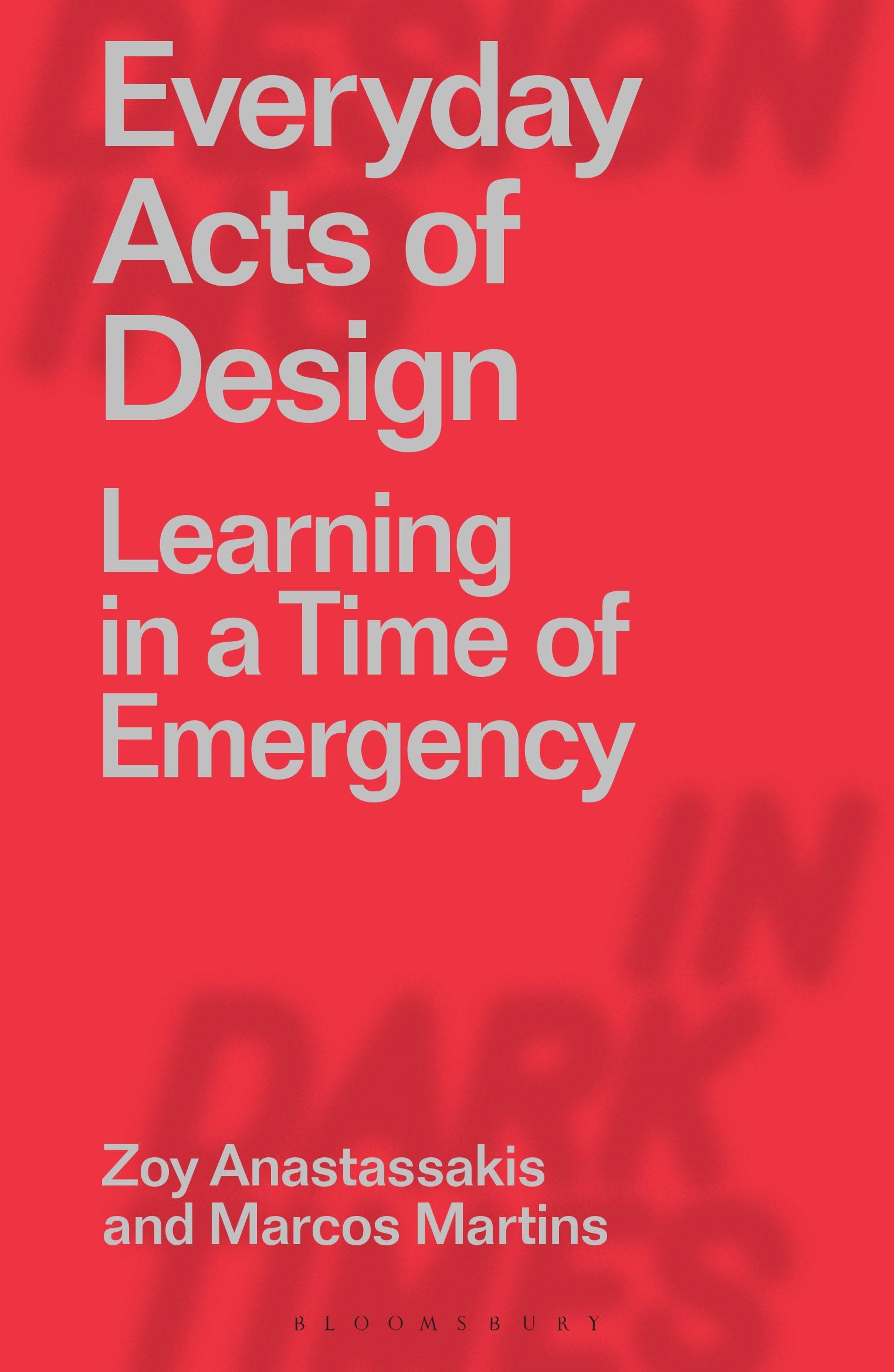
From 2016-2018, teachers and students at the State University of Rio de Janeiro in Brazil found themselves at the center of a crisis. A new right-wing government suspended payment of staff salaries and student scholarships and stopped funding basic maintenance. Everyday Acts of Design tells the story of how the university's design school reacted to the crisis: not with despondency or despair, but by promoting a series of radical teaching experiments.
Working together, students, alumni, teachers, and staff embraced hope as a method, demonstrating that it is possible to find positive answers even in a situation of imminent collapse. The case histories narrated in the book provide alternatives to conventional forms of design teaching, but also prove that education can be a site for democracy and the practice of freedom. Deprived of the activity of creating for an imagined future, design can still assert a way forward through practices of making and experimenting. Drawing on their personal experience of designing and teaching design at a time of crisis, the authors assert the value of a design attitude which, in refusing to be delimited by the forethought of designing, insists on a radical, experimental practice as a means of survival.
Although a multitude of voices, both assenting and dissenting, are present in the text, the authors do not hide their own position, making it clear that their stories are not a balanced mosaic of polyphonic positions. The contemporary attack on free public education, fueled by the growth of far-right regimes all over the globe, relies on a totalizing univocal conception of 'truth' as a means to shut down a plurality of thinking. Against this, this book adopts the partiality of historical and cultural truths as an urgent and explicit counter-attack. Adopting a consciously international approach,the authors connect and compare their own story with those of similar design teaching movements in the Global South, such as the Barefoot School in India, and ZIVA, founded by Saki Mafunkikwa in Zimbabwe.
Working together, students, alumni, teachers, and staff embraced hope as a method, demonstrating that it is possible to find positive answers even in a situation of imminent collapse. The case histories narrated in the book provide alternatives to conventional forms of design teaching, but also prove that education can be a site for democracy and the practice of freedom. Deprived of the activity of creating for an imagined future, design can still assert a way forward through practices of making and experimenting. Drawing on their personal experience of designing and teaching design at a time of crisis, the authors assert the value of a design attitude which, in refusing to be delimited by the forethought of designing, insists on a radical, experimental practice as a means of survival.
Although a multitude of voices, both assenting and dissenting, are present in the text, the authors do not hide their own position, making it clear that their stories are not a balanced mosaic of polyphonic positions. The contemporary attack on free public education, fueled by the growth of far-right regimes all over the globe, relies on a totalizing univocal conception of 'truth' as a means to shut down a plurality of thinking. Against this, this book adopts the partiality of historical and cultural truths as an urgent and explicit counter-attack. Adopting a consciously international approach,the authors connect and compare their own story with those of similar design teaching movements in the Global South, such as the Barefoot School in India, and ZIVA, founded by Saki Mafunkikwa in Zimbabwe.
Pagine: 272
Categoria: Konst, Design & Fotografi
e-ISBN: 9781350162419
Peso di spedizione: 1.2 kg
Spedito in: 1-2 giorni
Paga facilmente con carta, Klarna, Apple Pay o Google Pay. Non sei soddisfatto? Hai sempre 14 giorni per il rimborso. Leggi di più nei nostri termini. Per qualsiasi domanda, scrivici a hello@memmo.org.
Memmo rende lo studio più facile, ovunque tu sia nel mondo. Qui trovi i tuoi libri di testo e strumenti di studio intelligenti, tutto in un unico posto: riassunti, quiz, podcast e flashcard. E poi c'è Ted, il tuo compagno di studio che risponde a ogni tua domanda. Oltre 50.000 studenti studiano già qui: è stato creato per aiutarti a imparare più velocemente e a stressarti meno.