
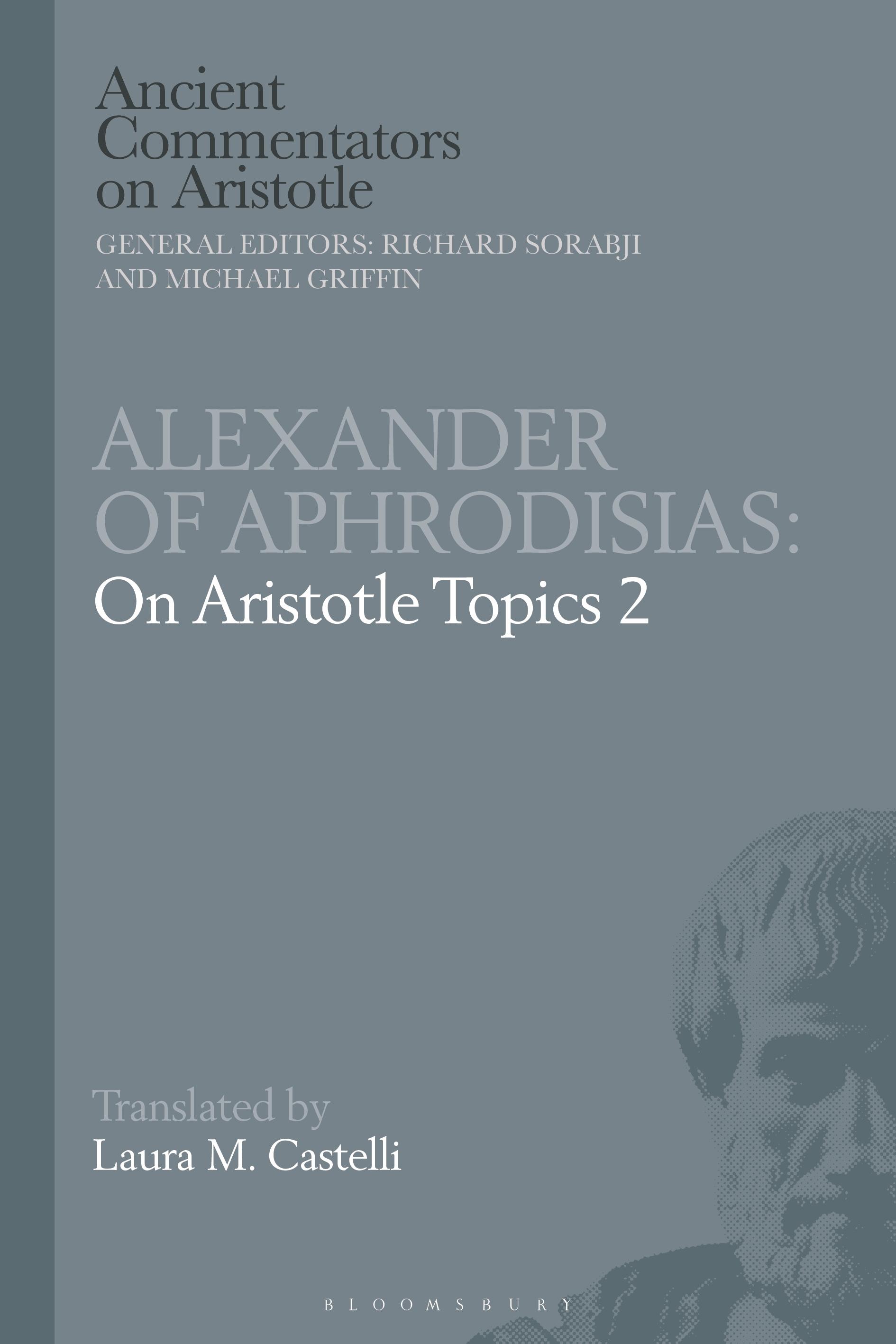
Aristotle's Topics is a handbook for dialectic, which can be understood as a philosophical debate between a questioner and a respondent. In book 2, Aristotle mainly develops strategies for making deductions about 'accidents', which are properties that might or might not belong to a subject (for instance, Socrates has five fingers, but might have had six), and about properties that simply belong to a subject without further specification.
In the present commentary, here translated into English for the first time, Alexander develops a careful study of Aristotle's text. He preserves objections and replies from other philosophers whose work is now lost, such as the Stoics. He also offers an invaluable picture of the tradition of Aristotelian logic down to his time, including innovative attempts to unify Aristotle's guidance for dialectic with his general theory of deductive argument (the syllogism), found in the Analytics.
The work will be of interest not only for its perspective on ancient logic, rhetoric, and debate, but also for its continuing influence on argument in the Middle Ages and later.
In the present commentary, here translated into English for the first time, Alexander develops a careful study of Aristotle's text. He preserves objections and replies from other philosophers whose work is now lost, such as the Stoics. He also offers an invaluable picture of the tradition of Aristotelian logic down to his time, including innovative attempts to unify Aristotle's guidance for dialectic with his general theory of deductive argument (the syllogism), found in the Analytics.
The work will be of interest not only for its perspective on ancient logic, rhetoric, and debate, but also for its continuing influence on argument in the Middle Ages and later.
Paga facilmente con carta, Klarna, Apple Pay o Google Pay. Non sei soddisfatto? Hai sempre 14 giorni per il rimborso. Leggi di più nei nostri termini. Per qualsiasi domanda, scrivici a hello@memmo.org.
Memmo rende lo studio più facile, ovunque tu sia nel mondo. Qui trovi i tuoi libri di testo e strumenti di studio intelligenti, tutto in un unico posto: riassunti, quiz, podcast e flashcard. E poi c'è Ted, il tuo compagno di studio che risponde a ogni tua domanda. Oltre 50.000 studenti studiano già qui: è stato creato per aiutarti a imparare più velocemente e a stressarti meno.