
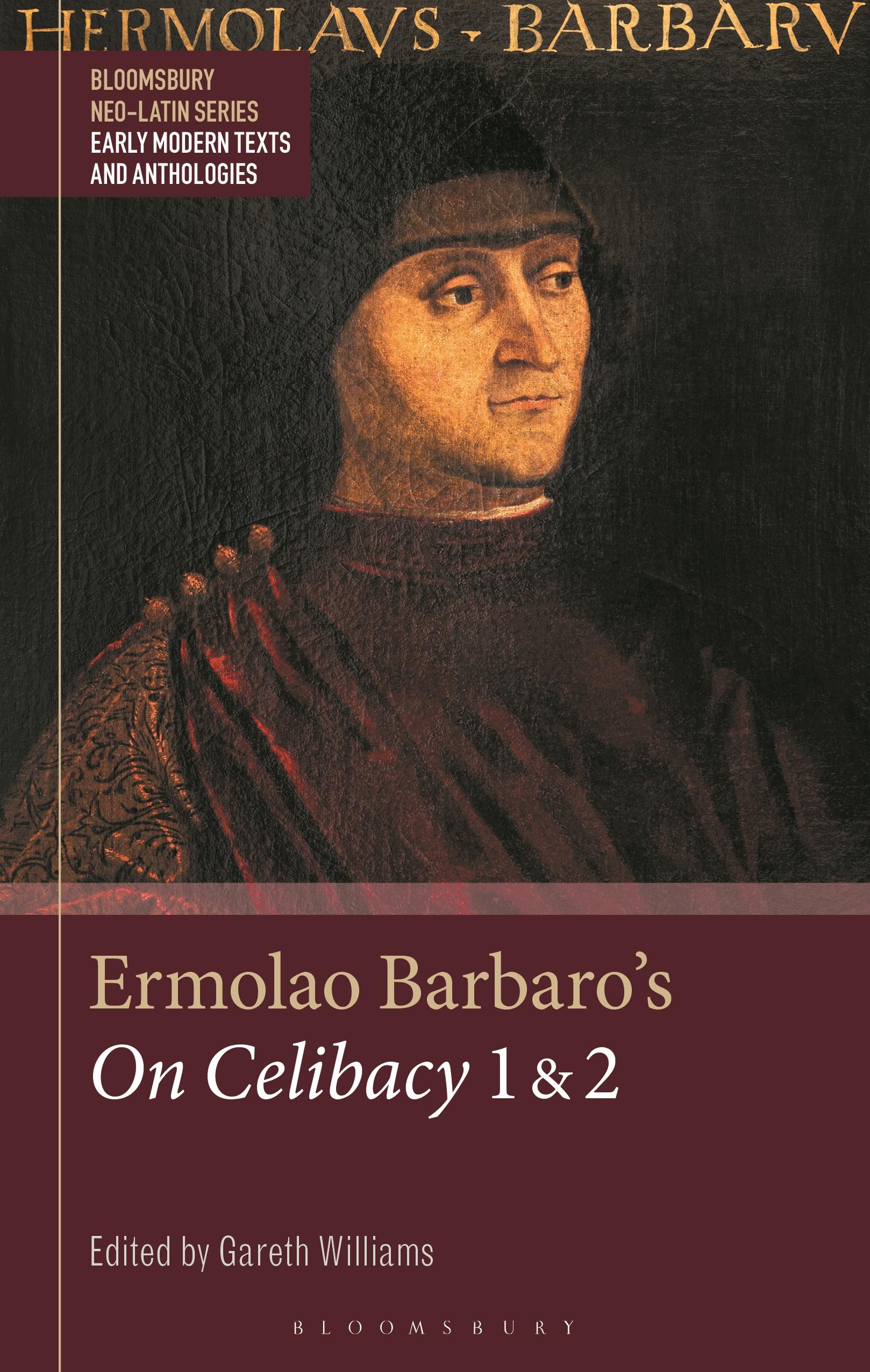
This volume offers the first annotated English translation of the first two books of On Celibacy (1473) by the eminent Venetian humanist Ermolao Barbaro (1454-93); Books 3 and 4 of On Celibacy are presented, along with Barbaro's On the Duty of the Ambassador, in the companion piece to this first volume. Setting out the historical context that crucially conditions Barbaro's advocacy of the celibate life in Books 1 and 2, the introduction examines how On Celibacy seeks to justify a contemplative existence that rejects the career path expected of a figure of Barbaro's standing within the Venetian patrician class.
Beyond setting out the essential facts of Ermolao Barbaro's life-story, Gareth Williams discusses how On Celibacy is set in counterpoise to the treatise On Marriage (1415) that was composed by Ermolao's eminent grandfather, Francesco Barbaro. If the latter's treatise was vitally concerned with the institution of marriage as a key factor in the safeguarding of family succession and the stability of patriciate participation in government at Venice, On Celibacy presents an alternative ideal whereby the celibate can proudly renounce civic life in the name of self-discovery and the pursuit of wisdom, his abilities simply unsuited to the rigors of civic life. On Celibacy is thus implicated in a much wider 15th-century debate about the claims of the contemplative as opposed to the active life – a debate that extends all the way back to Graeco-Roman antiquity.
Beyond setting out the essential facts of Ermolao Barbaro's life-story, Gareth Williams discusses how On Celibacy is set in counterpoise to the treatise On Marriage (1415) that was composed by Ermolao's eminent grandfather, Francesco Barbaro. If the latter's treatise was vitally concerned with the institution of marriage as a key factor in the safeguarding of family succession and the stability of patriciate participation in government at Venice, On Celibacy presents an alternative ideal whereby the celibate can proudly renounce civic life in the name of self-discovery and the pursuit of wisdom, his abilities simply unsuited to the rigors of civic life. On Celibacy is thus implicated in a much wider 15th-century debate about the claims of the contemplative as opposed to the active life – a debate that extends all the way back to Graeco-Roman antiquity.
Paga facilmente con carta, Klarna, Apple Pay o Google Pay. Non sei soddisfatto? Hai sempre 14 giorni per il rimborso. Leggi di più nei nostri termini. Per qualsiasi domanda, scrivici a hello@memmo.org.
Memmo rende lo studio più facile, ovunque tu sia nel mondo. Qui trovi i tuoi libri di testo e strumenti di studio intelligenti, tutto in un unico posto: riassunti, quiz, podcast e flashcard. E poi c'è Ted, il tuo compagno di studio che risponde a ogni tua domanda. Oltre 50.000 studenti studiano già qui: è stato creato per aiutarti a imparare più velocemente e a stressarti meno.