
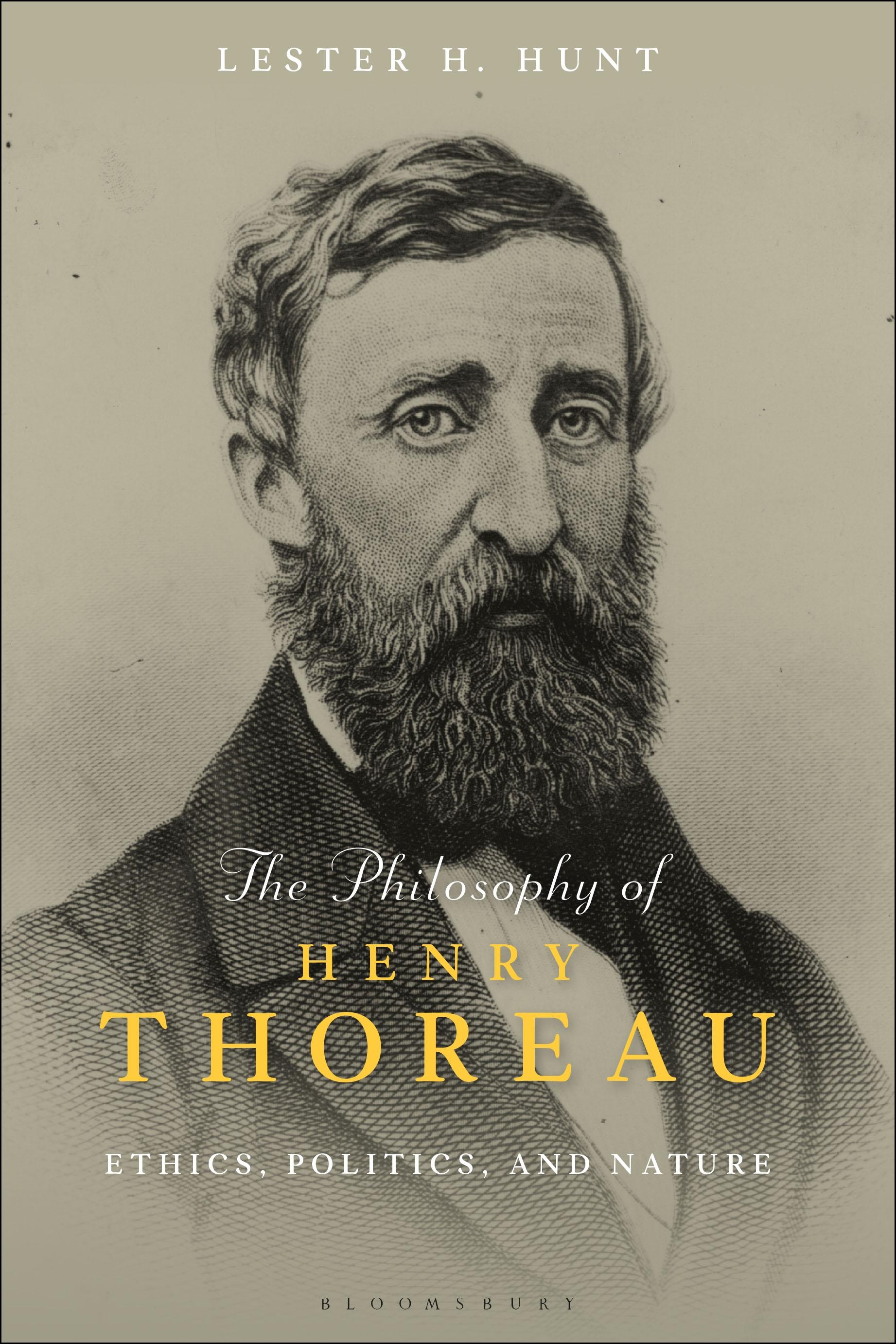
Henry Thoreau is widely considered to be one of the greatest nature writers, among whose best-known works are Walden and Walking. In this book, Lester Hunt shows that his writings have a compelling philosophical dimension as well.
Thoreau seldom argues for his ideas the way other philosophers do. Rather than setting up proofs designed to trap the reader into agreeing with him, he challenges the reader – by means of narratives, jokes, questions, and paradoxes -- to recognize possibilities previously unknown and unexplored.
Thoreau's own explorations led him to several distinctively philosophical theories: an intuitionist metaethics, an ethics based on virtue and self-realization, a politics that is fundamentally individualist and anarchist, and a secular religion in which nature is pre-eminent.
Thoreau seldom argues for his ideas the way other philosophers do. Rather than setting up proofs designed to trap the reader into agreeing with him, he challenges the reader – by means of narratives, jokes, questions, and paradoxes -- to recognize possibilities previously unknown and unexplored.
Thoreau's own explorations led him to several distinctively philosophical theories: an intuitionist metaethics, an ethics based on virtue and self-realization, a politics that is fundamentally individualist and anarchist, and a secular religion in which nature is pre-eminent.
Paga facilmente con carta, Klarna, Apple Pay o Google Pay. Non sei soddisfatto? Hai sempre 14 giorni per il rimborso. Leggi di più nei nostri termini. Per qualsiasi domanda, scrivici a hello@memmo.org.
Memmo rende lo studio più facile, ovunque tu sia nel mondo. Qui trovi i tuoi libri di testo e strumenti di studio intelligenti, tutto in un unico posto: riassunti, quiz, podcast e flashcard. E poi c'è Ted, il tuo compagno di studio che risponde a ogni tua domanda. Oltre 50.000 studenti studiano già qui: è stato creato per aiutarti a imparare più velocemente e a stressarti meno.