
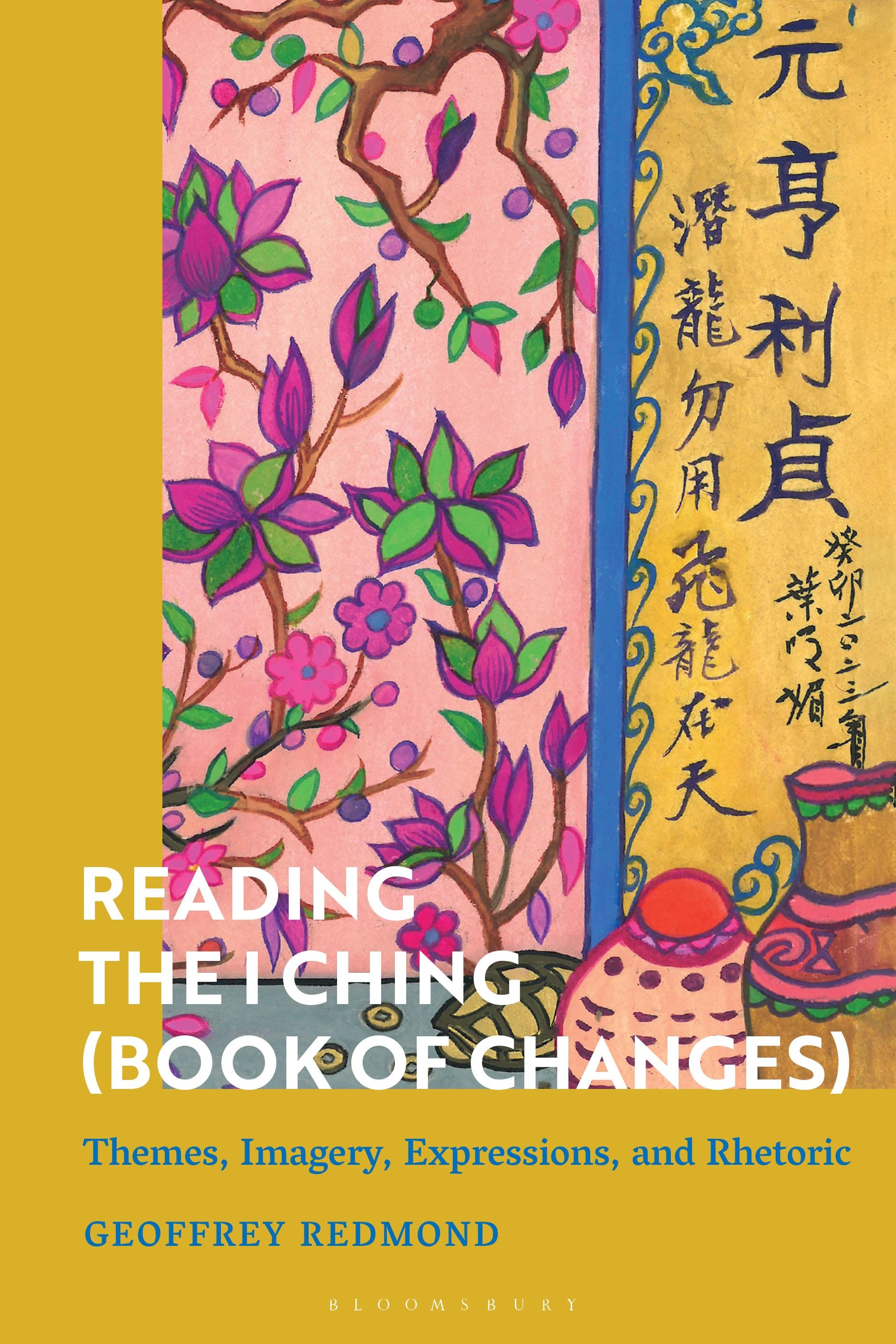
The 3,000 year old I Ching is the most esteemed of the ancient Chinese classics, yet also the most enigmatic. Reading the I Ching (Book of Changes) incorporates recent advances in scholarship, such as recently excavated texts, and demonstrates how the Zhouyi (the ancient textual layer of the I Ching) was compiled from mostly oral material and how it was organized to serve as an easily consulted compendium of divination responses.
In this book Geoffrey Redmond clarifies the meanings of the ancient text by examining use of literary devices such as prognostic terms, imagery from daily life, rhetorical tropes, metaphors, proverbs and set phrases. This provides insight on how the Zhouyi was composed and explains its use for divination. It also shows how, centuries later, the Zhouyi was adapted by the Confucians, who believed it to be the creation of ancient sages, and the source of their metaphysics and cosmology. Redmond also analyzes the Changes through a variety of philological heuristics, such as the Sapir-Whorf hypothesis, methods of analogy and anomaly, the distinction between argumentative and context dependence, as well as modern approaches such as Jungian psychology, and critical theory. Included are the interlinear Chinese text, and a glossary of key words in English, Chinese, and pinyin, making it essential reading for students studying Chinese philosophy, Chinese religion, and early Chinese history, as well as readers looking for a clear and accessible gloss of this text.
In this book Geoffrey Redmond clarifies the meanings of the ancient text by examining use of literary devices such as prognostic terms, imagery from daily life, rhetorical tropes, metaphors, proverbs and set phrases. This provides insight on how the Zhouyi was composed and explains its use for divination. It also shows how, centuries later, the Zhouyi was adapted by the Confucians, who believed it to be the creation of ancient sages, and the source of their metaphysics and cosmology. Redmond also analyzes the Changes through a variety of philological heuristics, such as the Sapir-Whorf hypothesis, methods of analogy and anomaly, the distinction between argumentative and context dependence, as well as modern approaches such as Jungian psychology, and critical theory. Included are the interlinear Chinese text, and a glossary of key words in English, Chinese, and pinyin, making it essential reading for students studying Chinese philosophy, Chinese religion, and early Chinese history, as well as readers looking for a clear and accessible gloss of this text.
Paga facilmente con carta, Klarna, Apple Pay o Google Pay. Non sei soddisfatto? Hai sempre 14 giorni per il rimborso. Leggi di più nei nostri termini. Per qualsiasi domanda, scrivici a hello@memmo.org.
Memmo rende lo studio più facile, ovunque tu sia nel mondo. Qui trovi i tuoi libri di testo e strumenti di studio intelligenti, tutto in un unico posto: riassunti, quiz, podcast e flashcard. E poi c'è Ted, il tuo compagno di studio che risponde a ogni tua domanda. Oltre 50.000 studenti studiano già qui: è stato creato per aiutarti a imparare più velocemente e a stressarti meno.