
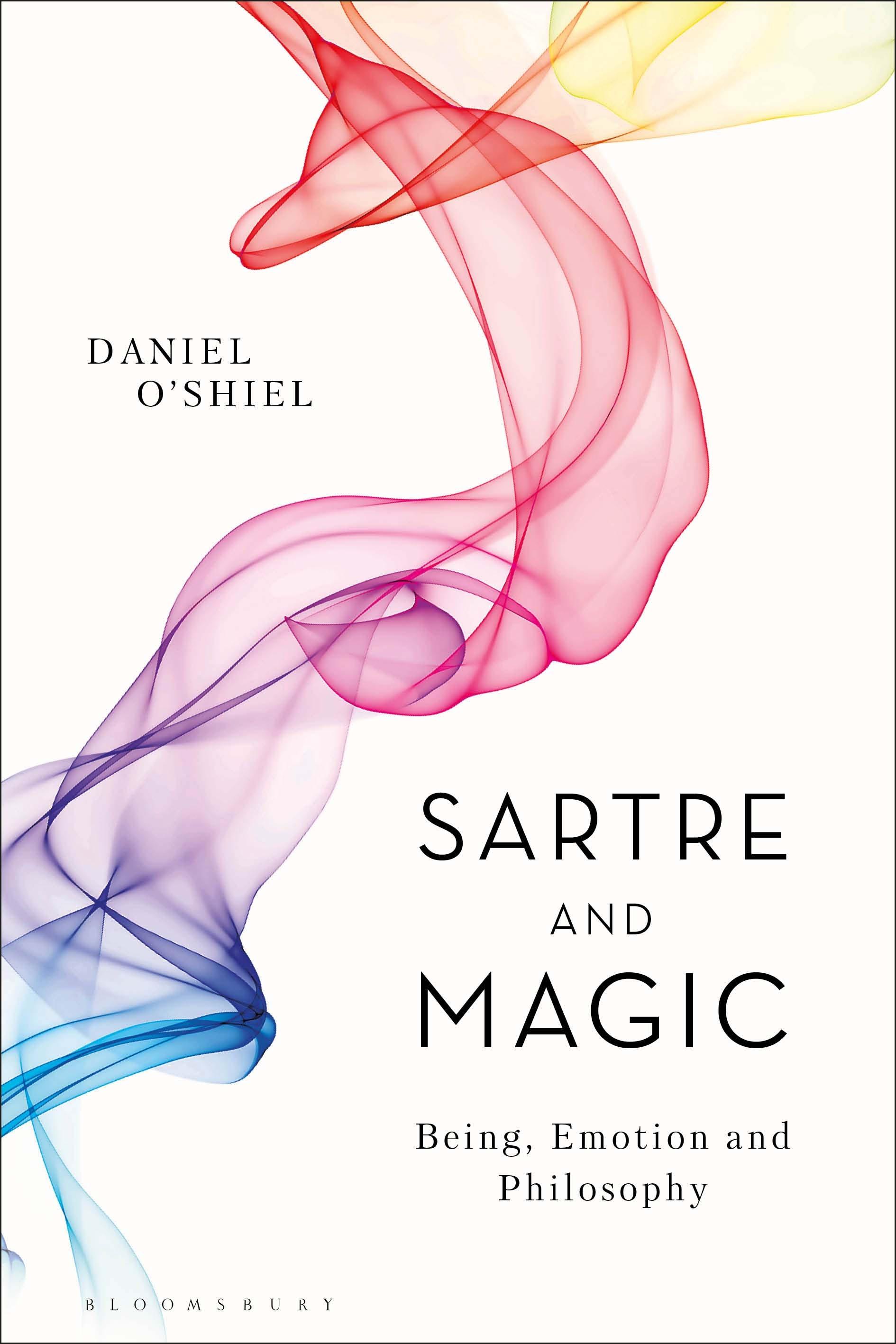
Jean-Paul Sartre's technical and multifaceted concept of magic is central for understanding crucial elements of his early philosophy (1936-1943), not least his conception of the ego, emotion, the imaginary and value.
Daniel O'Shiel follows the thread of magic throughout Sartre's early philosophical work. Firstly, Sartre's work on the ego (1936) shows a personal, reflective form of consciousness that is magically hypostasized onto the pre-reflective level. Secondly, emotion (1938) is inherently magical for Sartre because emotive qualities come to inhere in objects and thereby transform a world of pragmatism into one of captivation. Thirdly, analyses of The Imaginary (1940) reveal that anything we imagine is a spontaneous creation of consciousness that has the power to enchant and immerse us, even to the point of images holding sway over us. Culminating with Sartre's ontological system of Being and Nothingness (1943), O'Shiel argues that Sartre does not do away with the concept, but in fact provides ontological roots for it. This is most evident in Sartre's analyses of value, possession and language.
A second part shows how such Sartrean magic is highly relevant for a number of concrete case studies: the arts, advertising, racism and stupidity, and certain instances of psychopathology. O'Shiel shows that Sartre's magical being is important for any contemporary philosophical anthropology because it is essentially at work at the heart of many of our most significant experiences, both creative and damaging.
Daniel O'Shiel follows the thread of magic throughout Sartre's early philosophical work. Firstly, Sartre's work on the ego (1936) shows a personal, reflective form of consciousness that is magically hypostasized onto the pre-reflective level. Secondly, emotion (1938) is inherently magical for Sartre because emotive qualities come to inhere in objects and thereby transform a world of pragmatism into one of captivation. Thirdly, analyses of The Imaginary (1940) reveal that anything we imagine is a spontaneous creation of consciousness that has the power to enchant and immerse us, even to the point of images holding sway over us. Culminating with Sartre's ontological system of Being and Nothingness (1943), O'Shiel argues that Sartre does not do away with the concept, but in fact provides ontological roots for it. This is most evident in Sartre's analyses of value, possession and language.
A second part shows how such Sartrean magic is highly relevant for a number of concrete case studies: the arts, advertising, racism and stupidity, and certain instances of psychopathology. O'Shiel shows that Sartre's magical being is important for any contemporary philosophical anthropology because it is essentially at work at the heart of many of our most significant experiences, both creative and damaging.
Paga facilmente con carta, Klarna, Apple Pay o Google Pay. Non sei soddisfatto? Hai sempre 14 giorni per il rimborso. Leggi di più nei nostri termini. Per qualsiasi domanda, scrivici a hello@memmo.org.
Memmo rende lo studio più facile, ovunque tu sia nel mondo. Qui trovi i tuoi libri di testo e strumenti di studio intelligenti, tutto in un unico posto: riassunti, quiz, podcast e flashcard. E poi c'è Ted, il tuo compagno di studio che risponde a ogni tua domanda. Oltre 50.000 studenti studiano già qui: è stato creato per aiutarti a imparare più velocemente e a stressarti meno.