
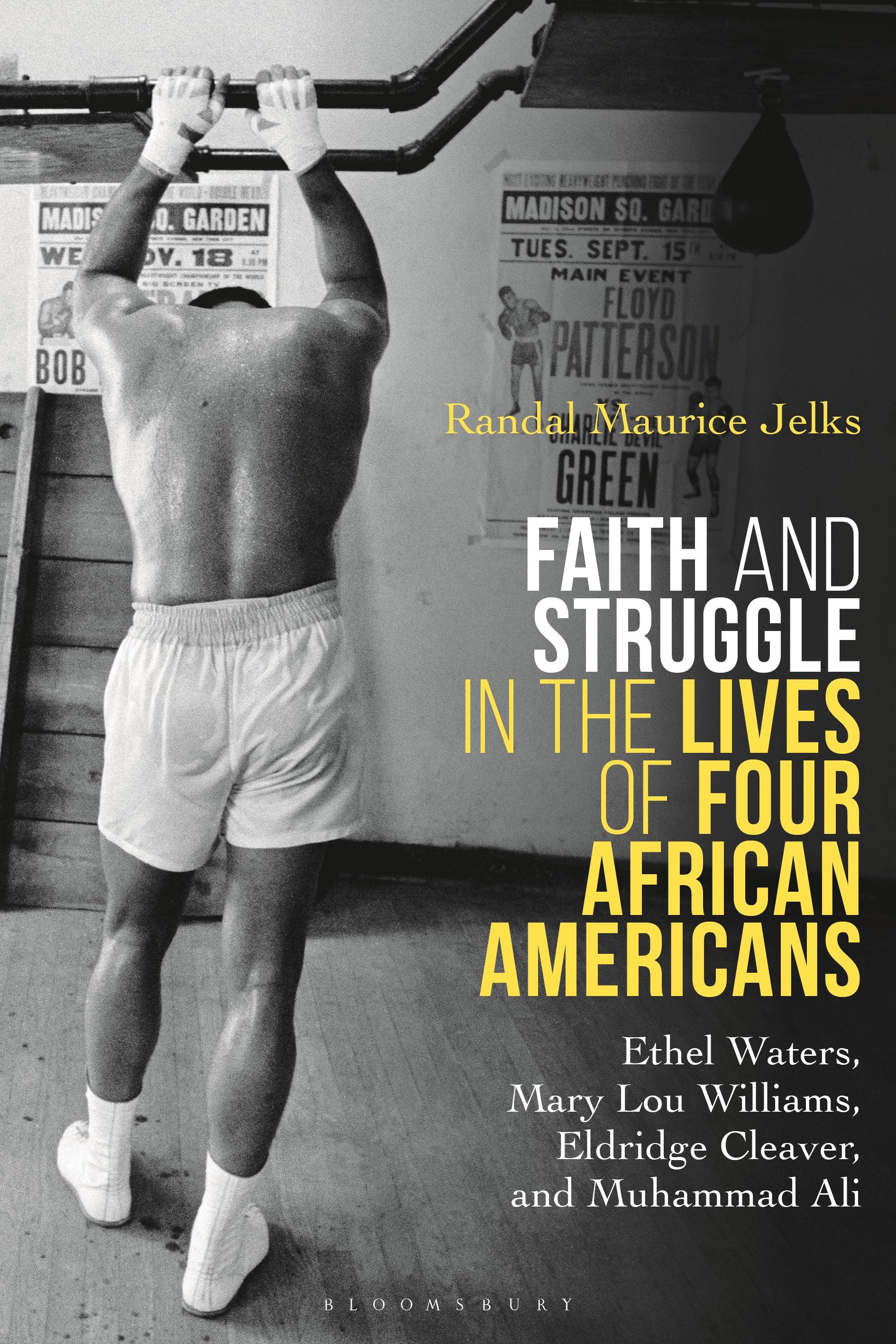
In 1964, Muhammad Ali said of his decision to join the Nation of Islam: “I know where I'm going and I know the truth and I don't have to be what you want me to be. I'm free to be what I want to be.”
This sentiment, the brash assertion of individual freedom, informs and empowers each of the four personalities profiled in this book. Randal Maurice Jelks shows that to understand the Black American experience beyond the larger narratives of enslavement, emancipation, and Black Lives Matter, we need to hear the individual stories. Drawing on his own experiences growing up as a religious African American, he shows that the inner history of Black Americans in the 20th century is a story worthy of telling.
This book explores the faith stories of four African Americans: Ethel Waters, Mary Lou Williams, Eldridge Cleaver, and Muhammad Ali. It examines their autobiographical writings, interviews, speeches, letters, and memorable performances to understand how each of these figures used religious faith publicly to reconcile deep personal struggles, voice their concerns for human dignity, and reinvent their public image. For them, liberation was not simply defined by material or legal wellbeing, but by a spiritual search for community and personal wholeness.
This sentiment, the brash assertion of individual freedom, informs and empowers each of the four personalities profiled in this book. Randal Maurice Jelks shows that to understand the Black American experience beyond the larger narratives of enslavement, emancipation, and Black Lives Matter, we need to hear the individual stories. Drawing on his own experiences growing up as a religious African American, he shows that the inner history of Black Americans in the 20th century is a story worthy of telling.
This book explores the faith stories of four African Americans: Ethel Waters, Mary Lou Williams, Eldridge Cleaver, and Muhammad Ali. It examines their autobiographical writings, interviews, speeches, letters, and memorable performances to understand how each of these figures used religious faith publicly to reconcile deep personal struggles, voice their concerns for human dignity, and reinvent their public image. For them, liberation was not simply defined by material or legal wellbeing, but by a spiritual search for community and personal wholeness.
Pagine: 208
Categoria: Religion & Teologi
e-ISBN: 9781350074637
Peso di spedizione: 1.2 kg
Spedito in: 1-2 giorni
Paga facilmente con carta, Klarna, Apple Pay o Google Pay. Non sei soddisfatto? Hai sempre 14 giorni per il rimborso. Leggi di più nei nostri termini. Per qualsiasi domanda, scrivici a hello@memmo.org.
Memmo rende lo studio più facile, ovunque tu sia nel mondo. Qui trovi i tuoi libri di testo e strumenti di studio intelligenti, tutto in un unico posto: riassunti, quiz, podcast e flashcard. E poi c'è Ted, il tuo compagno di studio che risponde a ogni tua domanda. Oltre 50.000 studenti studiano già qui: è stato creato per aiutarti a imparare più velocemente e a stressarti meno.