
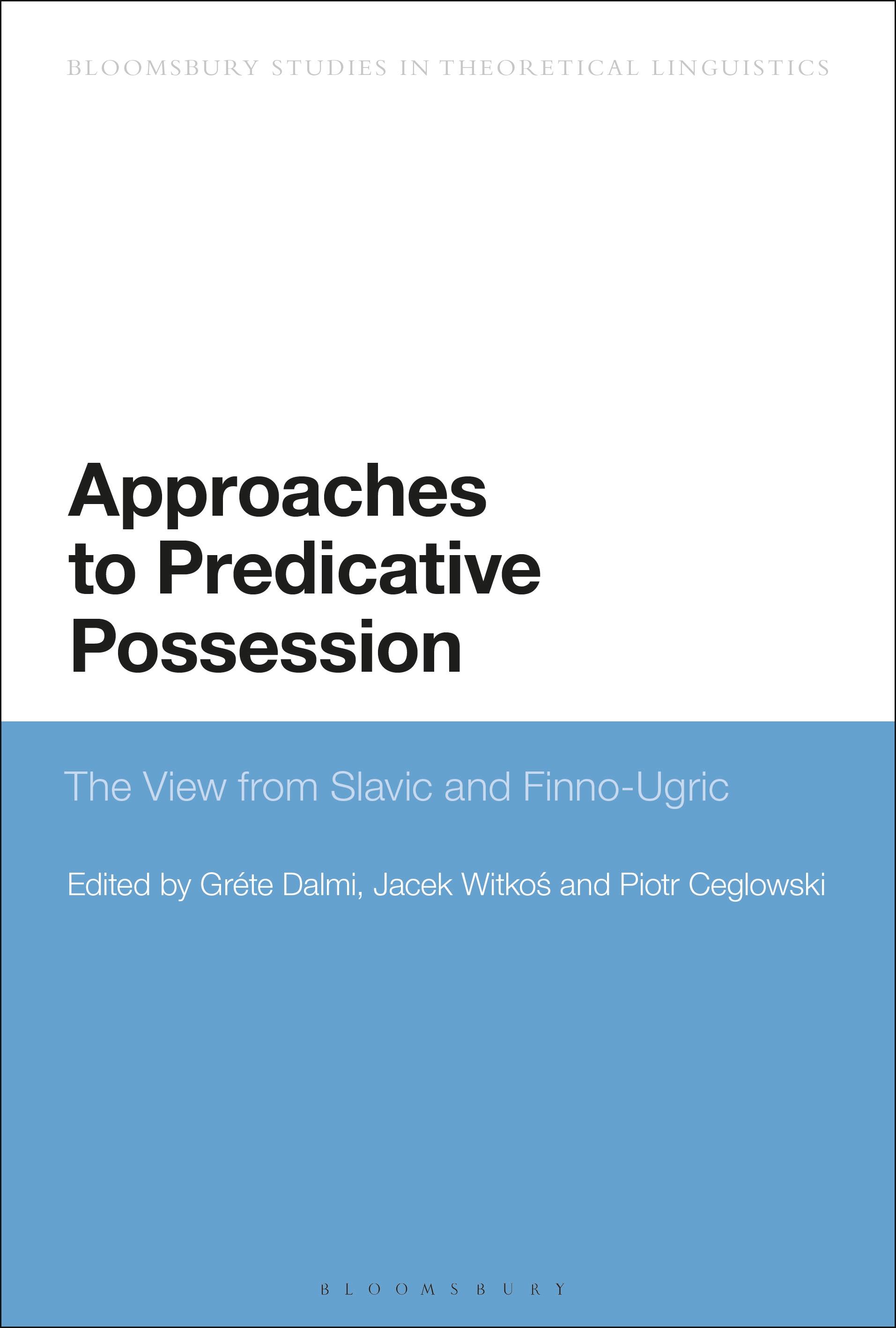
This book discusses existential and possessive constructions in two important, yet under-studied, language families, Slavic and Finno-Ugric. Using data from the Slavic languages of Polish, Belarusian and Russian, and the Finno-Ugric languages of Finnish, Hungarian, Meadow Mari, Komi-Permiyak and Udmurt, as well as the closely related Selkup of the Samoyedic family, the chapters in this volume analyse predicative possession in current syntactic terms.
Seeking an answer to the theoretical question of whether BE-possessives and HAVE-possessives are just accidental values of the 'Possessive Parameter' or are intrinsically related, this book takes a comparative approach to a whole range of syntactic and semantic phenomena that appear in these constructions, including the definiteness restriction, genitive of negation, person/number agreement, argument structure and extractability. The individual case studies can be easily integrated into the Principles & Parameters framework in terms of parametric variation. Approaches to Predicative Possession is an important contribution to our understanding of predicative possession across languages, with findings that can be fruitfully extended to other language families. It is an equally useful source of information for theoretical linguists, typologists, and graduate students of linguistics.
Seeking an answer to the theoretical question of whether BE-possessives and HAVE-possessives are just accidental values of the 'Possessive Parameter' or are intrinsically related, this book takes a comparative approach to a whole range of syntactic and semantic phenomena that appear in these constructions, including the definiteness restriction, genitive of negation, person/number agreement, argument structure and extractability. The individual case studies can be easily integrated into the Principles & Parameters framework in terms of parametric variation. Approaches to Predicative Possession is an important contribution to our understanding of predicative possession across languages, with findings that can be fruitfully extended to other language families. It is an equally useful source of information for theoretical linguists, typologists, and graduate students of linguistics.
Paga facilmente con carta, Klarna, Apple Pay o Google Pay. Non sei soddisfatto? Hai sempre 14 giorni per il rimborso. Leggi di più nei nostri termini. Per qualsiasi domanda, scrivici a hello@memmo.org.
Memmo rende lo studio più facile, ovunque tu sia nel mondo. Qui trovi i tuoi libri di testo e strumenti di studio intelligenti, tutto in un unico posto: riassunti, quiz, podcast e flashcard. E poi c'è Ted, il tuo compagno di studio che risponde a ogni tua domanda. Oltre 50.000 studenti studiano già qui: è stato creato per aiutarti a imparare più velocemente e a stressarti meno.