
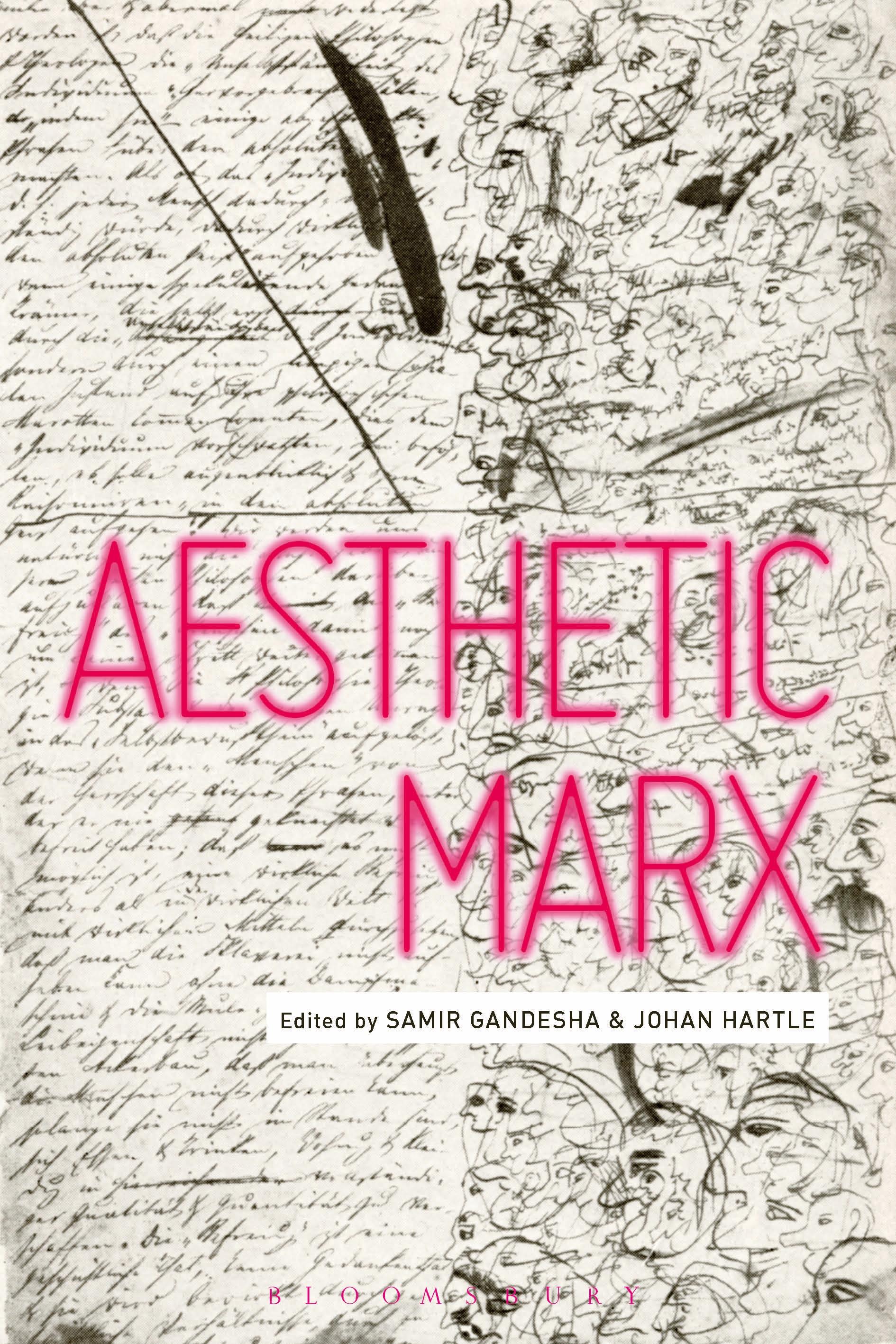
The whole of Marx's project confronts the narrow concerns of political philosophy by embedding it in social philosophy and a certain understanding of the aesthetic. From those of aesthetic production to the "poetry of the future" (as Marx writes in the Eighteenth Brumaire), from the radical modernism of bourgeois development to the very idea of association (which defined one of the main lines of tradition in the history of aesthetics), steady references to Dante, Shakespeare and Goethe, and the idea that bourgeois politics is nothing but a theatrical stage: the aesthetic has a prominent place in the constellation of Marx's thought.
This book offers an original and challenging study of both Marx in the aesthetic, and the aesthetic in Marx. It differs from previous discussions of Marxist aesthetic theory as it understands the works of Marx themselves as contributions to thinking the aesthetic. This is an engagement with Marx's aesthetic that takes into account Marx's broader sense of the aesthetic, as identified by Eagleton and Buck-Morss – as a question of sense perception and the body. It explores this through questions of style and substance in Marx and extends it into contemporary questions of how this legacy can be perceived or directed analytically in the present.
By situating Marx in contemporary art debates this volume speaks directly to lively interest today in the function of the aesthetic in accounts of emancipatory politics and is essential reading for researchers and academics across the fields of political philosophy, art theory, and Marxist scholarship.
This book offers an original and challenging study of both Marx in the aesthetic, and the aesthetic in Marx. It differs from previous discussions of Marxist aesthetic theory as it understands the works of Marx themselves as contributions to thinking the aesthetic. This is an engagement with Marx's aesthetic that takes into account Marx's broader sense of the aesthetic, as identified by Eagleton and Buck-Morss – as a question of sense perception and the body. It explores this through questions of style and substance in Marx and extends it into contemporary questions of how this legacy can be perceived or directed analytically in the present.
By situating Marx in contemporary art debates this volume speaks directly to lively interest today in the function of the aesthetic in accounts of emancipatory politics and is essential reading for researchers and academics across the fields of political philosophy, art theory, and Marxist scholarship.
Paga facilmente con carta, Klarna, Apple Pay o Google Pay. Non sei soddisfatto? Hai sempre 14 giorni per il rimborso. Leggi di più nei nostri termini. Per qualsiasi domanda, scrivici a hello@memmo.org.
Memmo rende lo studio più facile, ovunque tu sia nel mondo. Qui trovi i tuoi libri di testo e strumenti di studio intelligenti, tutto in un unico posto: riassunti, quiz, podcast e flashcard. E poi c'è Ted, il tuo compagno di studio che risponde a ogni tua domanda. Oltre 50.000 studenti studiano già qui: è stato creato per aiutarti a imparare più velocemente e a stressarti meno.