
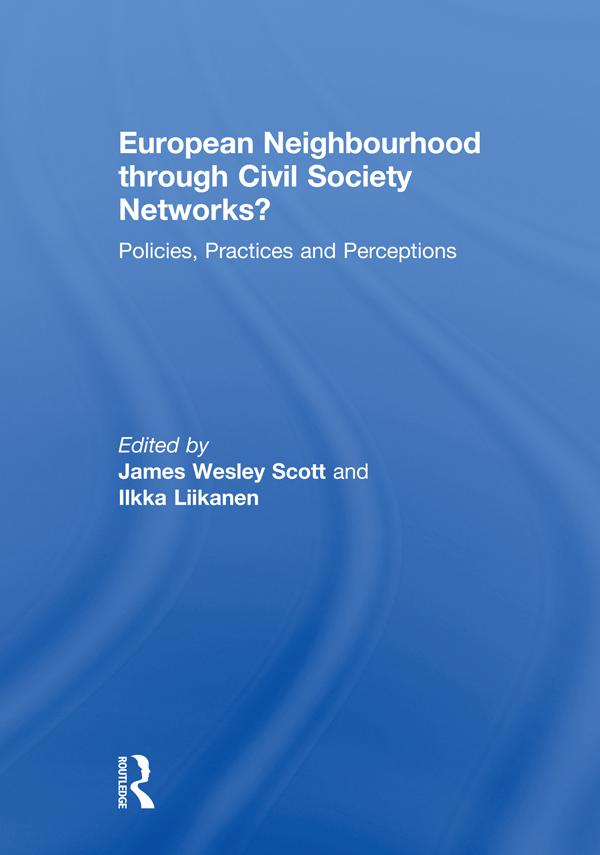
This book pursues a dual objective: on the one hand, it focuses on the actual and potential roles of civil society in developing new forms of political, economic, and socio-cultural cooperation between the European Union and its neighbours. On the other hand, through this investigation of civil society networks we will contribute to debate on the EU’s role as promoter of greater regional co-operation.
The rationale for this collection is thus defined by changing political relationships between the 27-member European Union and countries in its immediate vicinity. These transformations include the ongoing but by no means straightforward process of Turkey’s EU membership, an evolving (and complex) partnership with Russia and the development of deeper political, economic and social relationships with many other neighbouring countries. More specifically, the work presented here involves comparative studies of how the EU is perceived by civil society actors both within and outside the EU. We ask whether the EU’s promotion of cross-border co-operation (e.g. though the European Neighbourhood Policy) is empowering civil society within member states and in neighbouring countries such as Russia, Moldova, Turkey and Morocco.
This book was based on a special issue of Journal of European Integration.
Paga facilmente con carta, Klarna, Apple Pay o Google Pay. Non sei soddisfatto? Hai sempre 14 giorni per il rimborso. Leggi di più nei nostri termini. Per qualsiasi domanda, scrivici a hello@memmo.org.
Memmo rende lo studio più facile, ovunque tu sia nel mondo. Qui trovi i tuoi libri di testo e strumenti di studio intelligenti, tutto in un unico posto: riassunti, quiz, podcast e flashcard. E poi c'è Ted, il tuo compagno di studio che risponde a ogni tua domanda. Oltre 50.000 studenti studiano già qui: è stato creato per aiutarti a imparare più velocemente e a stressarti meno.