
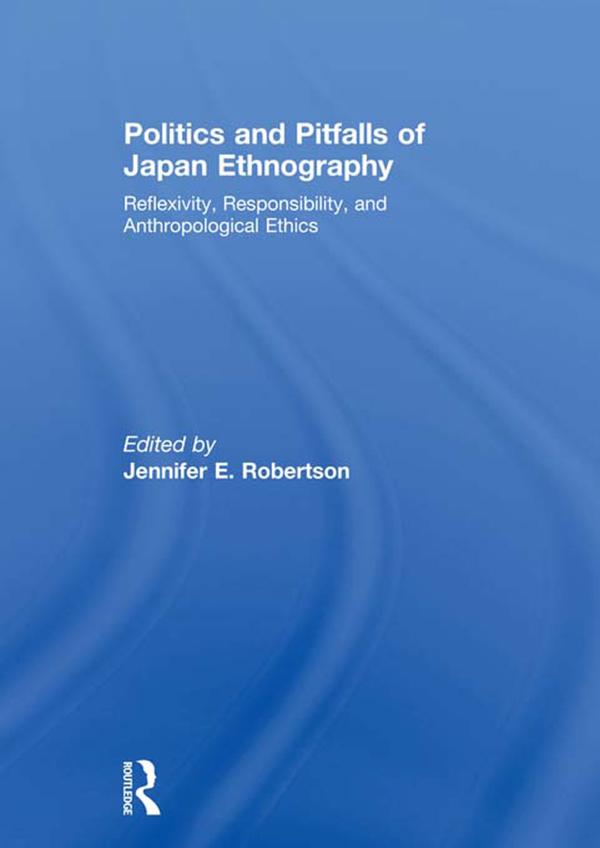
Four anthropologists, Elise Edwards, Ann Elise Lewallen, Bridget Love and Tomomi Yamaguchi, draw on their fieldwork experiences in Japan to demonstrate collectively the inadequacy of both the Code of Ethics developed by the American Anthropological Association (AAA) and the dictates of Institutional Review Boards (IRB) when dealing with messy human realities. The four candidly and critically explore the existential dilemmas they were forced to confront with respect to this inadequacy, for the AAA’s code and IRBs consider neither the vulnerability and powerlessness of ethnographers nor the wholly unethical (and even criminal) deportment of some informants. As Jennifer Robertson points out in her Introduction, whereas the AAA’s Code tends to perpetuate the stereotype of more advantaged fieldworkers studying less advantaged peoples, IRBs appear to protect their home institutions (from possible litigation) rather than living and breathing people whose lives are often ethically compromised irrespective of the presence of an ethnographer. In her commentary, Sabine Frühstück, who incurred ample experience with ethical dilemmas in the course of her pathbreaking ethnographic research on Japan’s Self-Defense Forces, situates the four articles in a broader theoretical context, and emphasizes the link between political engagement and ethnographic accuracy.
This book was previously published as a special issue of Critical Asian Studies.
Paga facilmente con carta, Klarna, Apple Pay o Google Pay. Non sei soddisfatto? Hai sempre 14 giorni per il rimborso. Leggi di più nei nostri termini. Per qualsiasi domanda, scrivici a hello@memmo.org.
Memmo rende lo studio più facile, ovunque tu sia nel mondo. Qui trovi i tuoi libri di testo e strumenti di studio intelligenti, tutto in un unico posto: riassunti, quiz, podcast e flashcard. E poi c'è Ted, il tuo compagno di studio che risponde a ogni tua domanda. Oltre 50.000 studenti studiano già qui: è stato creato per aiutarti a imparare più velocemente e a stressarti meno.