
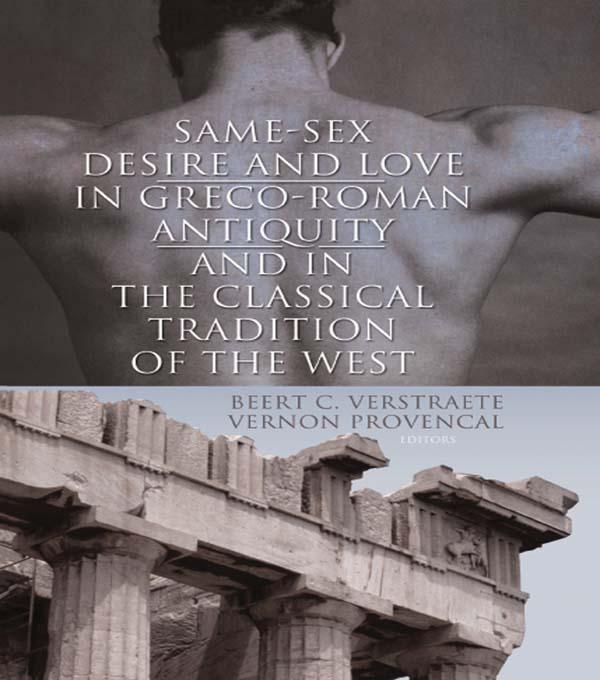
New and surprising insights into homoeroticism of times past
In ancient times, the Greek god Eros personified both heterosexual and homosexual attractions. Same-Sex Desire and Love in Greco-Roman Antiquity and in Classical Tradition of the West explores the homosexual side of the vanished civilizations of Greece and Rome, and the resulting influence on the Classical tradition of the West. Respected scholars clearly present evidence that shows the extensive nature of homoeroticism and homosexuality in the Classical world. Iconography such as vase decoration and carved gemstones is presented in photographs, and the text includes an examination of a wide selection of literature of the times with an eye to opening new vistas for future study.
Same-Sex Desire and Love in Greco-Roman Antiquity and in Classical Tradition of the West lays to rest the myths generally accepted as truth about Greco-Roman views on homosexuality and brings fresh insights to philological and historical scholarship. This book provides nuanced, humanistic discussions on the common phenomena of same-sex desire. Topics include Greek pederasty and its origins, the Greek female homoeroticism of Sappho, homosexuality in Greek and Roman art and literature, and the emergence of the gay liberation movement with the influence of discussions of Greek and Roman homosexuality in the twentieth century. The text is extensively referenced and includes helpful notation.
Same-Sex Desire and Love in Greco-Roman Antiquity and in Classical Tradition of the West provides a comprehensive table of abbreviations, subject index, and index of names and terms. It discusses in detail:
- the integral role athletic nudity played in athlete-trainer pederasty
- the central role of pederasty in Greek history, politics, art, literature, and learning
- tracing the history of the Ganymede myth
- how the athletic culture of Sparta contributed to the spread of pederasty in Greece
- homosexuality in Boeotia in contrast to the rest of Greece
- the homoeroticism of Sappho
- dispelling generally accepted myths prevalent about Roman sexuality
- Roman visual representations of homosexuality as evidence of prevailing attitudes
- homoerotic connotations in literature and philosophy of the Italian Renaissance
- the effect of German classical philology on gay scholarship
- English Romantic poets and the importance of male love in their lives
- the Uranians’ use of allusions and themes from ancient Greece
- the building of intellectual community through gay print culturethrough the use of Greece and Rome as models
- and more
Same-Sex Desire and Love in Greco-Roman Antiquity and in Classical Tradition of the West is essential reading for Classicists, specialists in gender/sexuality studies, humanists interested in the classical tradition in Western culture, psychologists, and other social scientists in human sexuality.
Paga facilmente con carta, Klarna, Apple Pay o Google Pay. Non sei soddisfatto? Hai sempre 14 giorni per il rimborso. Leggi di più nei nostri termini. Per qualsiasi domanda, scrivici a hello@memmo.org.
Memmo rende lo studio più facile, ovunque tu sia nel mondo. Qui trovi i tuoi libri di testo e strumenti di studio intelligenti, tutto in un unico posto: riassunti, quiz, podcast e flashcard. E poi c'è Ted, il tuo compagno di studio che risponde a ogni tua domanda. Oltre 50.000 studenti studiano già qui: è stato creato per aiutarti a imparare più velocemente e a stressarti meno.