
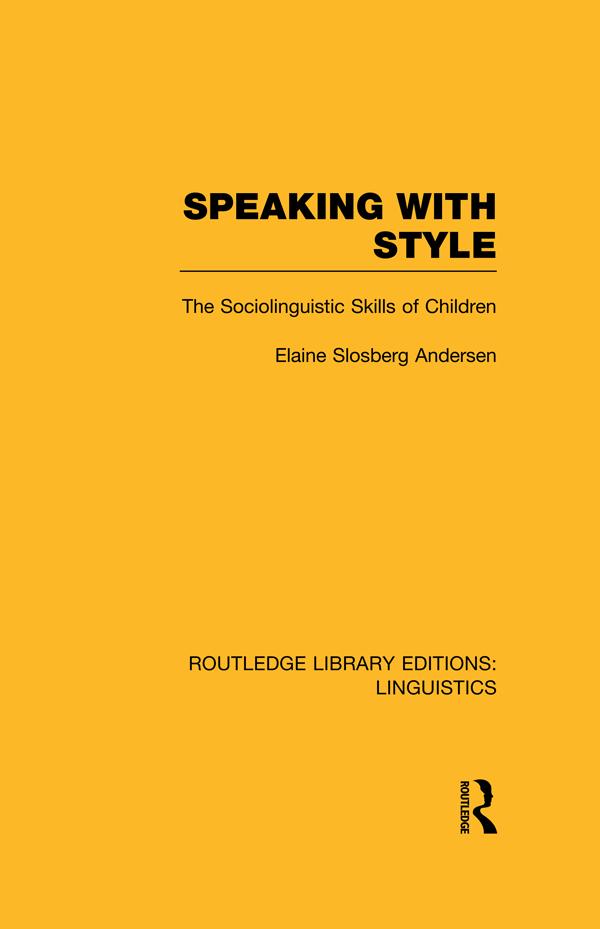
In acquiring communicative competence, children must learn to speak not only grammatically but also appropriately. Although rules for appropriate language use may vary from culture to culture, they are usually sensitive across languages to many of the same factors, including the context and the topic of the discourse, and the sex, age, familiarity and relative status of the speaker and the listener. There is available detailed evidence of the ways in which adults consistently modify their speech to foreigners, of phonological, syntactic, and lexical markings of language in professional settings, and of differences in men’s and women’s speech that are tied to their roles in society.
This book examines young children’s knowledge of the sociolinguistic rules that govern appropriate language use, exploring (i) the repertoire of registers (ie speech varieties) that young children possess; (ii) the linguistic devices that they use to mark distinct registers; (iii) the way their skill in using these registers develops.
Paga facilmente con carta, Klarna, Apple Pay o Google Pay. Non sei soddisfatto? Hai sempre 14 giorni per il rimborso. Leggi di più nei nostri termini. Per qualsiasi domanda, scrivici a hello@memmo.org.
Memmo rende lo studio più facile, ovunque tu sia nel mondo. Qui trovi i tuoi libri di testo e strumenti di studio intelligenti, tutto in un unico posto: riassunti, quiz, podcast e flashcard. E poi c'è Ted, il tuo compagno di studio che risponde a ogni tua domanda. Oltre 50.000 studenti studiano già qui: è stato creato per aiutarti a imparare più velocemente e a stressarti meno.