
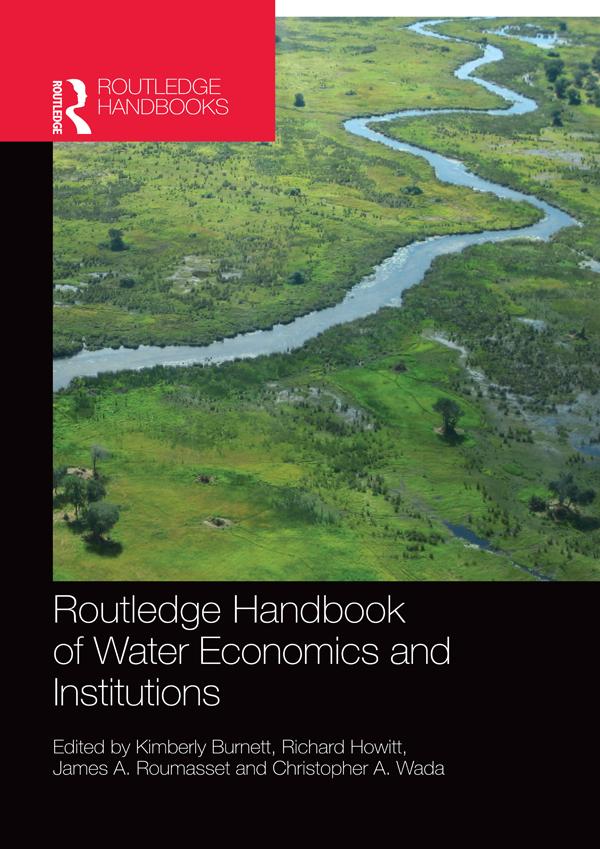
Growing scarcity of freshwater worldwide brings to light the need for sound water resource modeling and policy analysis. While a solid foundation has been established for many specific water management problems, combining those methods and principles in a unified framework remains an ongoing challenge. This Handbook aims to expand the scope of efficient water use to include allocation of sources and quantities across uses and time, as well as integrating demand-management with supply-side substitutes.
Socially efficient water use does not generally coincide with private decisions in the real world, however. Examples of mechanisms designed to incentivize efficient behavior are drawn from agricultural water use, municipal water regulation, and externalities linked to water resources. Water management is further complicated when information is costly and/or imperfect. Standard optimization frameworks are extended to allow for coordination costs, games and cooperation, and risk allocation. When operating efficiently, water markets are often viewed as a desirable means of allocation because a market price incentivizes users to move resources from low to high value activities. However, early attempts at water trading have run into many obstacles. Case studies from the United States, Australia, Europe, and Canada highlight the successes and remaining challenges of establishing efficient water markets.
Paga facilmente con carta, Klarna, Apple Pay o Google Pay. Non sei soddisfatto? Hai sempre 14 giorni per il rimborso. Leggi di più nei nostri termini. Per qualsiasi domanda, scrivici a hello@memmo.org.
Memmo rende lo studio più facile, ovunque tu sia nel mondo. Qui trovi i tuoi libri di testo e strumenti di studio intelligenti, tutto in un unico posto: riassunti, quiz, podcast e flashcard. E poi c'è Ted, il tuo compagno di studio che risponde a ogni tua domanda. Oltre 50.000 studenti studiano già qui: è stato creato per aiutarti a imparare più velocemente e a stressarti meno.