
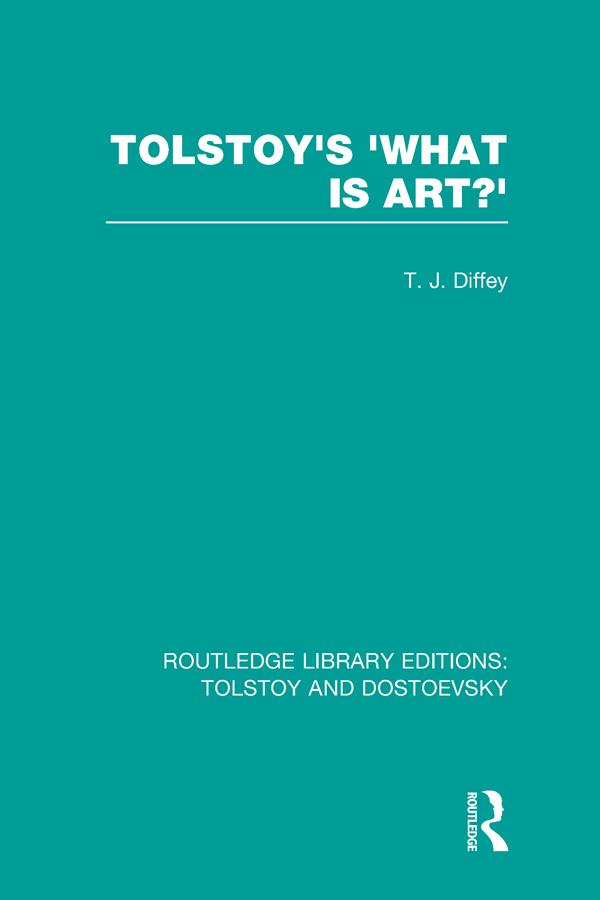
With its demand that works of art be judged according to the their morally didactic content, Tolstoy’s reviled aesthetics has seemed to exclude from the canon far too many works widely accepted as masterpieces, including Shakespeare and Beethoven.
This book, first published in 1985, argues that these are not mere oversights on the part of Tolstoy: he knew full well the consequences of his line of reasoning. The author contends that, even if we disagree with and eventually reject much of what Tolstoy concludes, his account of the nature and purpose of art is nevertheless worth consideration.
Diffey’s argument by no means accepts all of ‘What is Art?’, but by suggesting that the work is best interpreted as a counterpoint to the amoral aestheticism prevalent in Russia at the time, he does much to restore it to a status deserving attention, particularly in today’s climate of extreme relativism.
Paga facilmente con carta, Klarna, Apple Pay o Google Pay. Non sei soddisfatto? Hai sempre 14 giorni per il rimborso. Leggi di più nei nostri termini. Per qualsiasi domanda, scrivici a hello@memmo.org.
Memmo rende lo studio più facile, ovunque tu sia nel mondo. Qui trovi i tuoi libri di testo e strumenti di studio intelligenti, tutto in un unico posto: riassunti, quiz, podcast e flashcard. E poi c'è Ted, il tuo compagno di studio che risponde a ogni tua domanda. Oltre 50.000 studenti studiano già qui: è stato creato per aiutarti a imparare più velocemente e a stressarti meno.