
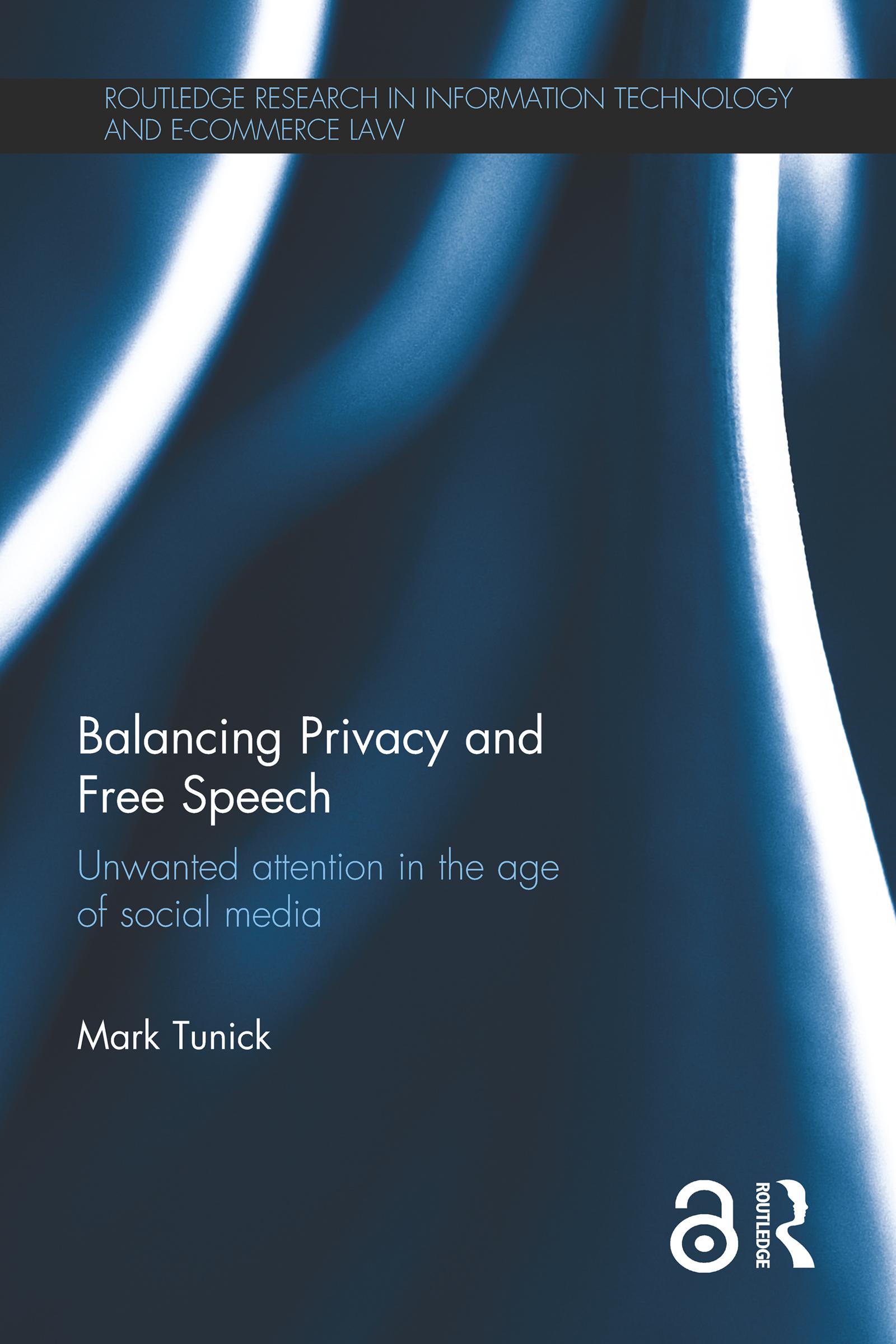
In an age of smartphones, Facebook and YouTube, privacy may seem to be a norm of the past. This book addresses ethical and legal questions that arise when media technologies are used to give individuals unwanted attention. Drawing from a broad range of cases within the US, UK, Australia, Europe, and elsewhere, Mark Tunick asks whether privacy interests can ever be weightier than society’s interest in free speech and access to information.
Taking a comparative and interdisciplinary approach, and drawing on the work of political theorist Jeremy Waldron concerning toleration, the book argues that we can still have a legitimate interest in controlling the extent to which information about us is disseminated. The book begins by exploring why privacy and free speech are valuable, before developing a framework for weighing these conflicting values. By taking up key cases in the US and Europe, and the debate about a ‘right to be forgotten’, Tunick discusses the potential costs of limiting free speech, and points to legal remedies and other ways to develop new social attitudes to privacy in an age of instant information sharing.
This book will be of great interest to students of privacy law, legal ethics, internet governance and media law in general.
Paga facilmente con carta, Klarna, Apple Pay o Google Pay. Non sei soddisfatto? Hai sempre 14 giorni per il rimborso. Leggi di più nei nostri termini. Per qualsiasi domanda, scrivici a hello@memmo.org.
Memmo rende lo studio più facile, ovunque tu sia nel mondo. Qui trovi i tuoi libri di testo e strumenti di studio intelligenti, tutto in un unico posto: riassunti, quiz, podcast e flashcard. E poi c'è Ted, il tuo compagno di studio che risponde a ogni tua domanda. Oltre 50.000 studenti studiano già qui: è stato creato per aiutarti a imparare più velocemente e a stressarti meno.