
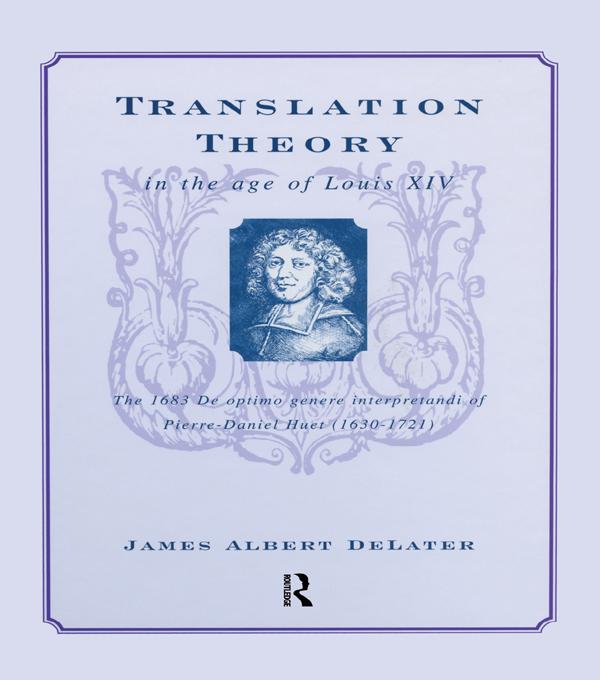
Preeminent in a relatively rare category of separate early modern treatises on translation, the 1683 De optimo genere interpretandi by the polymath cleric Pierre-Daniel Huet (1630-1721) offers a concise introduction to its nature, history, theory, process and practice.
Written in the form of a Ciceronian dialogue, On the best kind of translating not only represents Huet's acute and witty defence of the often disparaged literal or word for word model, but also provides illuminating glimpses into the critical and interpretive methods of his age. A guiding premise of this first modern edition and annotated translation of Huet's entire treatise is that, now as then, translation theory and practice are complementaries. Consistent also with this premise is the conscious attempt by DeLater to apply Huet's literal translation model at every stage in the process of producing this annotated translation of his treatise. Among the topics treated in Huet's work are: (1) a definition of translation and its relationship to interpretation; (2) adaptation of translation aims and methods to the subject matter of the original; (3) the translating and glossing of idioms, proverbs, metaphors, puns and ambiguities; (4) translators' priorities, from sense and words to the elusive quality that makes a translation seem an original work; and (5) translation as an independent theoretical discipline. In addition to providing an introduction to Huet's life and works as well as explanatory glosses for his copious sources and various topics in the DOGI, the present work also supplies links between Huet's work and that of current theorists and critics in the field of translation studies.
Paga facilmente con carta, Klarna, Apple Pay o Google Pay. Non sei soddisfatto? Hai sempre 14 giorni per il rimborso. Leggi di più nei nostri termini. Per qualsiasi domanda, scrivici a hello@memmo.org.
Memmo rende lo studio più facile, ovunque tu sia nel mondo. Qui trovi i tuoi libri di testo e strumenti di studio intelligenti, tutto in un unico posto: riassunti, quiz, podcast e flashcard. E poi c'è Ted, il tuo compagno di studio che risponde a ogni tua domanda. Oltre 50.000 studenti studiano già qui: è stato creato per aiutarti a imparare più velocemente e a stressarti meno.