
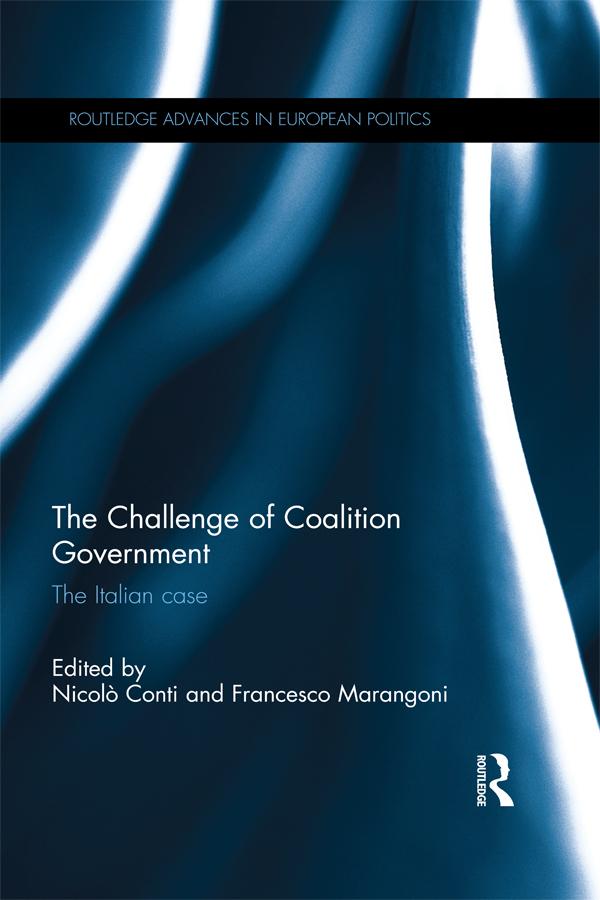
Since the advent of the Second Republic in Italy in the mid-1990s, a new generation of politicians has announced a shift in the system toward greater governmental leadership, policy innovation, government accountability and responsiveness to the citizens. Yet in recent years government has experienced frequent crises and deadlocks, policy blockades and undisciplined parliamentary majorities. Has the attempt to change the nature of the Italian government totally failed?
This book addresses this question by empirically assessing and theoretically evaluating the outcomes of the new system. It asks whether there has really been a shift toward a more majoritarian democracy and examines why alternation in power has failed to produce a more efficient and responsive government. It evaluates the connections between cabinet, parliament, parties and citizens, and in doing so, brings together diverse areas of inquiry such as government, legislative, party and public opinion studies. Drawing from comparative theory but also considering the impact of country-specific determinants, it explains the very nature of the Italian government from the point of view of its achievements and its failures.
This text will be of key interest to scholars and students of government, comparative and Italian politics, and more broadly those with an interest in government, democracy and Italy.
Paga facilmente con carta, Klarna, Apple Pay o Google Pay. Non sei soddisfatto? Hai sempre 14 giorni per il rimborso. Leggi di più nei nostri termini. Per qualsiasi domanda, scrivici a hello@memmo.org.
Memmo rende lo studio più facile, ovunque tu sia nel mondo. Qui trovi i tuoi libri di testo e strumenti di studio intelligenti, tutto in un unico posto: riassunti, quiz, podcast e flashcard. E poi c'è Ted, il tuo compagno di studio che risponde a ogni tua domanda. Oltre 50.000 studenti studiano già qui: è stato creato per aiutarti a imparare più velocemente e a stressarti meno.