
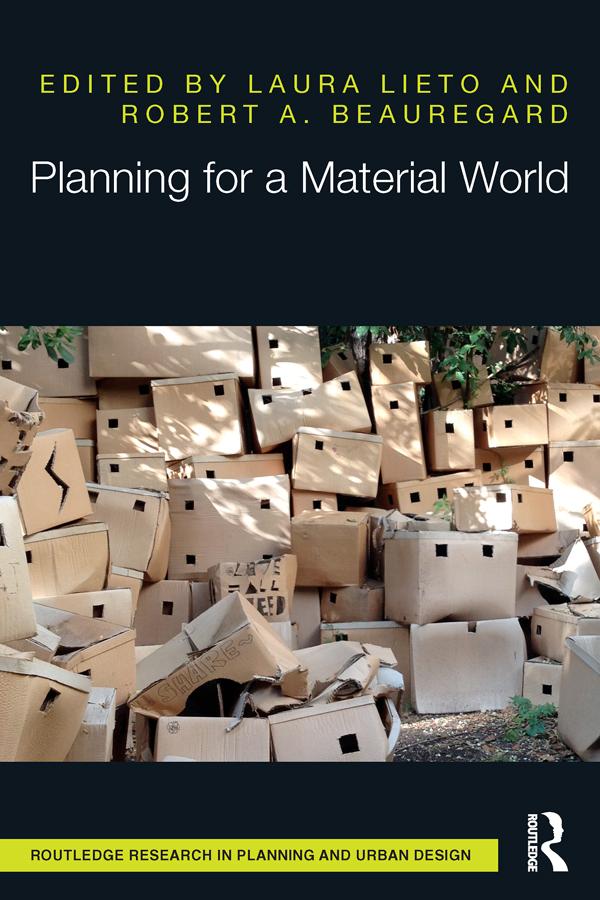
Today, urban scholars think of cities and regions as evolving through networks of human associations, technologies, and natural ecologies. This being the case, planners are faced with the task of navigating a profoundly material world. Planning with and for humans alone is unacceptable: in the unfolding of urban processes, non-human things cannot be ignored. This inclusive vision has consequences for how planners envision the connections among norms, technologies and life-worlds as well as how they design and implement their plans.
The contributors to this volume utilize a variety of examples – ecologically-sensitive, regional planning in Naples (Italy); congestion pricing in New York City; and public participation in Europe, among others – to explore how planners engage a heterogeneous and restless world. Inspired by assemblage thinking and actor-network theory, each chapter draws on this "new materialism" to acknowledge, in quite pragmatic ways, that spatial politics is a process of becoming that is inseparable from the materiality of urban practices.
Paga facilmente con carta, Klarna, Apple Pay o Google Pay. Non sei soddisfatto? Hai sempre 14 giorni per il rimborso. Leggi di più nei nostri termini. Per qualsiasi domanda, scrivici a hello@memmo.org.
Memmo rende lo studio più facile, ovunque tu sia nel mondo. Qui trovi i tuoi libri di testo e strumenti di studio intelligenti, tutto in un unico posto: riassunti, quiz, podcast e flashcard. E poi c'è Ted, il tuo compagno di studio che risponde a ogni tua domanda. Oltre 50.000 studenti studiano già qui: è stato creato per aiutarti a imparare più velocemente e a stressarti meno.