
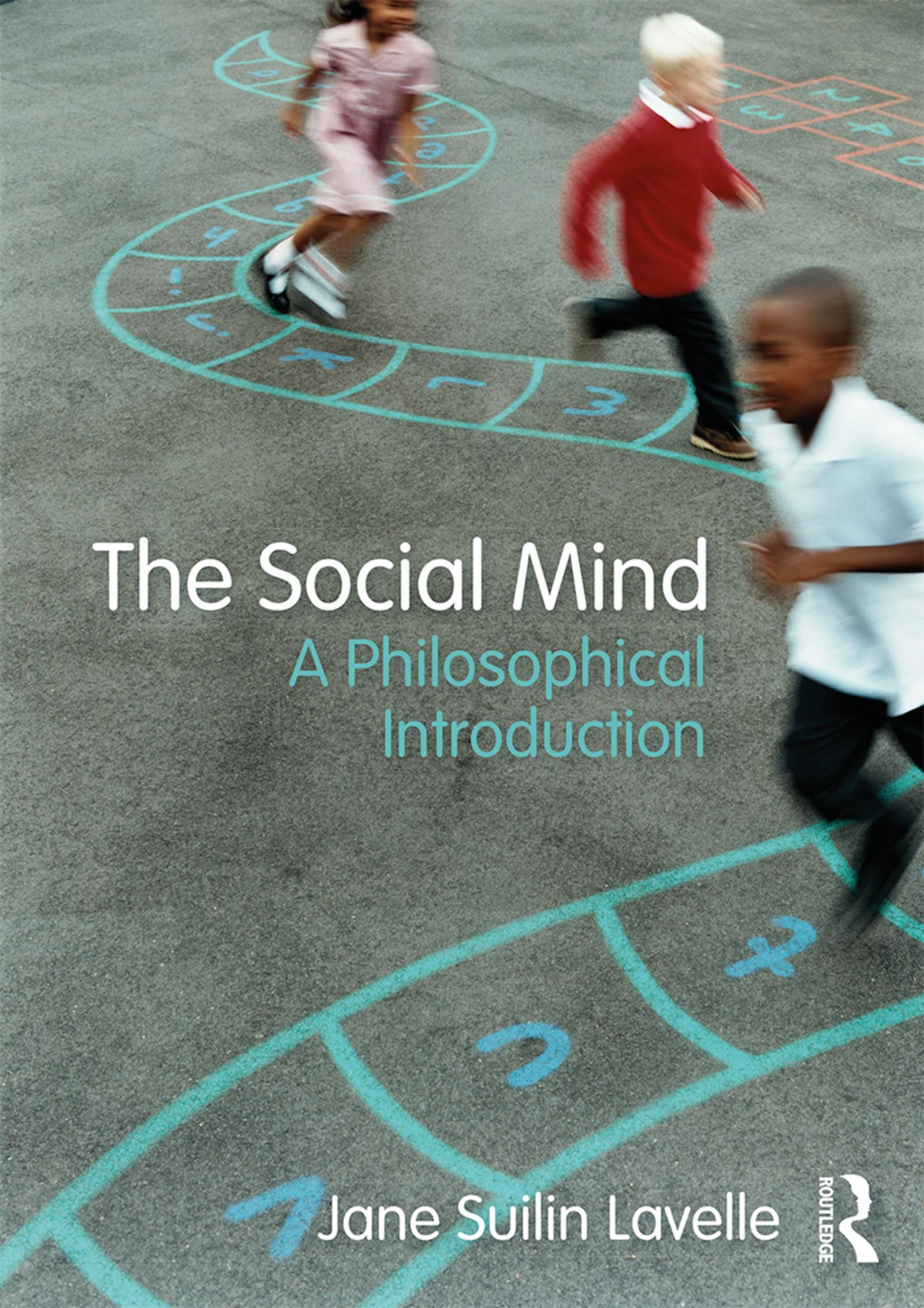
We spend a lot of time thinking about other people: their motivations, what they are thinking, why they want particular things. Sometimes we are aware of it, but it often occurs without conscious thought, and we can respond appropriately to other people's thoughts in a diverse range of situations.
The Social Mind: A Philosophical Introduction examines the cognitive capacities that facilitate this amazing ability. It explains and critiques key philosophical theories about how we think about other people's minds, measuring them against empirical findings from neuroscience, anthropology, developmental psychology and cognitive ethology. Some of the fascinating questions addressed include:
- How do we think about other people's minds? Do we put ourselves in another's shoes to work out what they think?
- When do we need to think about another person's thoughts?
- What kinds of thoughts do we attribute to others? Are they propositional attitudes like beliefs and desires as analytic philosophers have often assumed, or could they be something else?
- What sorts of neural mechanisms underlie our ability to think about other people's thoughts?
- How is the ability to think about other minds different for individuals on the autism Spectrum?
- Is a preoccupation with other people's thoughts a Western phenomenon or is it found in all cultures?
- How do children learn to think about other minds?
- Can non-human animals think about other minds?
These questions are applied to case studies throughout the book, including mirror neurons, recent research on infant social cognition, false belief tasks, and cross-cultural studies.
Covering complex interdisciplinary debates in an accessible and clear way, with chapter summaries, annotated further reading, and a glossary, The Social Mind: A Philosophical Introduction is an ideal entry point into this fast-moving and exciting field. It is essential reading for students of philosophy of mind and psychology, and also of interest to those in related subjects such as cognitive science, social and developmental psychology, and anthropology.
Paga facilmente con carta, Klarna, Apple Pay o Google Pay. Non sei soddisfatto? Hai sempre 14 giorni per il rimborso. Leggi di più nei nostri termini. Per qualsiasi domanda, scrivici a hello@memmo.org.
Memmo rende lo studio più facile, ovunque tu sia nel mondo. Qui trovi i tuoi libri di testo e strumenti di studio intelligenti, tutto in un unico posto: riassunti, quiz, podcast e flashcard. E poi c'è Ted, il tuo compagno di studio che risponde a ogni tua domanda. Oltre 50.000 studenti studiano già qui: è stato creato per aiutarti a imparare più velocemente e a stressarti meno.