
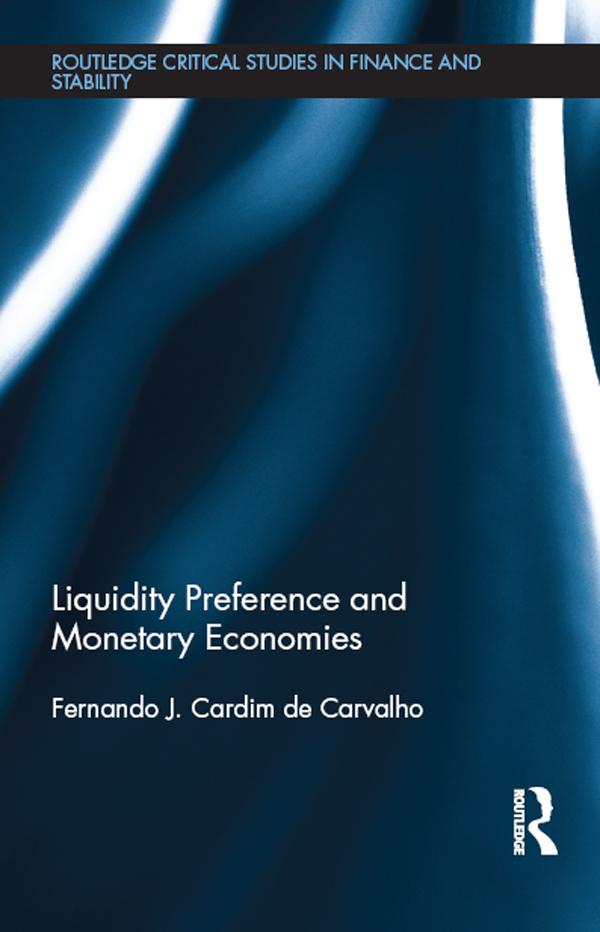
The 2008 international crisis has revived the interest in Keynes’s theories and, in particular, on Minsky’s models of financial fragility. The core proposition of these theories is that money plays an essential role in modern economies, which is usually neglected in other approaches. This is Keynes’s liquidity preference theory, which is also the foundation for Minsky’s model, a theory that has been largely forgotten in recent years.
This book looks at liquidity preference theory and its most important problems, showing how one should understand the role of money in modern monetary economies. It develops Keynes’s and Minsky’s financial view of money, relating it to the process of capital accumulation, the determination of effective demand and the theory of output, and employment as a whole.
Building on the author’s significant body of work in the field, this book delves into a broad range of topics allowing the general reader to understand propositions that have been mistreated in the literature including Keynes and the concept of monetary production economy; uncertainty, expectations and money; short and long period; liquidity preference theory as a theory of asset pricing under uncertainty; asset prices and capital accumulation; Keynes’s version of the principle of effective demand; and the role of macroeconomic policy. It will be essential reading for all students and scholars of Post-Keynesian economics.
Paga facilmente con carta, Klarna, Apple Pay o Google Pay. Non sei soddisfatto? Hai sempre 14 giorni per il rimborso. Leggi di più nei nostri termini. Per qualsiasi domanda, scrivici a hello@memmo.org.
Memmo rende lo studio più facile, ovunque tu sia nel mondo. Qui trovi i tuoi libri di testo e strumenti di studio intelligenti, tutto in un unico posto: riassunti, quiz, podcast e flashcard. E poi c'è Ted, il tuo compagno di studio che risponde a ogni tua domanda. Oltre 50.000 studenti studiano già qui: è stato creato per aiutarti a imparare più velocemente e a stressarti meno.