
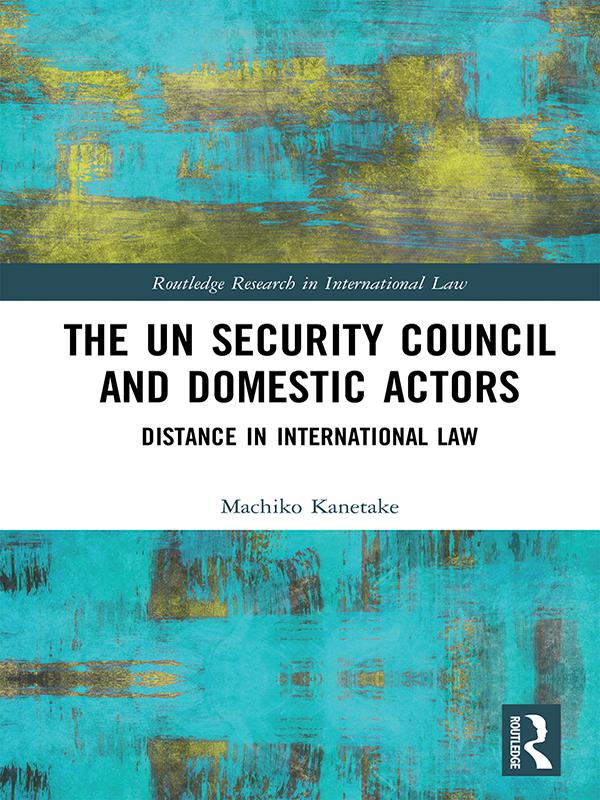
This book analyses the exercise of authority by the UN Security Council and its subsidiary organs over individuals. The UN Security Council was created in 1945 as an outcome of World War II under the predominant assumption that it exercises its authority against states. Under this assumption, the UN Security Council and those individuals were ‘distanced’ by the presence of member states that intermediate between the Security Council’s international commands and those individuals that are subject to member states’ domestic law. However, in practice, the UN Security Council’s exercise of authority has incrementally removed the presence of state intermediaries and reduced the Security Council’s distance to individuals.
This book demonstrates that this phenomenon has increased the relevance of domestic law in developing the international normative frameworks governing the UN Security Council and its subsidiary organs in safeguarding the rights, obligations, and interests of those affected individuals. This book presents how the UN Security Council’s exercise of authority has been received at the domestic level, and what would be the international implications of the Security Council’s extensive encounter with the actors who primarily reside in a domestic legal order.
Paga facilmente con carta, Klarna, Apple Pay o Google Pay. Non sei soddisfatto? Hai sempre 14 giorni per il rimborso. Leggi di più nei nostri termini. Per qualsiasi domanda, scrivici a hello@memmo.org.
Memmo rende lo studio più facile, ovunque tu sia nel mondo. Qui trovi i tuoi libri di testo e strumenti di studio intelligenti, tutto in un unico posto: riassunti, quiz, podcast e flashcard. E poi c'è Ted, il tuo compagno di studio che risponde a ogni tua domanda. Oltre 50.000 studenti studiano già qui: è stato creato per aiutarti a imparare più velocemente e a stressarti meno.