
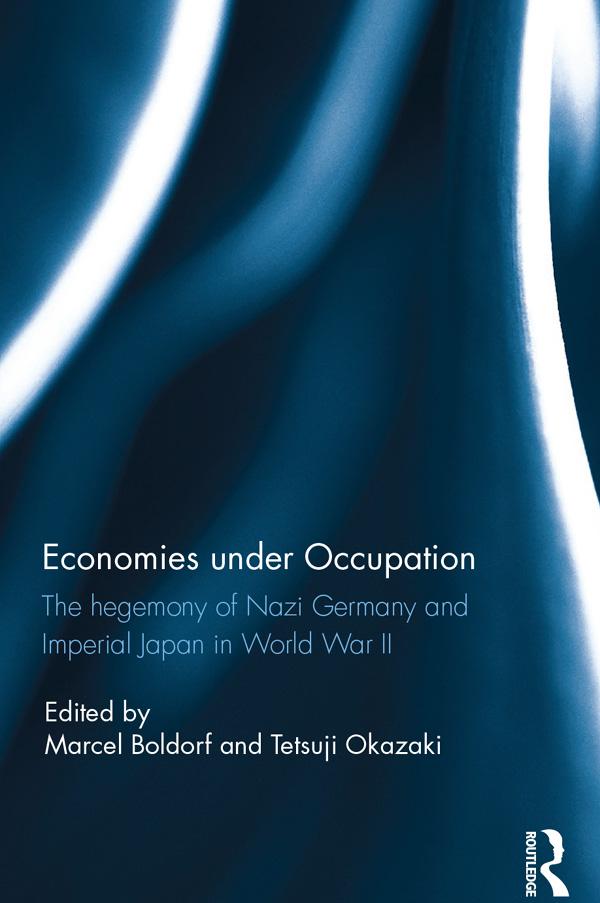
Nazi Germany and Japan occupied huge areas at least for some period during World War II, and those territories became integral parts of their war economies. The book focuses on the policies of World War II aggressors in occupied countries.
The unbalanced economic and financial relations were defined by administrative control, the implementation of institutions and a variety of military exploitation strategies. Plundering, looting and requisitions were frequent aggressive acts, but beyond these interventions by force, specific institutions were created to gain control over the occupied economies as a whole. An appropriate institutional setting was also crucial to give incentives to the companies in the occupied countries to produce munitions for the aggressors. The book explains the main fields of war exploitation (organisation and control, war financing and workforce recruitment). It substantiates these aspects in case studies of occupied countries and gives examples of the business policy of multinational companies under war conditions. The book also provides an account of differences and similarities of the two occupation systems.
Economies under Occupation will interest researchers specialising in the history of economic thought as well as in economic theory and philosophy. It will also engage readers concerned with regional European and Japanese studies and imperial histories.
Paga facilmente con carta, Klarna, Apple Pay o Google Pay. Non sei soddisfatto? Hai sempre 14 giorni per il rimborso. Leggi di più nei nostri termini. Per qualsiasi domanda, scrivici a hello@memmo.org.
Memmo rende lo studio più facile, ovunque tu sia nel mondo. Qui trovi i tuoi libri di testo e strumenti di studio intelligenti, tutto in un unico posto: riassunti, quiz, podcast e flashcard. E poi c'è Ted, il tuo compagno di studio che risponde a ogni tua domanda. Oltre 50.000 studenti studiano già qui: è stato creato per aiutarti a imparare più velocemente e a stressarti meno.