
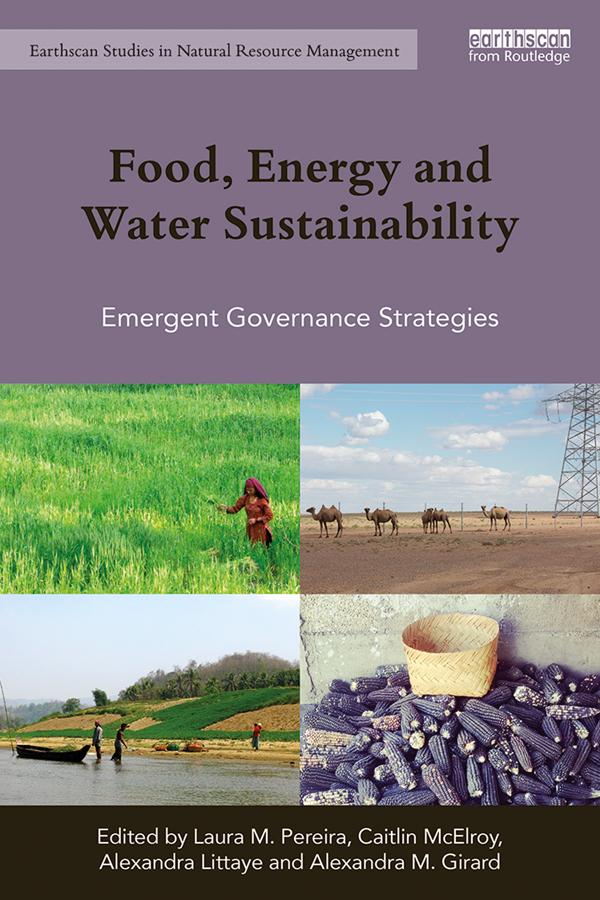
Societies around the world face an increasingly uncertain future as social and ecological changes create pressure on resource governance, and this uncertainty calls for new models that illuminate the intersections of civil society, public sector, and private sector resource management. This volume presents a diversity of collaborations between various governance actors in the management of the Food-Energy-Water (FEW) nexus. It analyses the ability of emergent governance structures to cope with the complexity of future challenges across FEW systems.
Divided into two sections, chapters in the first half of the book present a collection of case studies from around the world exemplifying how FEW nexus challenges are addressed in a multitude of ways and by a variety of actors. Chapters in the second half offer broader perspectives on the management of FEW and underline the lessons that emerge from applying a FEW lens to the question of natural resource governance.
The varied examples in this book highlight that the management of FEW is often a question of reinventing, adapting, and building upon existing practices. Such practices are deeply embedded in unique socio-cultural, environmental, and political contexts as well as ‘hard’ infrastructures. Most of all, this edited volume seeks to communicate the wealth of ideas from committed individuals who continue to work to improve natural resource governance and our sustainable futures.
Paga facilmente con carta, Klarna, Apple Pay o Google Pay. Non sei soddisfatto? Hai sempre 14 giorni per il rimborso. Leggi di più nei nostri termini. Per qualsiasi domanda, scrivici a hello@memmo.org.
Memmo rende lo studio più facile, ovunque tu sia nel mondo. Qui trovi i tuoi libri di testo e strumenti di studio intelligenti, tutto in un unico posto: riassunti, quiz, podcast e flashcard. E poi c'è Ted, il tuo compagno di studio che risponde a ogni tua domanda. Oltre 50.000 studenti studiano già qui: è stato creato per aiutarti a imparare più velocemente e a stressarti meno.