
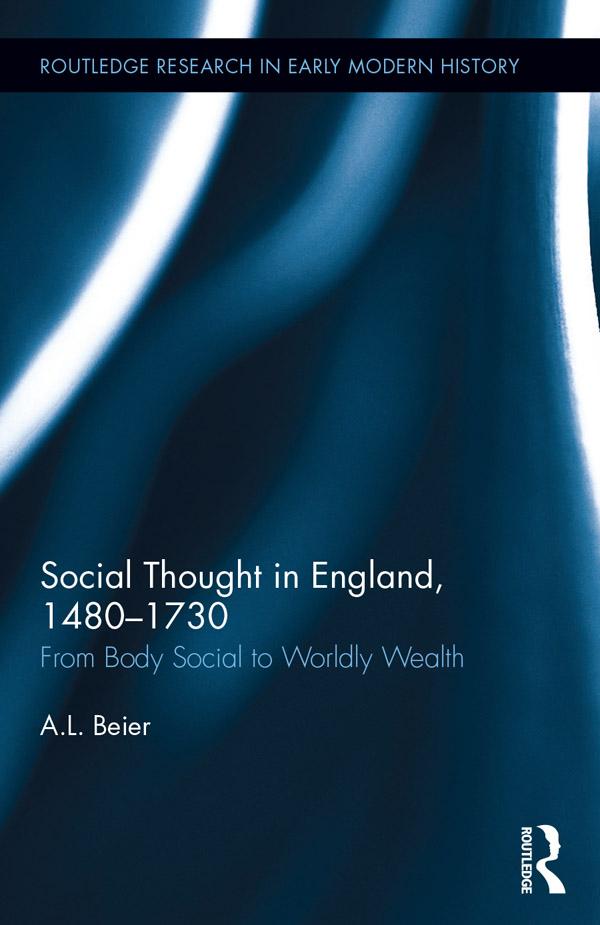
Authorities ranging from philosophers to politicians nowadays question the existence of concepts of society, whether in the present or the past. This book argues that social concepts most definitely existed in late medieval and early modern England, laying the foundations for modern models of society. The book analyzes social paradigms and how they changed in the period. A pervasive medieval model was the "body social," which imagined a society of three estates – the clergy, the nobility, and the commonalty – conjoined by interdependent functions, arranged in static hierarchies based upon birth, and rejecting wealth and championing poverty. Another model the book describes as "social humanist," that fundamentally questioned the body social, advancing merit over birth, mobility over stasis, and wealth over poverty. The theory of the body social was vigorously articulated between the 1480s and the 1550s. Parts of the old metaphor actually survived beyond 1550, but alternative models of social humanist thought challenged the body concept in the period, advancing a novel paradigm of merit, mobility, and wealth. The book’s methodology focuses on the intellectual context of a variety of contemporary texts.
Paga facilmente con carta, Klarna, Apple Pay o Google Pay. Non sei soddisfatto? Hai sempre 14 giorni per il rimborso. Leggi di più nei nostri termini. Per qualsiasi domanda, scrivici a hello@memmo.org.
Memmo rende lo studio più facile, ovunque tu sia nel mondo. Qui trovi i tuoi libri di testo e strumenti di studio intelligenti, tutto in un unico posto: riassunti, quiz, podcast e flashcard. E poi c'è Ted, il tuo compagno di studio che risponde a ogni tua domanda. Oltre 50.000 studenti studiano già qui: è stato creato per aiutarti a imparare più velocemente e a stressarti meno.