
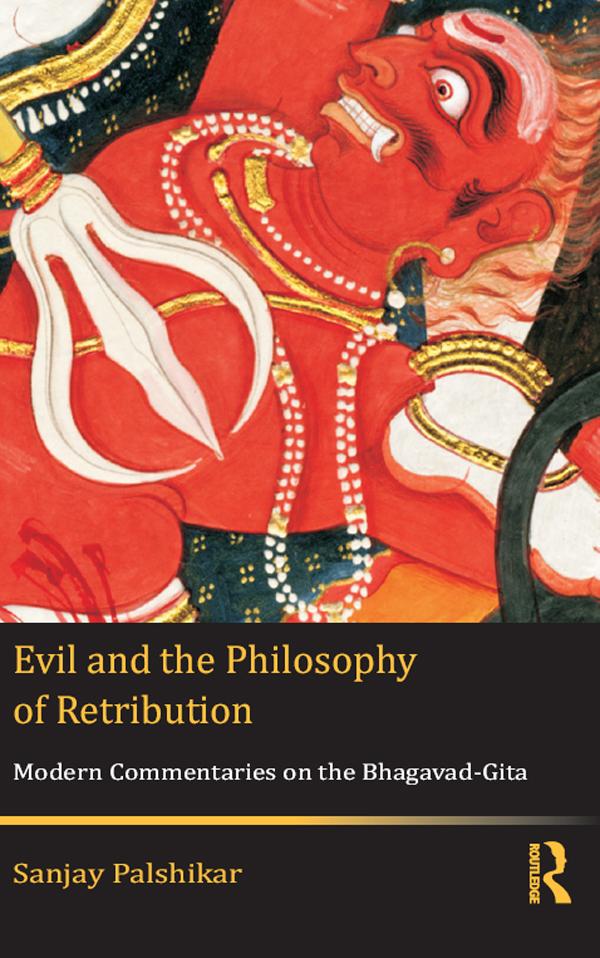
What is ‘evil’? What are the ways of overcoming this destructive and morally recalcitrant phenomenon? To what extent is the use of punitive violence tenable? Evil and the Philosophy of Retribution compares the responses of three modern Indian commentators on the Bhagavad-Gita — Aurobindo Ghose, Bal Gangadhar Tilak and Mahatma Gandhi. The book reveals that some of the central themes in the Bhagavad-Gita were transformed by these intellectuals into categories of modern socio-political thought by reclaiming them from pre-modern debates on ritual and renunciation.
Based on canonical texts, this work presents a fascinating account of how the relationship between ‘good’, ‘evil’ and retribution is construed against the backdrop of militant nationalism and the development of modern Hinduism. Amid competing constructions of Indian tradition as well as contemporary concerns, it traces the emerging representations of modern Hindu self-consciousness under colonialism, and its very understanding of evil surrounding a textual ethos.
Replete with Sanskrit, English, Marathi, and Gujarati sources, this will especially interest scholars of modern Indian history, philosophy, political science, history of religion, and those interested in the Bhagavad-Gita.
Paga facilmente con carta, Klarna, Apple Pay o Google Pay. Non sei soddisfatto? Hai sempre 14 giorni per il rimborso. Leggi di più nei nostri termini. Per qualsiasi domanda, scrivici a hello@memmo.org.
Memmo rende lo studio più facile, ovunque tu sia nel mondo. Qui trovi i tuoi libri di testo e strumenti di studio intelligenti, tutto in un unico posto: riassunti, quiz, podcast e flashcard. E poi c'è Ted, il tuo compagno di studio che risponde a ogni tua domanda. Oltre 50.000 studenti studiano già qui: è stato creato per aiutarti a imparare più velocemente e a stressarti meno.