
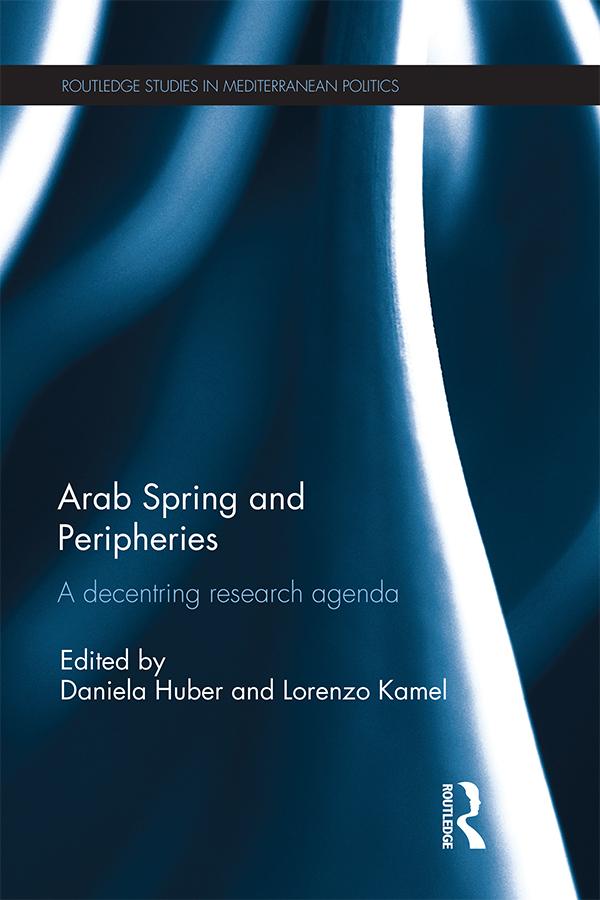
The emerging literature on the so-called ‘Arab Spring’ has largely focused on the evolution of the uprisings in cities and power centres. In order to reach a more diversified and inner understanding of the ‘Arab Spring’, this edited book examines how peripheries have reacted and contributed to the historical dynamics at work in the Middle East and North Africa. It rejects the idea that the ‘Arab Spring’ is a unitary process and shows that it consists of diverse Springs which differed in terms of opportunity structure, strategies of a variance of actors, and outcomes. This book looks at geographical, religious, gender and ethnical peripheries, conceptualizing periphery as a dynamic structure which can expand and contract. It shows that the seeds for changing the face of politics and polities are within peripheries themselves. Focusing on the voices of peripheries can therefore be a powerful tool to ‘de-simplify’ the reading of the Arab Spring and to reshape the paradigmatic schemes through which to look at this part of the world.
This book was published as a special issue of Mediterranean Politics.
Paga facilmente con carta, Klarna, Apple Pay o Google Pay. Non sei soddisfatto? Hai sempre 14 giorni per il rimborso. Leggi di più nei nostri termini. Per qualsiasi domanda, scrivici a hello@memmo.org.
Memmo rende lo studio più facile, ovunque tu sia nel mondo. Qui trovi i tuoi libri di testo e strumenti di studio intelligenti, tutto in un unico posto: riassunti, quiz, podcast e flashcard. E poi c'è Ted, il tuo compagno di studio che risponde a ogni tua domanda. Oltre 50.000 studenti studiano già qui: è stato creato per aiutarti a imparare più velocemente e a stressarti meno.