
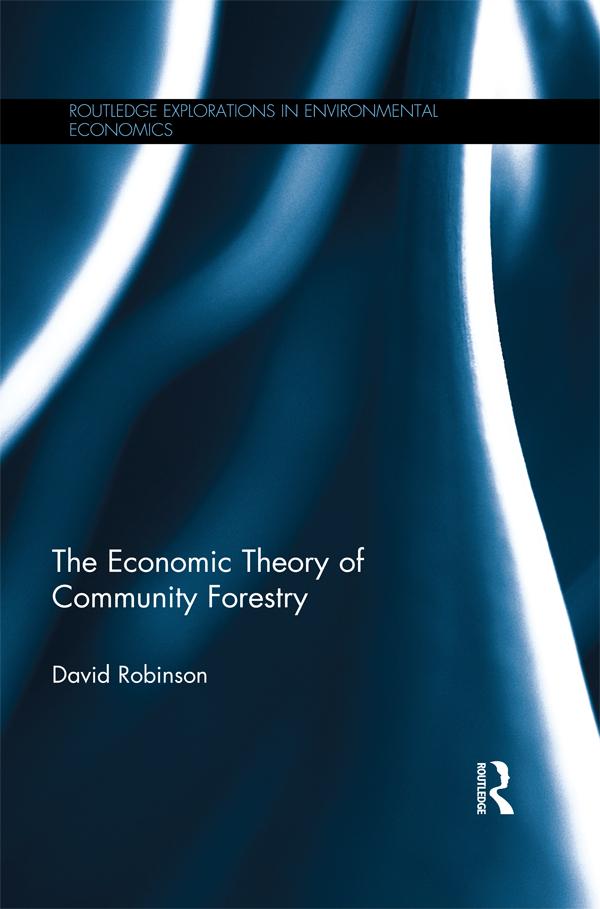
Community forestry is an expanding model of forest management around the world. Over a quarter of forests in developing countries are now owned by or assigned to communities and there is a growing community forestry movement in developed countries such as Canada and the USA. There is, however, no economic theory of community forestry and no systematic treatment of the potential economic advantages of promoting Community forestry in developed countries. As a result much of the policy debate over forest management and forest tenure rests on confused and often erroneous views held by policy makers and encouraged by the dominant forestry industry.
The Economic Theory of Community Forestry aims to address this gap and provides the tools for understanding community forestry movement as an alternative form of ownership that can mobilize community resources and encourage innovation. It uses a wide range of economic principles to show how community forestry can be economically superior to conventional forestry; provides examples from Canadian practice; and discusses the regulatory regime that policy makers must put in place to benefit from community forestry.
This book will be of interest to policy makers, activists, community forestry managers and members, foresters and forestry students.
Paga facilmente con carta, Klarna, Apple Pay o Google Pay. Non sei soddisfatto? Hai sempre 14 giorni per il rimborso. Leggi di più nei nostri termini. Per qualsiasi domanda, scrivici a hello@memmo.org.
Memmo rende lo studio più facile, ovunque tu sia nel mondo. Qui trovi i tuoi libri di testo e strumenti di studio intelligenti, tutto in un unico posto: riassunti, quiz, podcast e flashcard. E poi c'è Ted, il tuo compagno di studio che risponde a ogni tua domanda. Oltre 50.000 studenti studiano già qui: è stato creato per aiutarti a imparare più velocemente e a stressarti meno.