
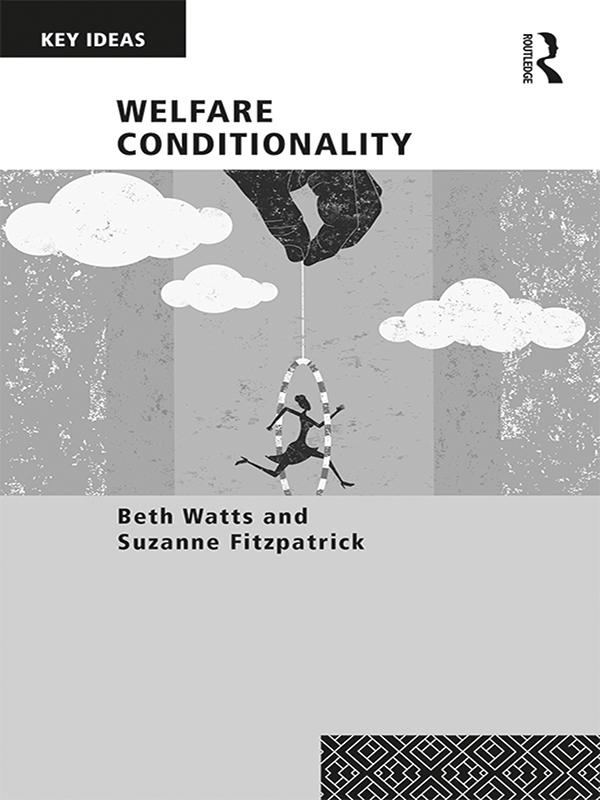
Welfare conditionality has become an idea of global significance in recent years. A ‘hot topic’ in North America, Australia, and across Europe, it has been linked to austerity politics, and the rise of foodbanks and destitution. In the Global South, where publicly funded welfare protection systems are often absent, conditional approaches have become a key tool employed by organisations pursuing human development goals.
The essence of welfare conditionality lies in requirements for people to behave in prescribed ways in order to access cash benefits or other welfare support. These conditions are typically enforced through benefit ‘sanctions’ of various kinds, reflecting a new vision of ‘welfare’, focused more on promoting ‘pro-social’ behaviour than on protecting people against classic ‘social risks’ like unemployment.
This new book in Routledge’s Key Ideas series charts the rise of behavioural conditionality in welfare systems across the globe, its appeal to politicians of Right and Left, and its application to a growing range of social problems. Crucially it explores why, in the context of widespread use of conditional approaches as well as apparently strong public support, both the efficacy and the ethics of welfare conditionality remain so controversial. As such, Welfare Conditionality is essential reading for students, researchers, and commentators in social and public policy, as well as those designing and implementing welfare policies.
Paga facilmente con carta, Klarna, Apple Pay o Google Pay. Non sei soddisfatto? Hai sempre 14 giorni per il rimborso. Leggi di più nei nostri termini. Per qualsiasi domanda, scrivici a hello@memmo.org.
Memmo rende lo studio più facile, ovunque tu sia nel mondo. Qui trovi i tuoi libri di testo e strumenti di studio intelligenti, tutto in un unico posto: riassunti, quiz, podcast e flashcard. E poi c'è Ted, il tuo compagno di studio che risponde a ogni tua domanda. Oltre 50.000 studenti studiano già qui: è stato creato per aiutarti a imparare più velocemente e a stressarti meno.