
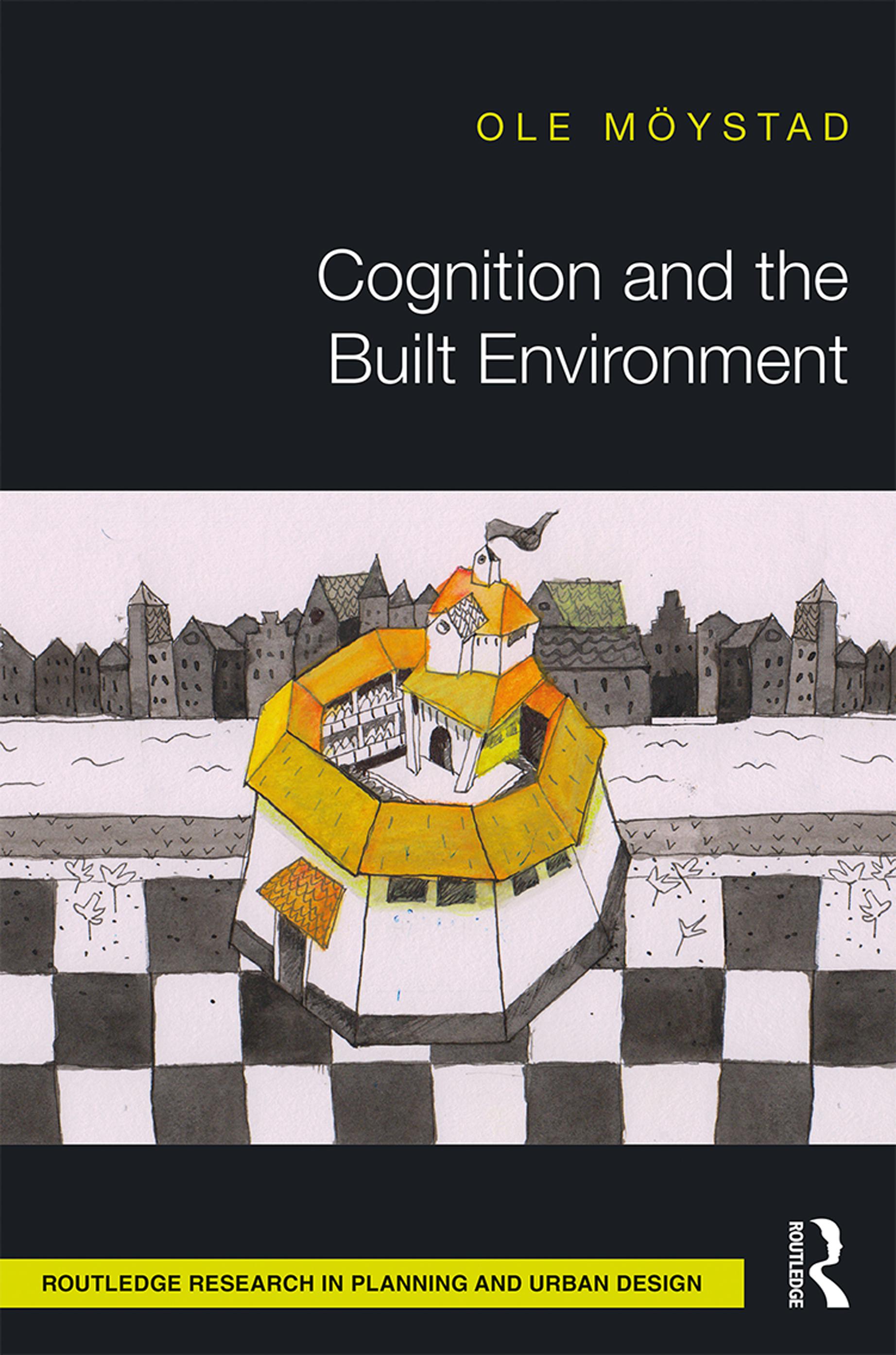
Cognition and the Built Environment argues that interacting with our built environment, as users and as architects, is a cognitive process. It claims that architecture, in its form and meaning, is a basic, embodied level of human cognition.
The assumption is that we and our built environment together form an intelligent system, a cognitive feedback loop between us and the world of which we are part. With this as a vantage point, the book discusses the meaning and intelligence of concrete architectural environments as well as the agency of the architect, of his client and of the user.
The inquiry oscillates between abstract thought, topological models and cognitive semiotics, between pragmatist philosophy and the professional practice of planning cities, developing projects and using objects. Architecture serves more complex purposes than our caves, paths and landmarks did.
Written for students and academics of urban design, urban planning and architectural theory, Cognition and the Built Environment argues that human cognition feeds on the interaction between thought, agency and built environment, and that architecture is the spatial form of this interaction.
Paga facilmente con carta, Klarna, Apple Pay o Google Pay. Non sei soddisfatto? Hai sempre 14 giorni per il rimborso. Leggi di più nei nostri termini. Per qualsiasi domanda, scrivici a hello@memmo.org.
Memmo rende lo studio più facile, ovunque tu sia nel mondo. Qui trovi i tuoi libri di testo e strumenti di studio intelligenti, tutto in un unico posto: riassunti, quiz, podcast e flashcard. E poi c'è Ted, il tuo compagno di studio che risponde a ogni tua domanda. Oltre 50.000 studenti studiano già qui: è stato creato per aiutarti a imparare più velocemente e a stressarti meno.