
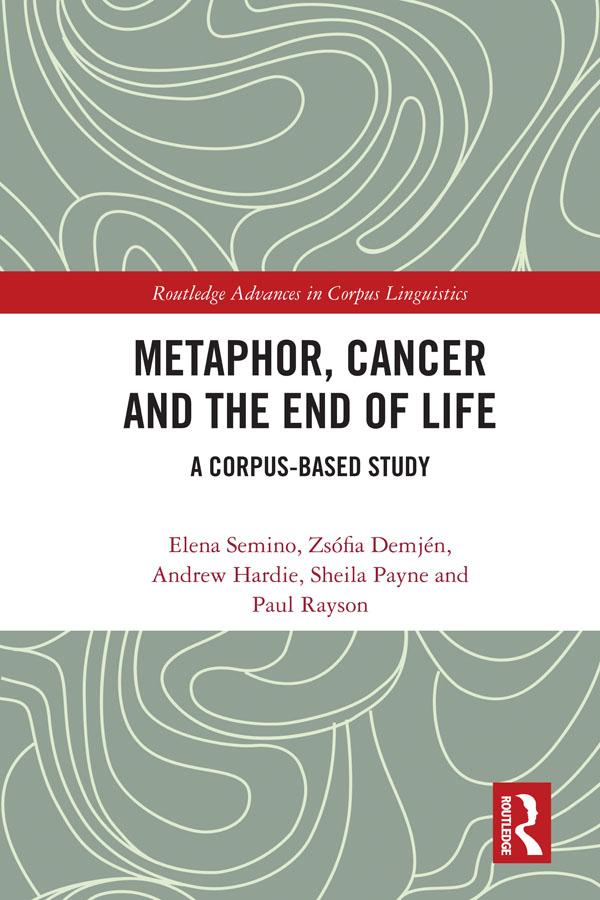
This book presents the methodology, findings and implications of a large-scale corpus-based study of the metaphors used to talk about cancer and the end of life (including care at the end of life) in the UK. It focuses on metaphor as a central linguistic and cognitive tool that is frequently used to talk and think about sensitive and subjective experiences, such as illness, emotions, death, and dying, and that can both help and hinder communication and well-being, depending on how it is used. The book centers on a combination of qualitative analyses and innovative corpus linguistic methods. This methodological assemblage was applied to the systematic study of the metaphors used in a 1.5-million-word corpus. The corpus consists of interviews with, and online forum posts written by, members of three stakeholder groups, namely: patients diagnosed with advanced cancer; unpaid carers looking after a relative with a diagnosis of advanced cancer; and healthcare professionals. The book presents a range of qualitative and quantitative findings that have implications for: metaphor theory and analysis; corpus linguistic and computational approaches to metaphor; and training and practice in cancer care and hospice, palliative and end-of-life care.
Paga facilmente con carta, Klarna, Apple Pay o Google Pay. Non sei soddisfatto? Hai sempre 14 giorni per il rimborso. Leggi di più nei nostri termini. Per qualsiasi domanda, scrivici a hello@memmo.org.
Memmo rende lo studio più facile, ovunque tu sia nel mondo. Qui trovi i tuoi libri di testo e strumenti di studio intelligenti, tutto in un unico posto: riassunti, quiz, podcast e flashcard. E poi c'è Ted, il tuo compagno di studio che risponde a ogni tua domanda. Oltre 50.000 studenti studiano già qui: è stato creato per aiutarti a imparare più velocemente e a stressarti meno.