
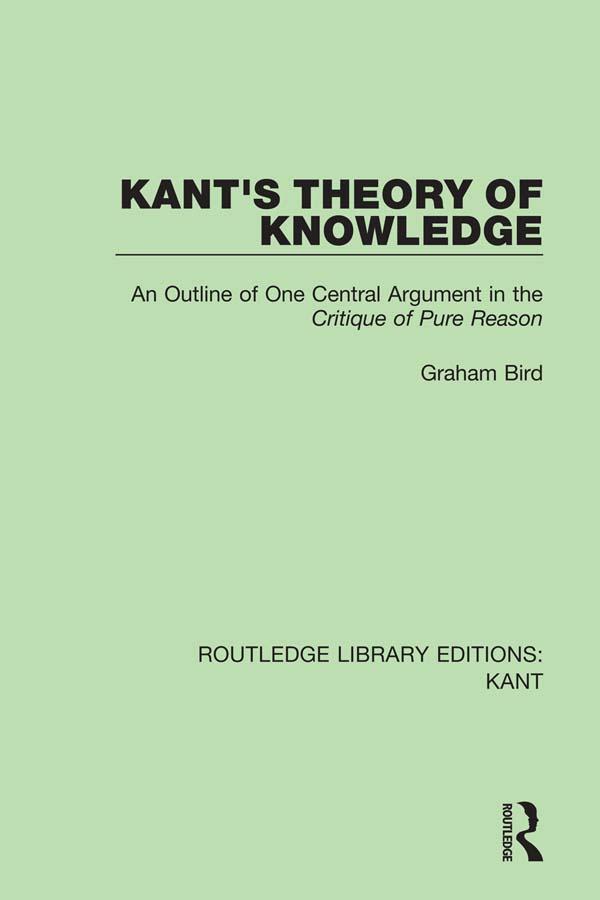
First published in 1962. Kant’s philosophical works, and especially the Critique of Pure Reason, have had some influence on recent British philosophy. But the complexities of Kant’s arguments, and the unfamiliarity of his vocabulary, inhibit understanding of his point of view. In Kant’s Theory of Knowledge an attempt is made to relate Kant’s arguments in the Critique of Pure Reason to contemporary issues by expressing them in a more modern idiom.
The selection of issues discussed is intended to present a continuous argument, of an epistemological kind, which runs centrally through the Critique. The argument deals with essentially with the problems, raised in the Transcendental Analytic, about the status of categories. It deals with certain preliminary assumptions made in setting these problems, and discusses the way in which the various sections of the Analytic contribute to their solution. It also deals with Kant’s criticisms of traditional metaphysics, and ends with an account of his effort in the Third Antinomy to resolve the conflict between freedom and causality, and so to effect a transition of knowledge to moral philosophy.
Paga facilmente con carta, Klarna, Apple Pay o Google Pay. Non sei soddisfatto? Hai sempre 14 giorni per il rimborso. Leggi di più nei nostri termini. Per qualsiasi domanda, scrivici a hello@memmo.org.
Memmo rende lo studio più facile, ovunque tu sia nel mondo. Qui trovi i tuoi libri di testo e strumenti di studio intelligenti, tutto in un unico posto: riassunti, quiz, podcast e flashcard. E poi c'è Ted, il tuo compagno di studio che risponde a ogni tua domanda. Oltre 50.000 studenti studiano già qui: è stato creato per aiutarti a imparare più velocemente e a stressarti meno.