
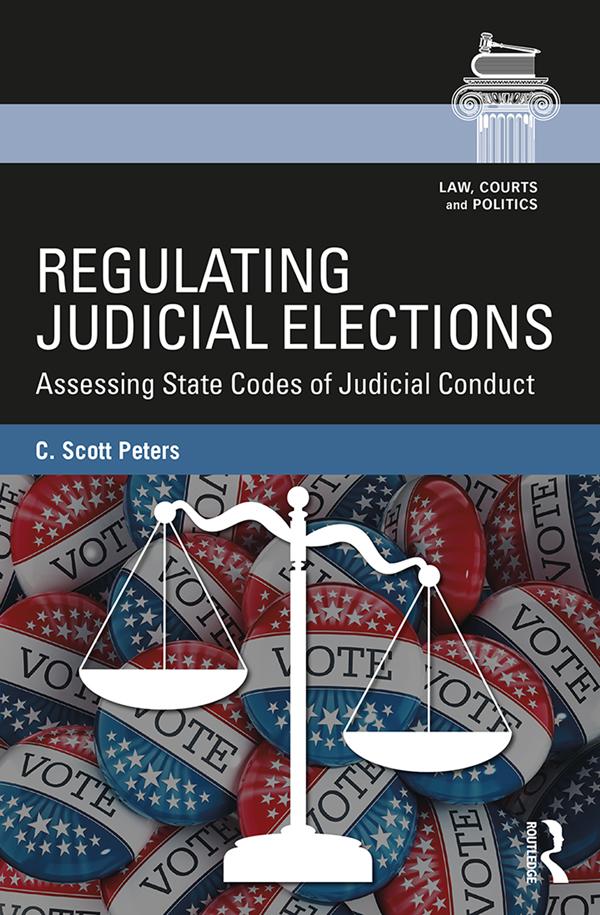
State judicial elections are governed by a unique set of rules that enforce longstanding norms of judicial independence by limiting how judicial candidates campaign. These rules have been a key part of recent debates over judicial elections and have been the subject of several U.S. Supreme Court cases.
Regulating Judicial Elections provides the first accounting of the efficacy and consequences of such rules. C. Scott Peters re-frames debates over judicial elections by shifting away from all-or-nothing claims about threats to judicial independence and focusing instead on the trade-offs inherent in our checks and balances system. In doing so, he is able to examine the costs and benefits of state ethical restrictions. Peters finds that while some parts of state codes of conduct achieve their desired goals, others may backfire and increase the politicization of judicial elections. Moreover, modest gains in the protection of independence come at the expense of the effectiveness of elections as accountability mechanisms. These empirical findings will inform ongoing normative debates about judicial elections.
Paga facilmente con carta, Klarna, Apple Pay o Google Pay. Non sei soddisfatto? Hai sempre 14 giorni per il rimborso. Leggi di più nei nostri termini. Per qualsiasi domanda, scrivici a hello@memmo.org.
Memmo rende lo studio più facile, ovunque tu sia nel mondo. Qui trovi i tuoi libri di testo e strumenti di studio intelligenti, tutto in un unico posto: riassunti, quiz, podcast e flashcard. E poi c'è Ted, il tuo compagno di studio che risponde a ogni tua domanda. Oltre 50.000 studenti studiano già qui: è stato creato per aiutarti a imparare più velocemente e a stressarti meno.