
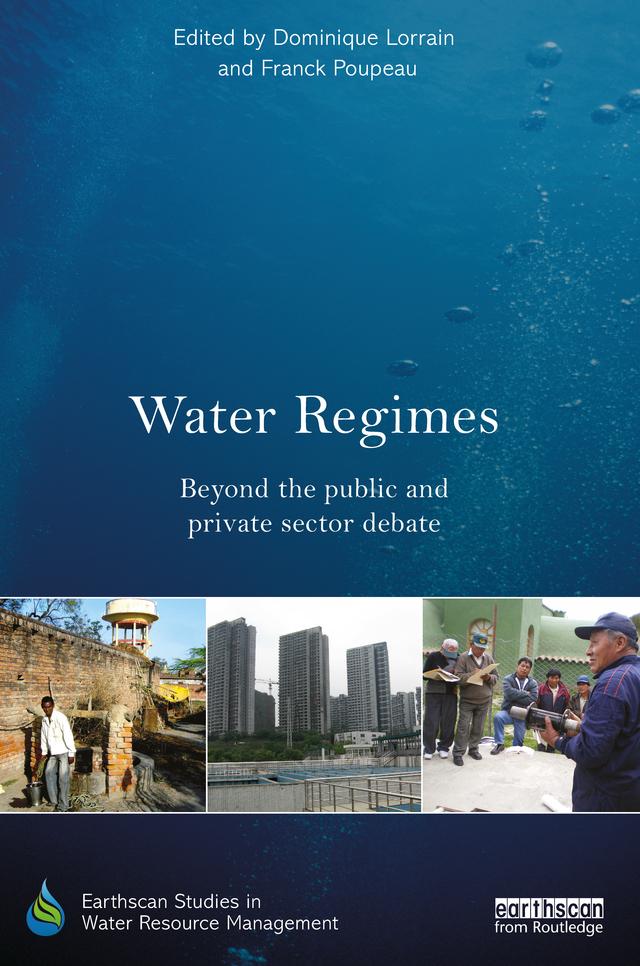
In recent years the water sector has undergone profound institutional, economic and political transformations. Some countries have encouraged privatization of water services, but in many cases this has provoked adverse reaction to such a neoliberal and market-based approach to this common shared but essential resource.
This book goes beyond the ideology of the public versus private water regime debate, by focusing on the results of these types of initiatives to provide better water services, particularly in urban settings. It provides numerous examples of alternative models, to show who is responsible for implementing such systems and what are their social, institutional and technical-scientific characteristics. Policies are analysed in terms of their implications for employees and residents.
The book presents a new combinatory approach of water regimes, based on several international case studies (Argentina, Bolivia, China, France, Germany, India, South Africa and the USA, plus a comparison of three cities in Africa) presenting specific challenges for water models. These case studies demonstrate the successes and problems of a range of private sector involvements in the provision of water services, and provide examples of how small-scale systems can compare with larger-scale more technical systems.
Paga facilmente con carta, Klarna, Apple Pay o Google Pay. Non sei soddisfatto? Hai sempre 14 giorni per il rimborso. Leggi di più nei nostri termini. Per qualsiasi domanda, scrivici a hello@memmo.org.
Memmo rende lo studio più facile, ovunque tu sia nel mondo. Qui trovi i tuoi libri di testo e strumenti di studio intelligenti, tutto in un unico posto: riassunti, quiz, podcast e flashcard. E poi c'è Ted, il tuo compagno di studio che risponde a ogni tua domanda. Oltre 50.000 studenti studiano già qui: è stato creato per aiutarti a imparare più velocemente e a stressarti meno.