
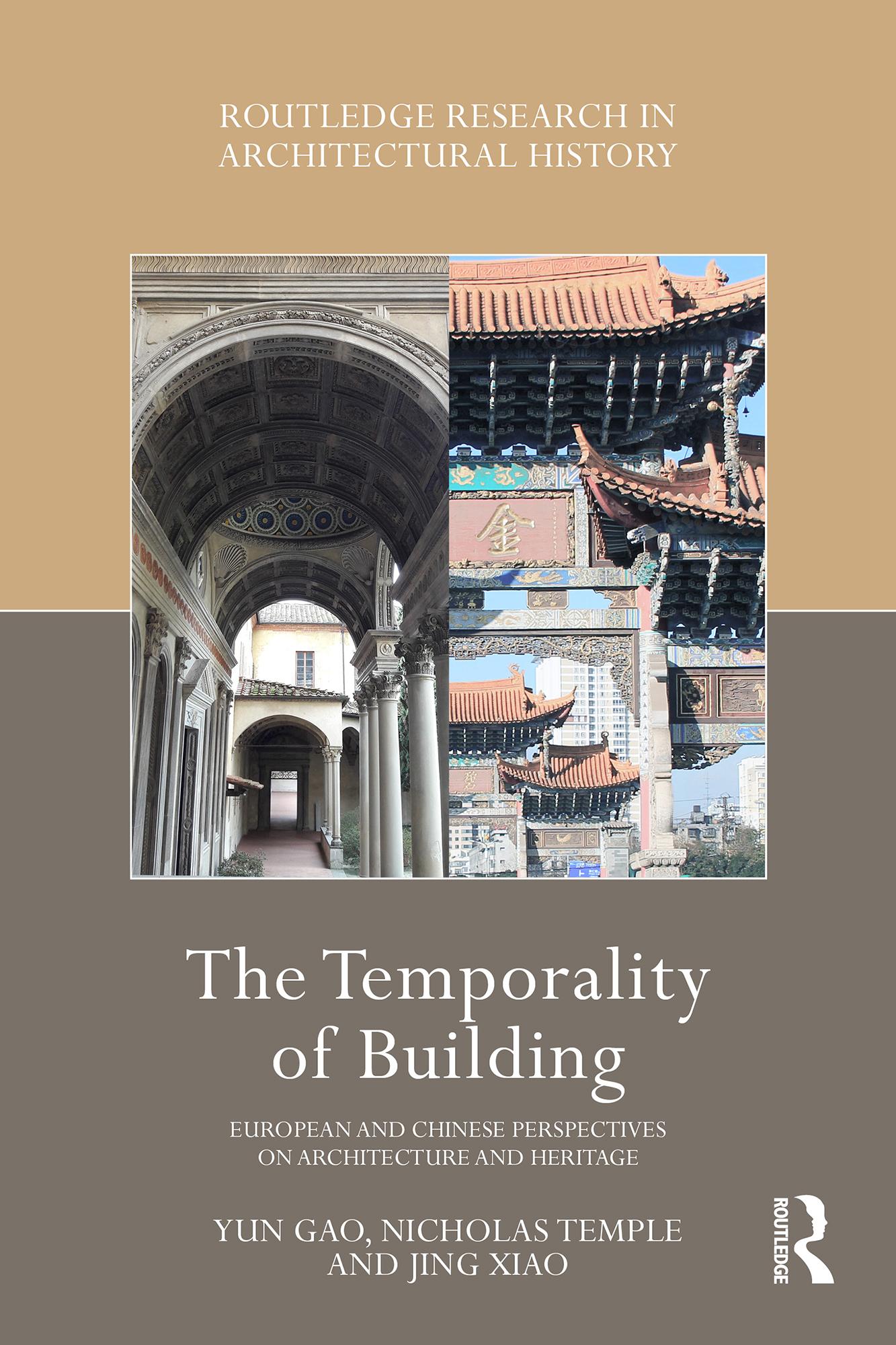
This book examines the role that time plays in the life of buildings, adopting a comparative study of this influence between European and Chinese traditions. Whilst issues of time in architecture have attracted increasing interest by academics in the West, challenging the dominant modernist precepts of space, there is little understanding of the subject in China and how these compare to historical and contemporary perspectives in Europe. A guiding premise of the investigation is that notions of building time require insight into how cultural habits commingle with natural rhythms, or what David Leatherbarrow calls “concurrency”.
Rather than examining specific buildings, the first three chapters apply three key themes (language, ritual and heritage) as cultural lenses to reveal differences and similarities between the two traditions. Through these lenses, buildings, interiors and their exterior spaces (churches/cathedrals, temples, palaces, gardens and courtyard houses) are explored to demonstrate how building time involves particular situations/settings and their correlating relationships to past traditions. In the final chapter we consider notions of time in the context of contemporary buildings in Europe and China, drawing on the earlier historical investigations and addressing globalising influences.
This book would be of interest to architects, architectural theorists, historians, philosophers, sociologists and anthropologists.
Paga facilmente con carta, Klarna, Apple Pay o Google Pay. Non sei soddisfatto? Hai sempre 14 giorni per il rimborso. Leggi di più nei nostri termini. Per qualsiasi domanda, scrivici a hello@memmo.org.
Memmo rende lo studio più facile, ovunque tu sia nel mondo. Qui trovi i tuoi libri di testo e strumenti di studio intelligenti, tutto in un unico posto: riassunti, quiz, podcast e flashcard. E poi c'è Ted, il tuo compagno di studio che risponde a ogni tua domanda. Oltre 50.000 studenti studiano già qui: è stato creato per aiutarti a imparare più velocemente e a stressarti meno.