
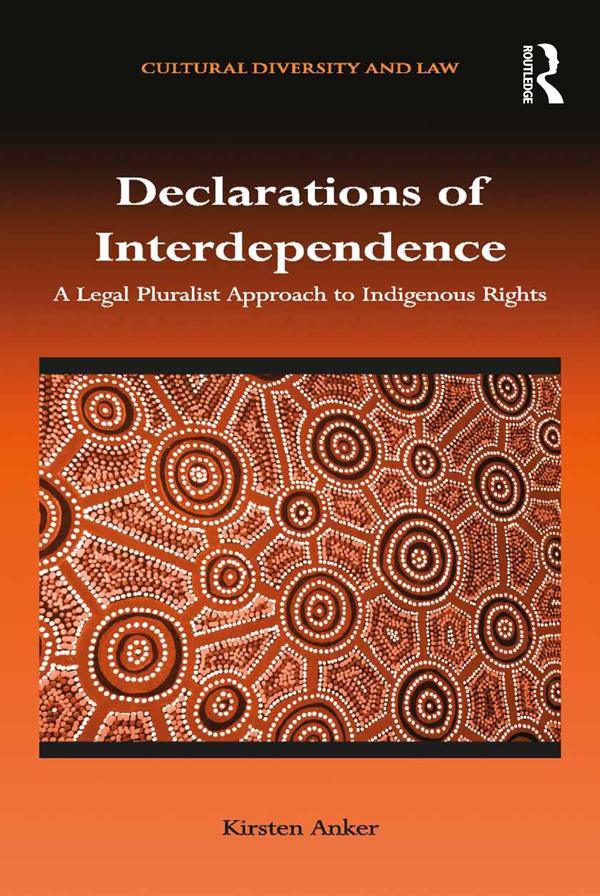
This book takes up the postcolonial challenge for law and explains how the problems of legal recognition for Indigenous peoples are tied to an orthodox theory of law. Constructing a theory of legal pluralism that is both critical of law's epistemological and ontological presuppositions, as well as discursive in engaging a dialogue between legal traditions, Anker focusses on prominent aspects of legal discourse and process such as sovereignty, proof, cultural translation and negotiation. With case studies and examples principally drawn from Australia and Canada, the book seeks to set state law in front of its own reflection in the mirror of Indigenous rights, drawing on a broad base of scholarship in addition to legal theory, from philosophy, literary studies, anthropology, social theory, Indigenous studies and art. As a contribution to legal theory, the study advances legal pluralist approaches not just by imagining a way to ’make space for’ Indigenous legal traditions, but by actually working with their insights in building theory. The book will be of value to students and researchers interested in Indigenous rights as well as those working in the areas of socio-legal studies, legal pluralism and law and cultural diversity.
Paga facilmente con carta, Klarna, Apple Pay o Google Pay. Non sei soddisfatto? Hai sempre 14 giorni per il rimborso. Leggi di più nei nostri termini. Per qualsiasi domanda, scrivici a hello@memmo.org.
Memmo rende lo studio più facile, ovunque tu sia nel mondo. Qui trovi i tuoi libri di testo e strumenti di studio intelligenti, tutto in un unico posto: riassunti, quiz, podcast e flashcard. E poi c'è Ted, il tuo compagno di studio che risponde a ogni tua domanda. Oltre 50.000 studenti studiano già qui: è stato creato per aiutarti a imparare più velocemente e a stressarti meno.
Potrebbe interessarti anche
Acquista il libro0